Currently browsing category

2016, Page 13

Managing Your Online Identity

Today, Internet users are taking advantage of the many forms of social media to create an online persona. But which profile represents their true offline identity? Each website will create a partial identity, a persona, for the user based on a subset of their characteristics. Some may see this as advantage, others a lack of authenticity. The most common reason to create more than one online identity is to differentiate your private and professional identity. Continue reading →
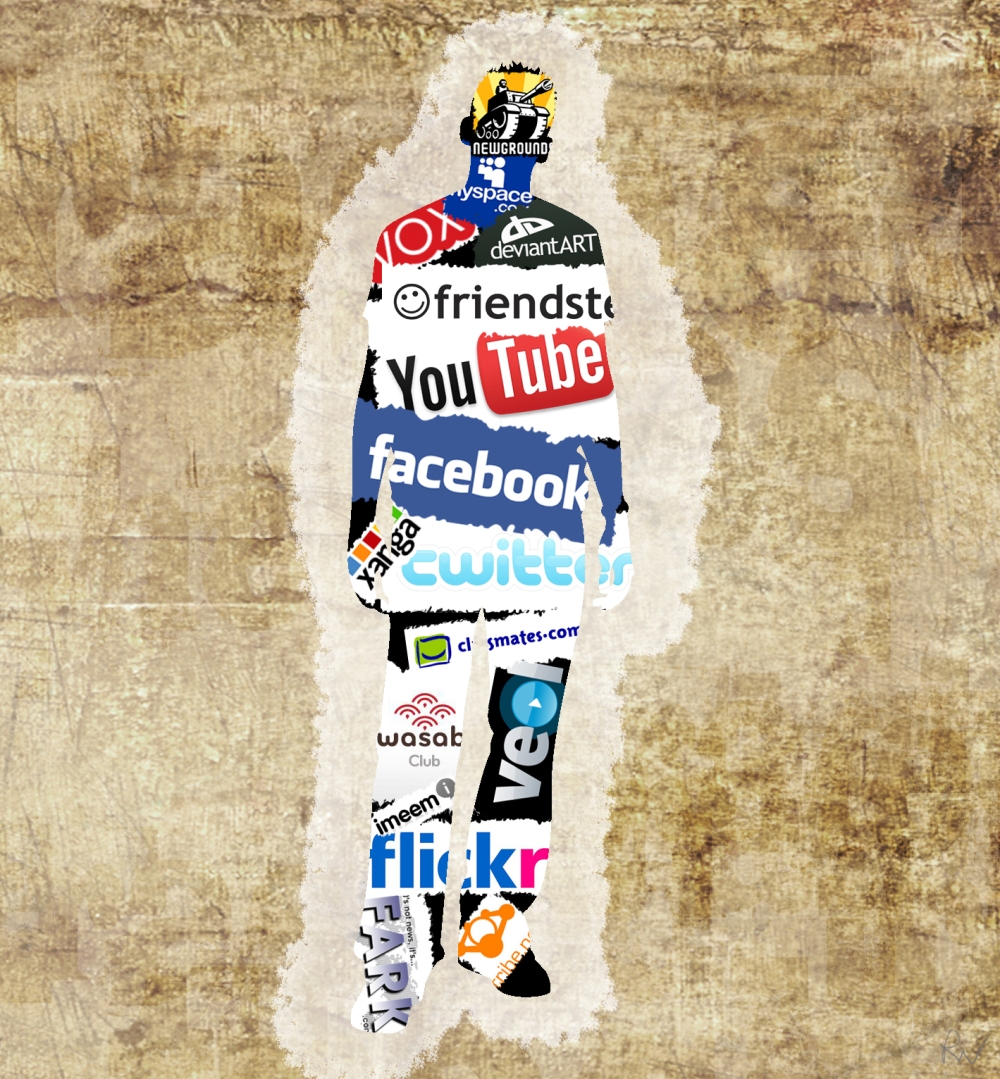
Managing Online Identity

  Online identities are an increasingly important concept in the age of the social Web. In the past, Internet users may have been more likely to experience the Web behind a shield of anonymity with few ties to their offline persona. Today however, it is likely that a person will have at least one online identity, if not multiple, as the ever expanding collection of web services and social networks ask us for more details about ourselves, and we willingly upload them. Continue reading →

More than one online identity: What are the pros and cons?

With an increase in virtual lifestyles, people are spending more time on the web. With last week’s blog introducing digital residents & visitors, I started thinking how multiple online identities may affect a person’s security & anonymity online. Online identity as defined by Costa and Torres (2011 pg. 49) is centred around two areas: Presentation & reputation. Continue reading →

Topic Two: Online Identities

Managing our online identities is fast becoming an important ability as more and more of our activities, relationships and time is spent online. Whilst the Web previously afforded a veil of anonymity to its users, increasingly the services most people use expect an at minimum semi-public and authentic online identity, or at least a partial identity (Kroski, 2012). Continue reading →

Topic 2: Managing Your Online Identity

According to Costa and Torres (2011) single or multiple identities is one of the major dichotomies of online identities. It can be a difficult choice to make and a difficult situation to maintain and having a single online identity or multiple online identities both have benefits and limitations. Anyone with an active social media account makes decisions about how to present himself or herself online whether they realise it or not. Continue reading →

Topic 2: Digital Identity

Image Source: http://sattsat.tumblr.com/post/19445364906 Digital identity derives from the practices individuals have been developing online and it centres around two areas: presentation of the persona assumed and reputation. (Costa & Torres 2011:49) There is an idea that, among other dichotomies, users can assume multiple online identities; not just one. Continue reading →

Managing My Online Identity

Everyone has their own identity based on their unique characteristics. However, because of greater developments and new social media infrastructure found on the web, online identity has started to grow as an offspring to ones offline (real identity). ‘Online identity’ is built through your interactions on the internet, whether you are simply clicking through advertisements or sharing information through social media websites (Internet Society 2016). Continue reading →

Maintaining Multiple Online Identities. Is it worth it? Is it necessary?

For some people their online identity is simply an extension of their offline identity: they use the same name, same picture and express the same ideas. For other people, their online identity could be very different: they might use a different name and express very different ideas. And of course, you’ll get people in between, who decide to maintain different identities that are shared with different people. Continue reading →

Topic 2: Managing your online identity

Everyone who has an online presence will ultimately leave a digital footprint behind. A digital footprint consists of our online history and how we navigate ourselves around the web. We project an image of ourselves onto social media to express our online identity. Factors such as  likes, dislikes, opinions, hobbies, fashion and social life  are all communicated online. Continue reading →

How much of a trail do we leave behind?

In today’s digital age the way we present ourselves online is a great deal. Whilst on the web, we form online identities where we establish a sense of belonging in the digital world. Often leading many to develop multiple online identities. What? You ask what multiple online identities, check out the video below! Whilst online a reputation starts to develop when we interact and participate in shared spaces, having an implication on our offline and online life. Continue reading →

Online Identities and Mental Health

Photo Credit The main reason for having multiple online profiles is anonymity as who needs 2 Facebook accounts for themselves unless 1 of them isn’t actually them. For people suffering from mental illness the anonymity that multiple accounts provide leads to them being able to interact with people without the stigma and repercussions that may come with mental illness (Sokratis Dinos, 2004). Continue reading →

Online Identities

“Having two identities for yourself is an example of a lack of integrity.” Mark Zuckerberg Just because I keep my personal and professional identities separate, does this mean I have a lack of integrity? Elements of an Online Identity Online identities derive from the practices of individuals on the internet. The internet is integral in our digital society and our online activities have an impact on our social interactions both face to face and on the web. Continue reading →

TOPIC 2: Have you tried Googling your own name? The arguments for and against having more than one online identity

Should we keep our online identities private? What are the advantages and disadvantages of having a completely open vs. private identity? Julia Allison states that we should maintain many different identities dependent on the community we are in, for example school, work, friends and home (Jarvis, 2011). This is definitely something that I and I know many others can relate too. Continue reading →

Topic 2. Managing online identity

We hear a lot about ‘online identity’, ‘constructing online identity’, ‘identity theft’ and ‘identity and privacy’. But what is actually identity? Smith&Watson (2014) define identity as ‘a set of components of personhood’ (p.82), such as demographic characteristics, and note that ‘I’ is constructed and reflexive, both online and offline. However, online identity is not simply an extension of our offline selves. Continue reading →