Currently browsing

Page 33

Digital users: “Natives & Immigrants”, or “Visitors & Residents”?

The concept of Digital Natives & Immigrants was first introduced by Prensky’s in 2001 to distinguish between different generation’s technology engagement. However, should people’s technology competence be labelled based on their age group? Would a person in Gen Z automatically be more familiar with technology than a person of gen X? This age-based typology, though was widely accepted, has therefore received many criticisms. Continue reading →

At Home or Away?

Natives, Immigrants, Visitors and Residents Prensky (2001) explains that the way students now learn has changed “radically” because of time exposed to Internet and ubiquitous technologies. “Digital Natives” are “native speakers of digital [languages]”. Digital Immigrants are the opposite – technologies seem new and they “have very little appreciation of [digital] skills”. Continue reading →

Using the Twitter hashtag

The Twitter hashtag for this module - #uosm2008 - is a central part of this course. You need to monitor the feed daily and be actively engaged. We understand that you may NOT want to connect your personal Twitter account with this module. We therefore suggest creating a new profile - under your full/real name - which you can use for this module and for following professionally useful people/institutions/services beyond the end of the module. Continue reading →

Which are you – Digital Resident or Digital Visitor?

Marc Prensky coined the terms digital natives and digital immigrants and how the distinction between the two will become less relevant in the coming years.  “Natives” are those who grew up immersed in technology, referring to the younger generation, whereas “Immigrants” are the older generation who struggle to adapt to the network age as if “learning a new language“. Continue reading →

Introductory Topic

Digital Natives & Immigrants ‘Digital Natives’, a term coined by Prensky (2001) to describe people who have always had access to the internet their entire lives. People from my age group (Millenials) are included in this group, as we grew up with the internet and hence we tend to have a high level of online proficiency, in comparison to people born long before the rise of the internet known as ‘Digital Immigrants’. Continue reading →

Introductory blog

Digital Natives and Digital Immigrants Prensky’s concept differentiates between those who were born in the digital world and speak the digital language (Natives) and those who have adjusted to the new technology at a later part of their life but will always have an “accent” (Immigrants) (Prensky, 2001). He also implied that ‘Immigrant educators’ would need to reform their methods of teaching to accommodate the Digital Natives (White & Cornu, 2011). Continue reading →

Digital Proficiency – Examining Residents and Visitors

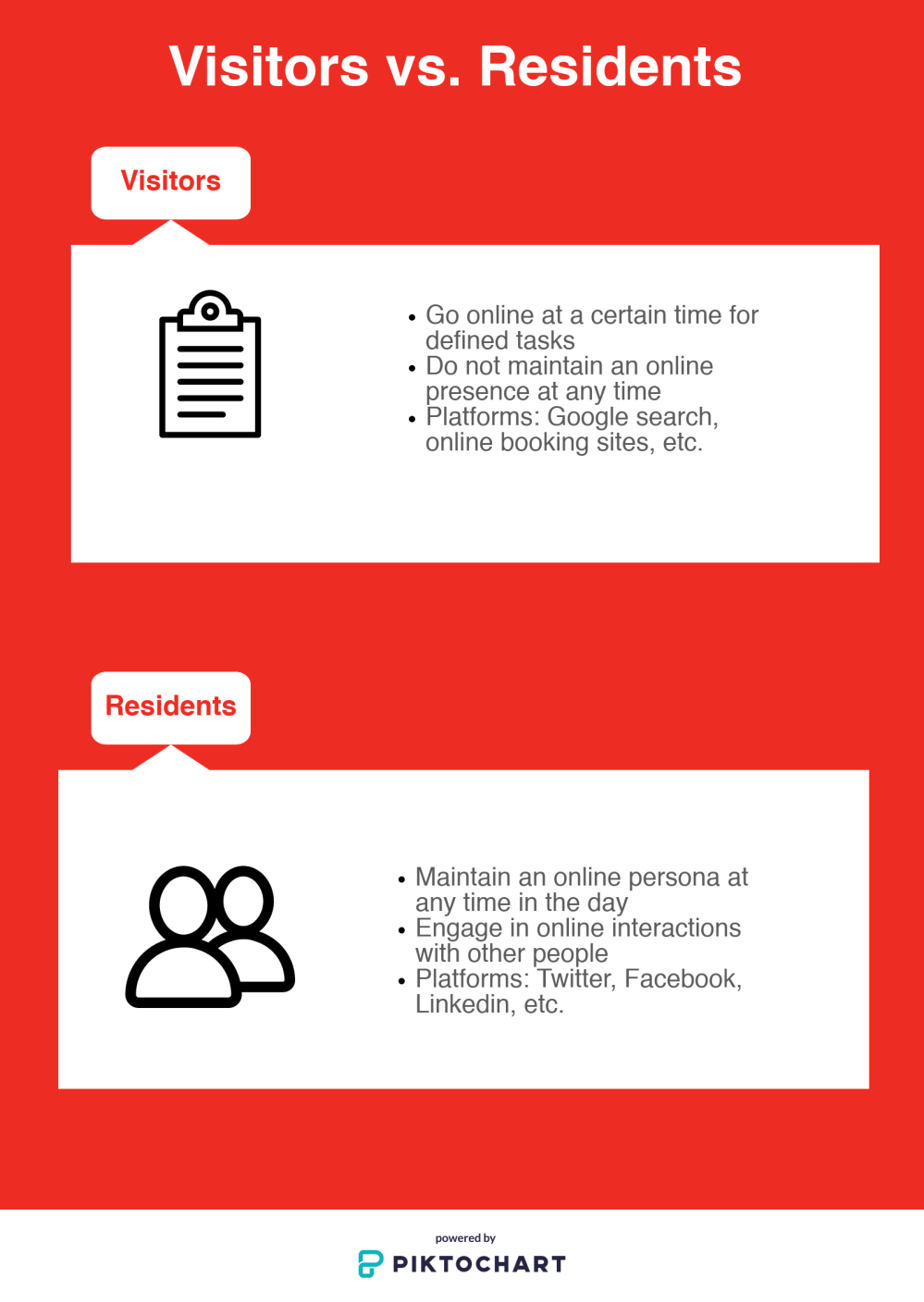
Understanding digital literacy is an increasingly important skill as we are more and more dependant upon utilising the internet for professional and social reasons. Through a high level of Digital Literacy – synonymous with being a ‘Digital Resident’, we are empowered with higher social presence allowing for online activities within communities, or engagement thus facilitating networked learning. Continue reading →

Digital Visitors and Digital Residents.

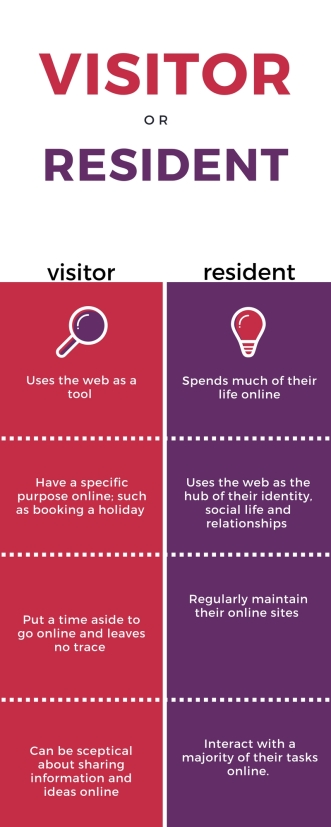
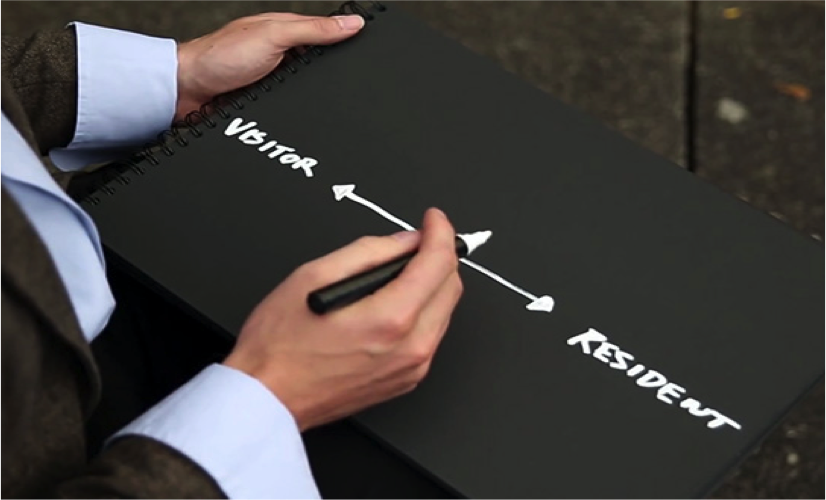
Dan White describes that Digital Visitors and Residents “are a way of describing the range of ways individuals can engage with the web”. Visitors and Residents are at opposite ends of the spectrum. https://youtu.be/sPOG3iThmRI Prensky also defined that there is a major distinction between them. Those who are considered a ‘Visitor’ are not “fully competent” with the digital environment. They go online for a reason and after leave onto something else. Continue reading →

Digital Residents and Visitors

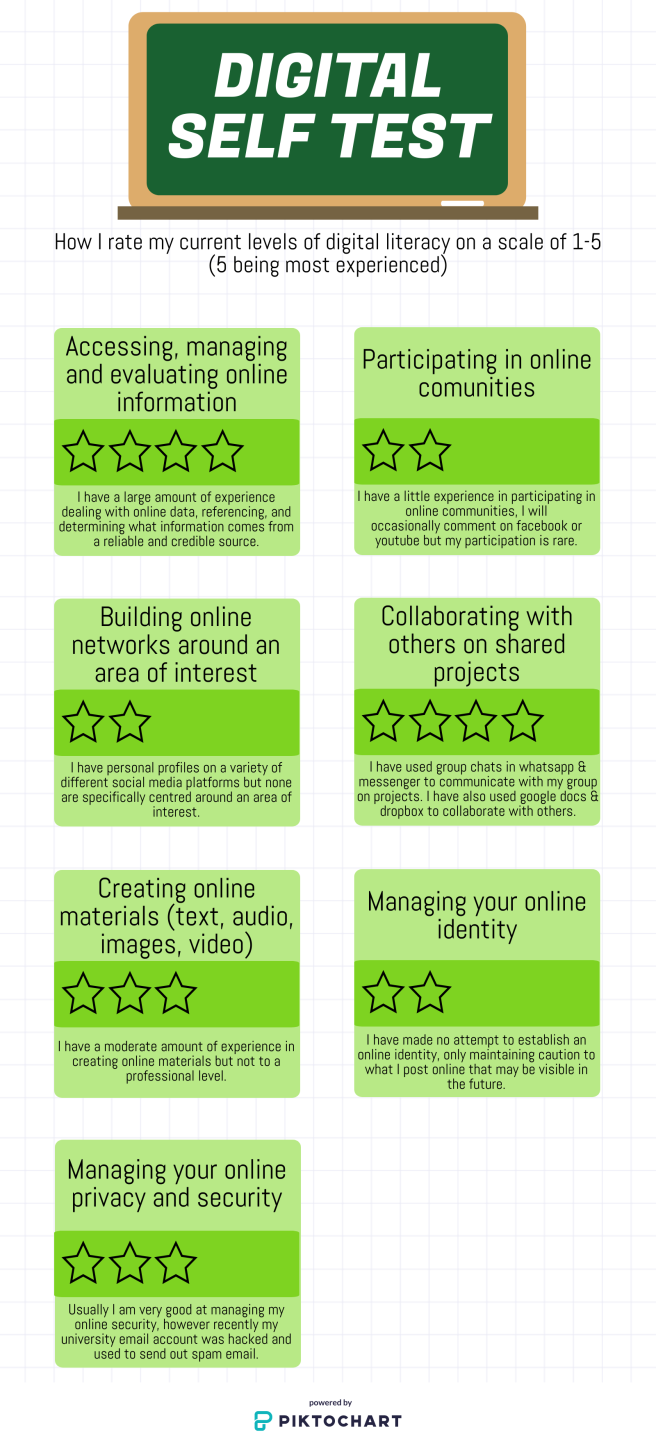
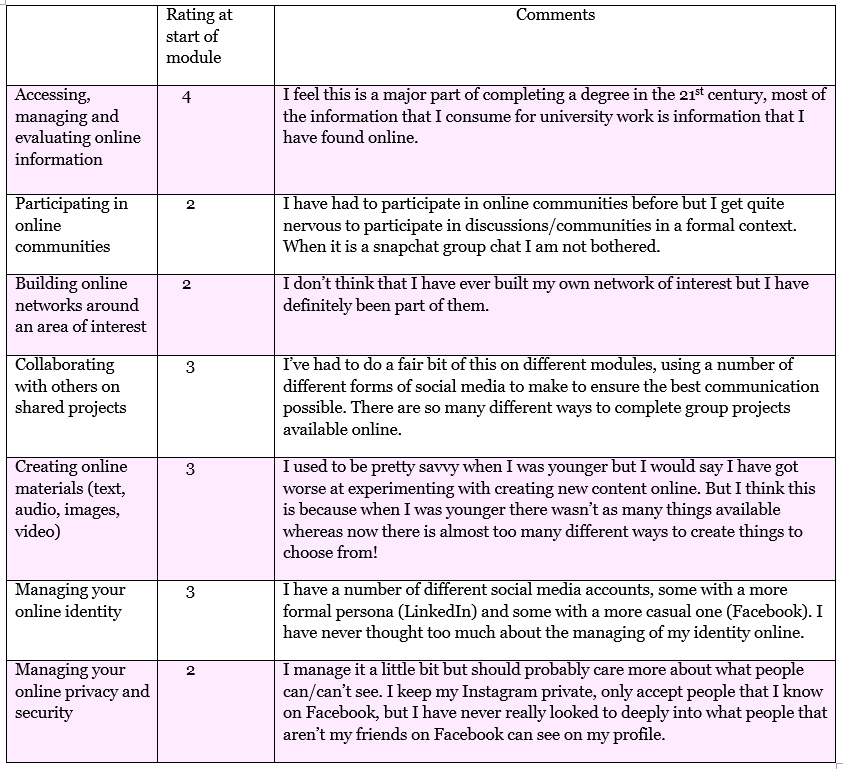
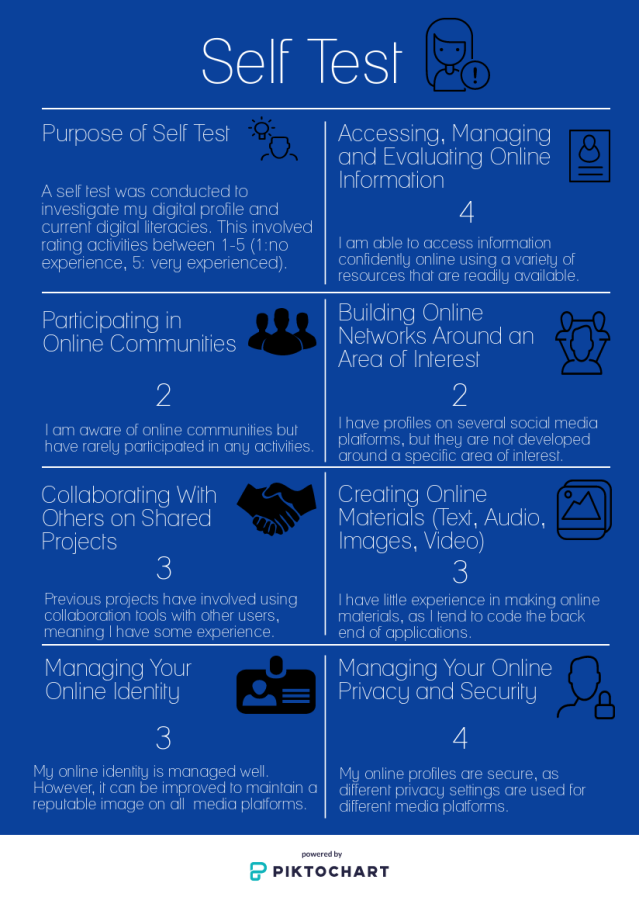
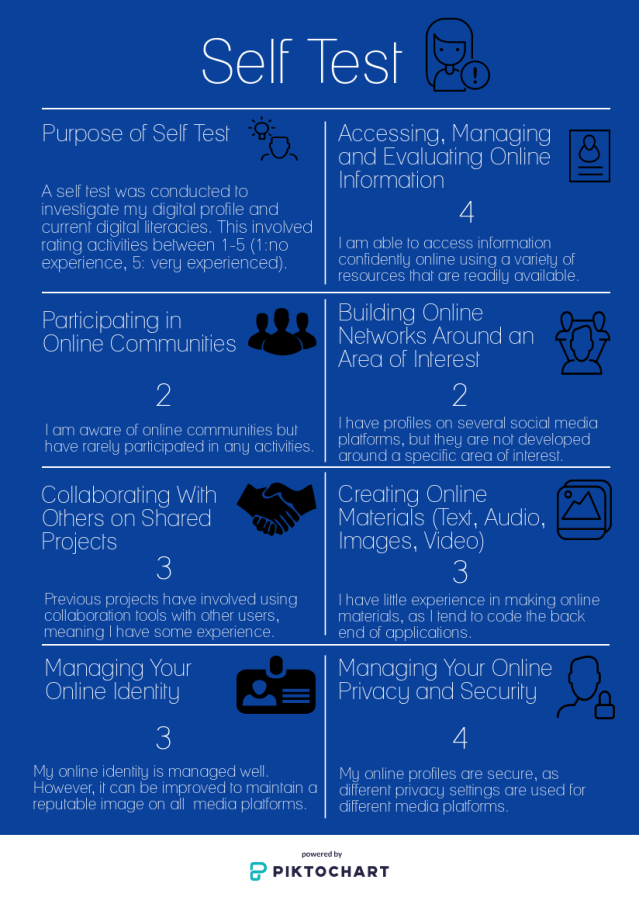
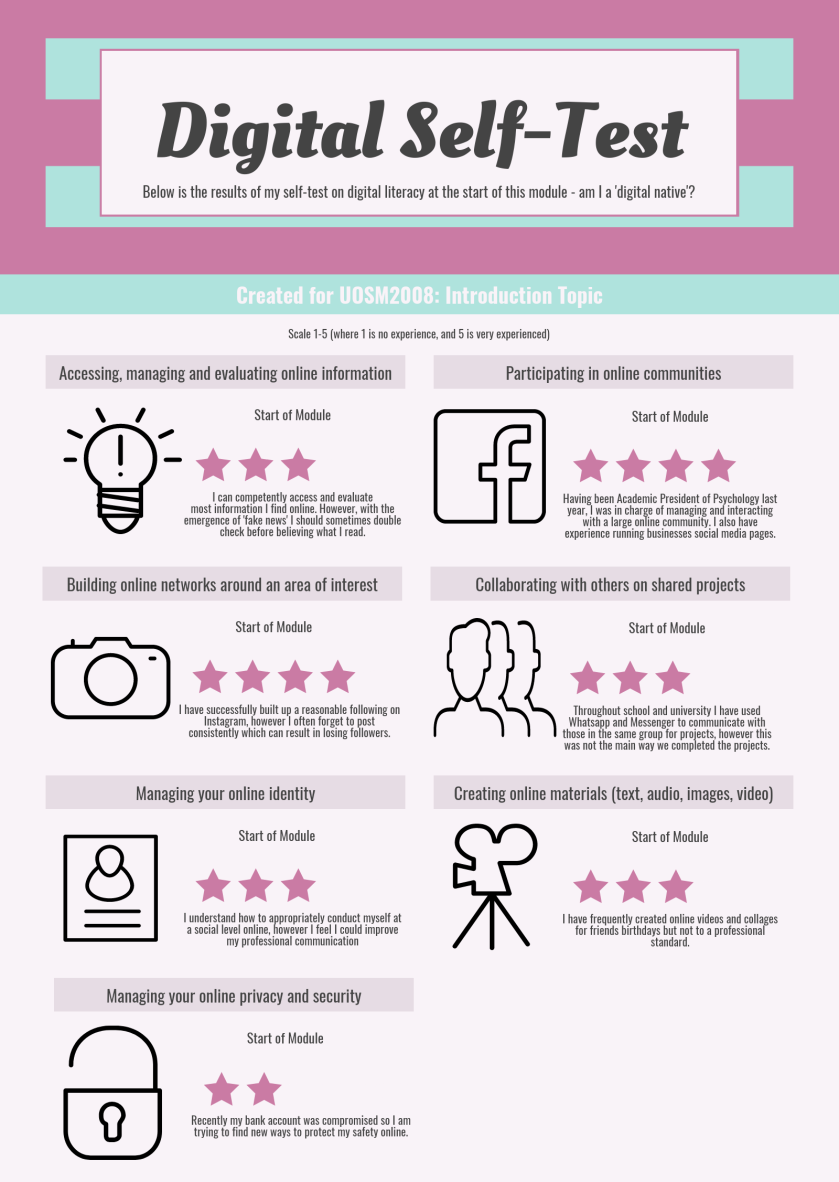
The concept of Digital Visitors and Residents: The concept of Digital Visitors and Residents enable us to map individual’s engagement with the web today (White and Cornu, 2011).  Click the link below to find out more about Digital Residents and Visitors. Digital residents and visitors (created using biteable.com) When reflecting on my digital literacies and online behaviours, I referred to my self-test and my mapping of my digital engagement. Continue reading →

Digital residents and visitors

The concept of Digital visitors and residents: The concept of Digital Visitors and Residents enable us to map individual’s engagement with the web today (White and Cornu, 2011).  Click the link below to find out more about digital residents and visitors. Digital residents and visitors (created using biteable.com) When reflecting on my digital literacies and online behaviours, I referred to my self-test and my mapping of my digital engagement. Continue reading →

UOSM2008 Introductory Post

Digital Natives and Immigrants Prensky (2001) identified the term ‘digital natives’, describing users who are very experienced with the Web. This looks at the younger generation (‘millenials’) in particular, who are highly skilled (Howe and Strauss, 2000, 2003). Digital immigrants are users who lack the digital skills, and find the Web a difficult environment to navigate. What defines a native and immigrant can vary per individual. Continue reading →

UOSM2008 Introductory Post

Digital Natives and Immigrants Prensky (2001) identified the term ‘digital natives’, describing users who are very experienced with the Web. This looks at the younger generation (‘millenials’) in particular, who are highly skilled (Howe and Strauss, 2000, 2003). Digital immigrants are users who lack the digital skills, and find the Web a difficult environment to navigate. What defines a native and immigrant can vary per individual. Continue reading →