Currently browsing

Page 22

FAKE NEWS – Topic 2

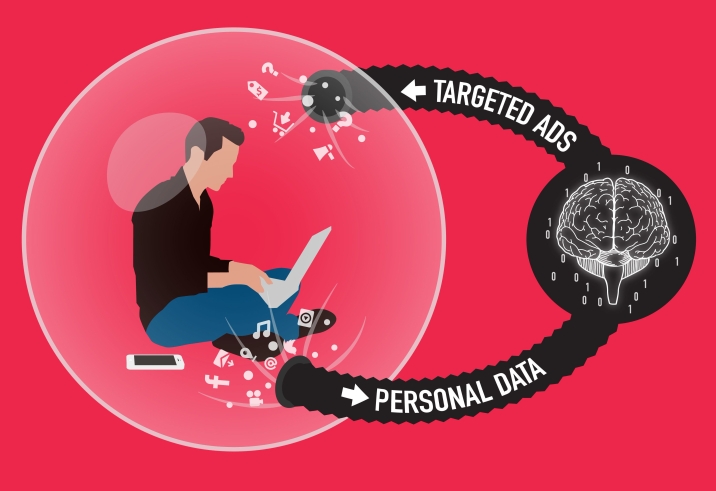
Last week I created my PLN (Personal Learning Network) By studying the FutureLearn MOOC I looked at how to grow this network. To do this I need to be more aware of the authenticity of online media I interact with. Eli Pariser coined the term ‘Filter Bubble’ in his Ted talk. The term is used to refer to the specific tailoring of online services (Google, Facebook, YouTube) to only show content based on what an algorithm thinks you want to see. Continue reading →

FAKE NEWS – Topic 2

Last week I created my PLN (Personal Learning Network), by studying the FutureLearn MOOC I looked at how to grow this network. To do this I need to be more aware of the authenticity of online media I interact with. Eli Pariser coined the term ‘Filter Bubble’ in his Ted talk. The term is used to refer to the specific tailoring of online services (Google, Facebook, YouTube) to only show content based on what an algorithm thinks you want to see. Continue reading →

Who do I trust?

Regarding last week’s topic on Digital Differences, it can be argued that the ability to identify reliable, and trustworthy information online is important. The Cambridge Dictionary, defines fake news as: Figure 1. Fake News definition (Cambridge Dictionary, 2018) Adding to this, due to its rise, Corner points out that it should be distinguished from the ‘post-truth’ era we’re living in as a result. Continue reading →

Digital Natives or Digital Naivety? Evaluating how to assess the reliability and authenticity of online news

Alongside being a much-loved term of Donald Trump, ‘fake news’ sparked a lot of debates recently (Allcott and Gentzkow, 2017). Background Watch my video to find out what fake news is: Created by Filipek (2018) on Powtoon As noted in my first blog post, Prensky (2001) categorized young people as digital natives. Continue reading →

Brave New World – Developing the skills for evaluating “Fake News”

False information published online can be designed to further a political agenda, or simply to generate revenue through misleading titles, article descriptions and media in the form of “clickbait”. “Information gap theory” offers some insight into why clickbait is successful, when a reader sees a snippet of a fake news article they will draw upon their background knowledge of that subject (Golman and Loewenstein 2015). Continue reading →

Brave New World – Developing the skills for evaluating “Fake News”

False information published online can be designed to further a political agenda, or simply to generate revenue through misleading titles, article descriptions and media in the form of “clickbait”. “Information gap theory” offers some insight into why clickbait is successfully, when a reader sees a snippet of a fake news article they will draw upon their background knowledge of that subject (Golman and Loewenstein 2015). Continue reading →

Filter Bubble: Can we pop it?! – Topic 2

“Filter Bubble” was first coined by Eli Pariser (2011), who described it as a personalised search where algorithms guess what content myself would be interested in using data provided by yourself outlined in the video below: Figure 1 – Filter Bubble on Biteable created by Will Jones: Sources: (El-Bermawy, 2016)   Evidence of Filter Bubbles The effect of filter bubbles had a big effect on the recent US election. Continue reading →

Filter Bubble: Can we pop it?! – Topic 2

“Filter Bubble” was first coined by Eli Pariser (2011), who described it as a personalised search where algorithms guess what content myself would be interested in using data provided by yourself outlined in the video below: Figure 1 – Filter Bubble on Biteable created by Will Jones: Sources: (El-Bermawy, 2016)   Evidence of Filter Bubbles The effect of filter bubbles had a big effect on the recent US election. Continue reading →

Filter Bubble: Can we pop it?! – Topic 2

“Filter Bubble” was first coined by Eli Pariser (2011), who described it as a personalised search where algorithms guess what content myself would be interested in using data provided by yourself outlined in the video below: Figure 1 – Filter Bubble on Biteable created by Will Jones: Sources: (El-Bermawy, 2016)   Evidence of Filter Bubbles The effect of filter bubbles had a big effect on the recent US election. Continue reading →

Filter Bubble: Can we pop it?! – Topic 2

“Filter Bubble” was first coined by Eli Pariser (2011), who described it as a personalised search where algorithms guess what content myself would be interested in using data provided by yourself outlined in the video below: Figure 1 – Filter Bubble on Biteable created by Will Jones: Sources: (El-Bermawy, 2016)   Evidence of Filter Bubbles The effect of filter bubbles had a big effect on the recent US election. Continue reading →