Currently browsing

Page 41

Digital visitor vs Digital resident

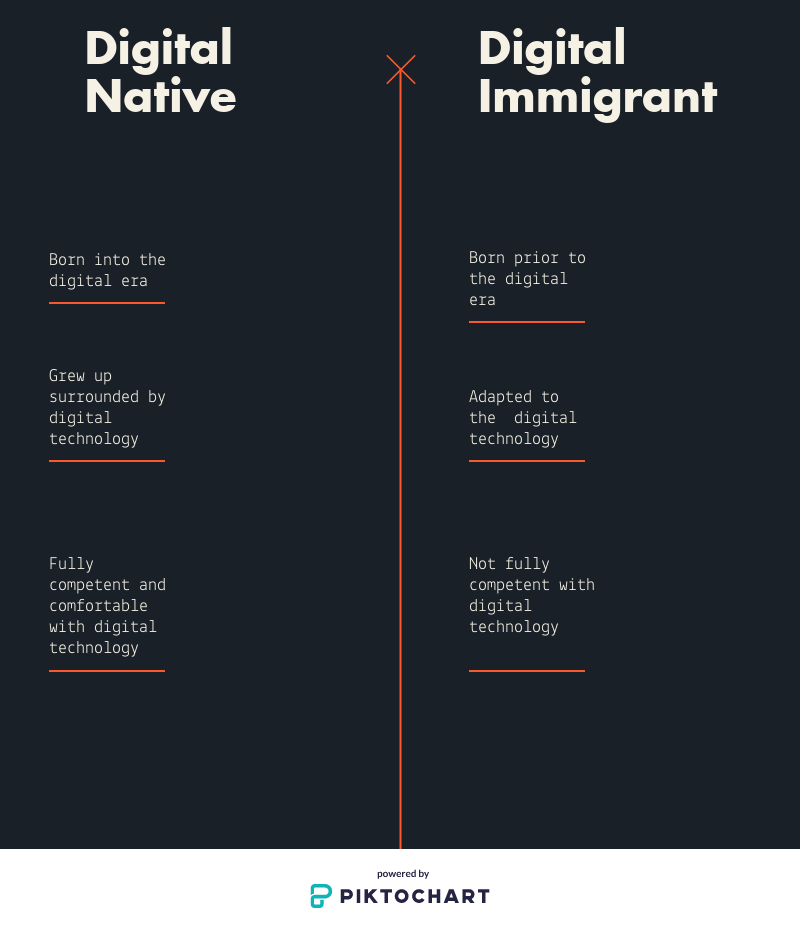
Digital natives vs Digital immigrants The terms Digital Natives and Digital Immigrants were coined by marc prensky in 2001. Digital natives are competent users of the digital language who have been born into a world of computer and internet usage. This refers to the fact they have been immersed into a world with digital technology from a very young age (Prensky, 2001). This is in contrast to Digital immigrants who tend to adopt technological advancements many years’ after it’s onset. Continue reading →

Introductory Topic

[UPDATE] The reflection post on this topic can be found here. As times progress, the terminologies in internet-related studies change. We started the 21st century with a different outlook on defining the different generations of people in the modern digital age, with Mark Prensky’s 2001 article, Digital Natives, Digital Immigrants. Continue reading →

Introductory Topic

[UPDATE] The reflection post on this topic can be found here. As times progress, the terminologies in internet-related studies change. We started the 21st century with a different outlook on defining the different generations of people in the modern digital age, with Mark Prensky’s 2001 article, Digital Natives, Digital Immigrants. Continue reading →

Introductory Topic

[UPDATE] The reflection post on this topic can be found here. As times progress, the terminologies in internet-related studies change. We started the 21st century with a different outlook on defining the different generations of people in the modern digital age, with Mark Prensky’s 2001 article, Digital Natives, Digital Immigrants. Continue reading →

Introductory Topic

[UPDATE] The reflection post on this topic can be found here. As times progress, the terminologies in internet-related studies change. We started the 21st century with a different outlook on defining the different generations of people in the modern digital age, with Mark Prensky’s 2001 article, Digital Natives, Digital Immigrants. Continue reading →

UOSM2008: Digital literacy and self-evaluation

This is the first in a series of posts to be published over the coming months as part of the University of Southampton’s Living and Working on the Web module. To find out more, including links to all of this year’s student blogs, check out the UOSM2008 website. I have long regarded my digital literacy as strong, having used computers regularly from a young age and gone on to study for a Web Science degree. Continue reading →

Digital ‘Visitors and Residents’: Moving In

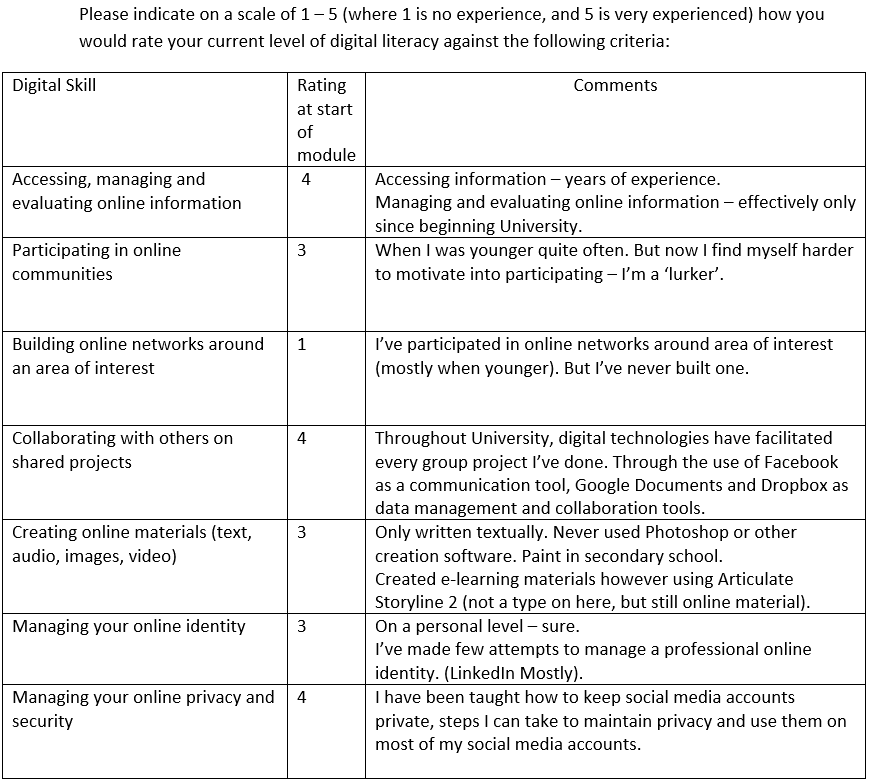
Prensky (2001) assumes someone of my generation must be a ‘digital native’ having grown up and gained a fluency in languages of computing and Web services to live, learn and work with. Whereas older generations are natural ‘digital immigrants’ with little experience of digital technology and require more education to become equally as competent. After filling out the digital literacy self-test sheet (shown below) I am definitely not a ‘digital native’. Continue reading →

Digital ‘Visitors and Residents’: Moving In

Prensky (2001) assumes someone of my generation must be a ‘digital native’ having grown up and gained a fluency in languages of computing and Web services to live, learn and work with. Whereas older generations are natural ‘digital immigrants’ with little experience of digital technology and require more education to become equally as competent. After filling out the digital literacy self-test sheet (shown below) I am definitely not a ‘digital native’. Continue reading →

Digital ‘Visitors and Residents’: Moving In

Prensky (2001) assumes someone of my generation must be a ‘digital native’ having grown up and gained a fluency in languages of computing and Web services to live, learn and work with. Whereas older generations are natural ‘digital immigrants’ with little experience of digital technology and require more education to become equally as competent. After filling out the digital literacy self-test sheet (shown below) I am definitely not a ‘digital native’. Continue reading →

Digital ‘Visitors and Residents’: Moving In

Prensky (2001) assumes someone of my generation must be a ‘digital native’ having grown up and gained a fluency in languages of computing and Web services to live, learn and work with. Whereas older generations are natural ‘digital immigrants’ with little experience of digital technology and require more education to become equally as competent. After filling out the digital literacy self-test sheet (shown below) I am definitely not a ‘digital native’. Continue reading →

The digital spectrum: where do I fit in?

Prensky (2001)‘s infamous categorization of ‘digital natives’ (those who are native speakers of the digital language) and ‘digital immigrants’ (those who supposedly can never become native due to their ‘accent’- their foot in the past) encompasses problematic assumptions about generational differences. “Today’s students think and process information fundamentally differently from their predecessors” (Prensky, 2001, p. Continue reading →

The digital spectrum: where do I fit in?

Prensky (2001)‘s infamous categorization of ‘digital natives’ (those who are native speakers of the digital language) and ‘digital immigrants’ (those who supposedly can never become native due to their ‘accent’- their foot in the past) encompasses problematic assumptions about generational differences. “Today’s students think and process information fundamentally differently from their predecessors” (Prensky, 2001, p. Continue reading →

The digital spectrum: where do I fit in?

Prensky (2001)‘s infamous categorization of ‘digital natives’ (those who are native speakers of the digital language) and ‘digital immigrants’ (those who supposedly can never become native due to their ‘accent’- their foot in the past) encompasses problematic assumptions about generational differences. “Today’s students think and process information fundamentally differently from their predecessors” (Prensky, 2001, p. Continue reading →

The digital spectrum: where do I fit in?

Prensky (2001)‘s infamous categorization of ‘digital natives’ (those who are native speakers of the digital language) and ‘digital immigrants’ (those who supposedly can never become native due to their ‘accent’- their foot in the past) encompasses problematic assumptions about generational differences. “Today’s students think and process information fundamentally differently from their predecessors” (Prensky, 2001, p. Continue reading →

The digital spectrum: where do I fit in?

Prensky (2001)‘s infamous categorization of ‘digital natives’ (those who are native speakers of the digital language) and ‘digital immigrants’ (those who supposedly can never become native due to their ‘accent’- their foot in the past) encompasses problematic assumptions about generational differences. “Today’s students think and process information fundamentally differently from their predecessors” (Prensky, 2001, p. Continue reading →