Currently browsing

Page 43

Introductory blog

Digital Natives and Digital Immigrants Prensky’s concept differentiates between those who were born in the digital world and speak the digital language (Natives) and those who have adjusted to the new technology at a later part of their life but will always have an “accent” (Immigrants) (Prensky, 2001). He also implied that ‘Immigrant educators’ would need to reform their methods of teaching to accommodate the Digital Natives (White & Cornu, 2011). Continue reading →

Digital Proficiency – Examining Residents and Visitors

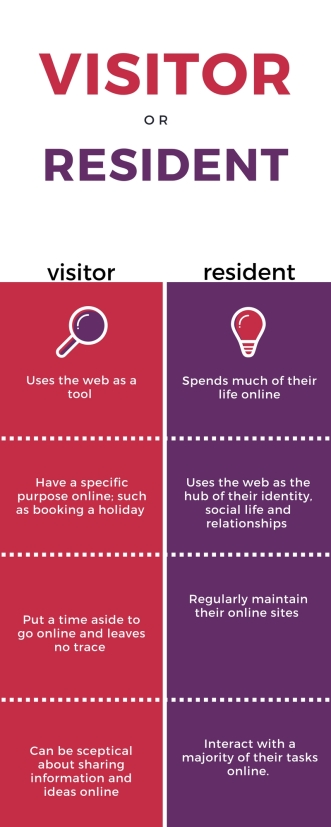
Understanding digital literacy is an increasingly important skill as we are more and more dependant upon utilising the internet for professional and social reasons. Through a high level of Digital Literacy – synonymous with being a ‘Digital Resident’, we are empowered with higher social presence allowing for online activities within communities, or engagement thus facilitating networked learning. Continue reading →

Digital Visitors and Digital Residents.

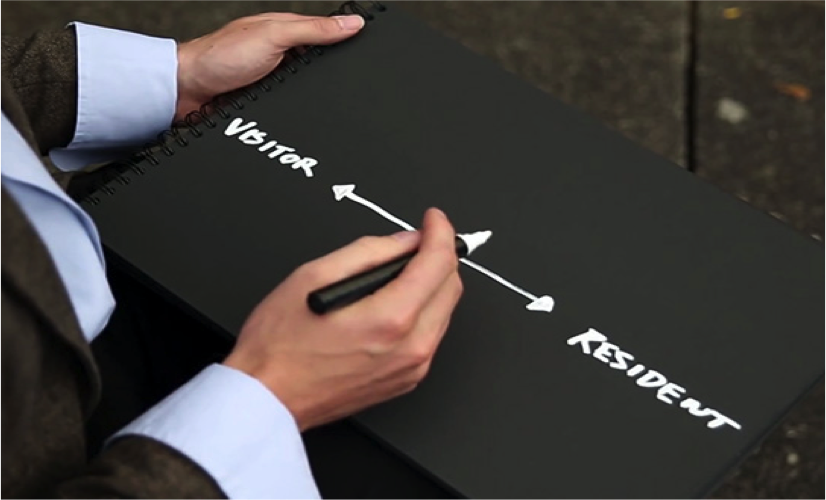
Dan White describes that Digital Visitors and Residents “are a way of describing the range of ways individuals can engage with the web”. Visitors and Residents are at opposite ends of the spectrum. https://youtu.be/sPOG3iThmRI Prensky also defined that there is a major distinction between them. Those who are considered a ‘Visitor’ are not “fully competent” with the digital environment. They go online for a reason and after leave onto something else. Continue reading →

Digital Residents and Visitors

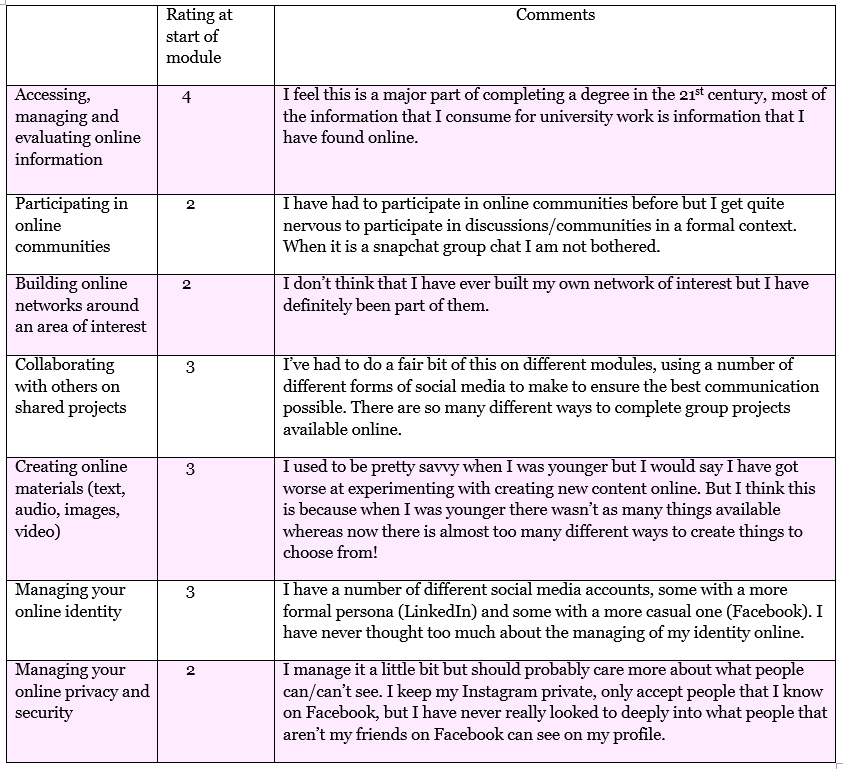
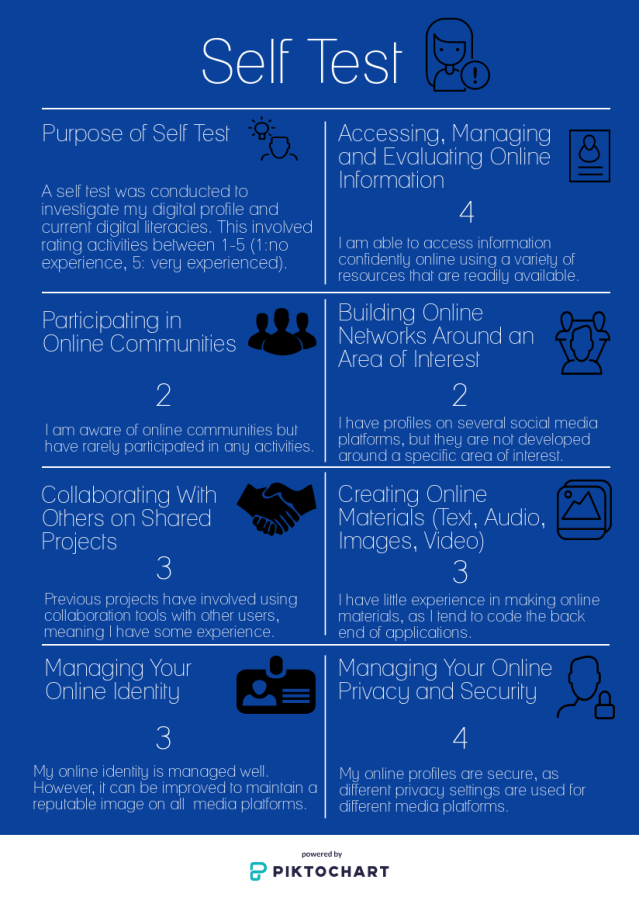
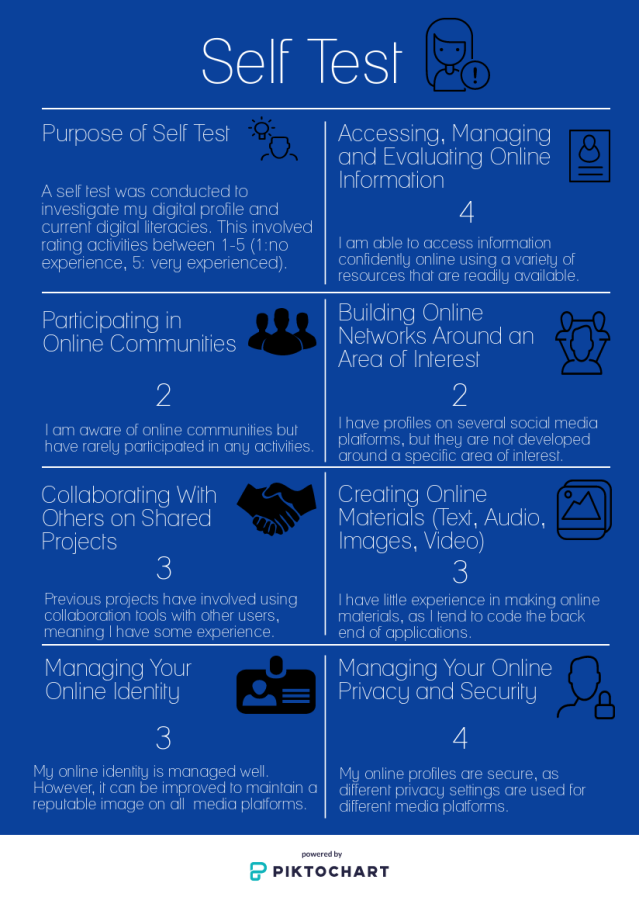
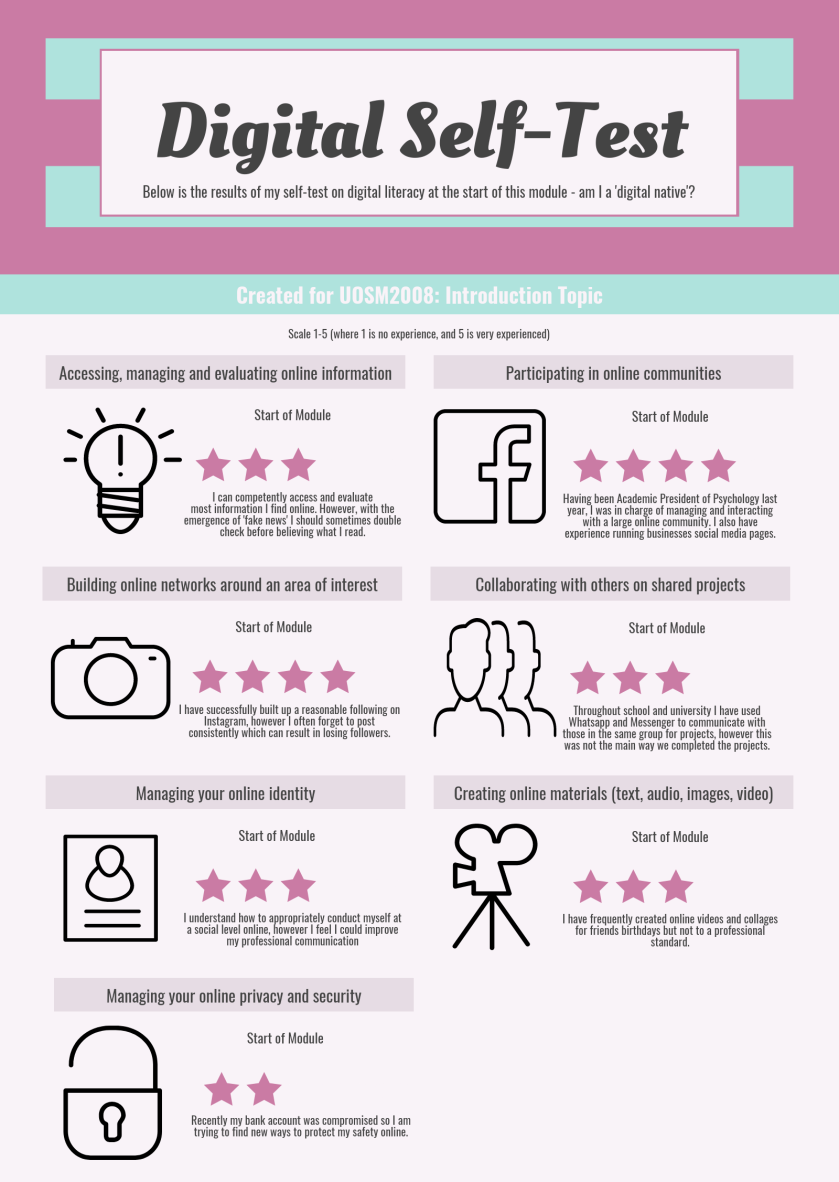
The concept of Digital Visitors and Residents: The concept of Digital Visitors and Residents enable us to map individual’s engagement with the web today (White and Cornu, 2011).  Click the link below to find out more about Digital Residents and Visitors. Digital residents and visitors (created using biteable.com) When reflecting on my digital literacies and online behaviours, I referred to my self-test and my mapping of my digital engagement. Continue reading →

Digital residents and visitors

The concept of Digital visitors and residents: The concept of Digital Visitors and Residents enable us to map individual’s engagement with the web today (White and Cornu, 2011).  Click the link below to find out more about digital residents and visitors. Digital residents and visitors (created using biteable.com) When reflecting on my digital literacies and online behaviours, I referred to my self-test and my mapping of my digital engagement. Continue reading →

Digital Residents and Visitors

The concept of Digital Visitors and Residents: The concept of Digital Visitors and Residents enable us to map individual’s engagement with the web today (White and Cornu, 2011).  Click the link below to find out more about Digital Residents and Visitors. Digital residents and visitors (created using biteable.com) When reflecting on my digital literacies and online behaviours, I referred to my self-test and my mapping of my digital engagement. Continue reading →

UOSM2008 Introductory Post

Digital Natives and Immigrants Prensky (2001) identified the term ‘digital natives’, describing users who are very experienced with the Web. This looks at the younger generation (‘millenials’) in particular, who are highly skilled (Howe and Strauss, 2000, 2003). Digital immigrants are users who lack the digital skills, and find the Web a difficult environment to navigate. What defines a native and immigrant can vary per individual. Continue reading →

UOSM2008 Introductory Post

Digital Natives and Immigrants Prensky (2001) identified the term ‘digital natives’, describing users who are very experienced with the Web. This looks at the younger generation (‘millenials’) in particular, who are highly skilled (Howe and Strauss, 2000, 2003). Digital immigrants are users who lack the digital skills, and find the Web a difficult environment to navigate. What defines a native and immigrant can vary per individual. Continue reading →

Digital Visitors and Residents

In this fast-moving world of technology, it sure is difficult to keep up with new innovations. Marc Prensky initially introduced the idea of Digital Natives and Immigrants in 2001 to distinguish between people based on their knowledge of the technology. ‘Natives’ being the people with a good understanding of the digital world that is the young generation and ‘Immigrants’ being the people struggling to establish a foundation within the digital world that is the older generation. Continue reading →