Currently browsing

Page 43

Intro Topic: Digital Visitors and Digital Residents

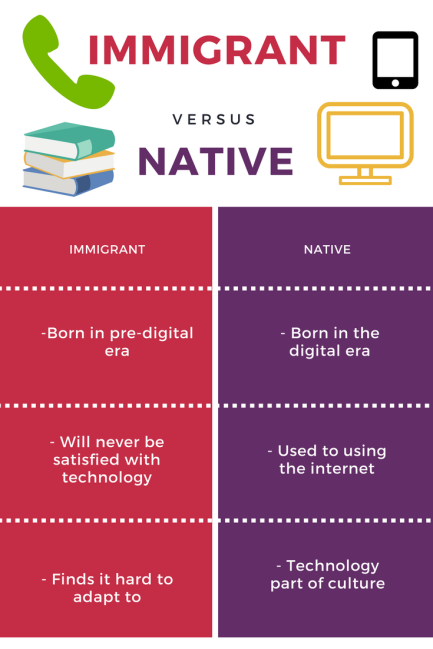
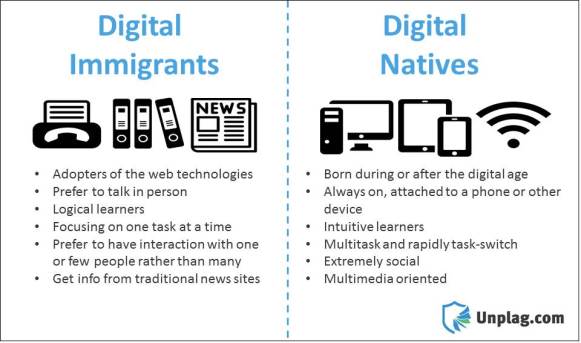
Digital visitors and Digital residents is a further development of Prenksy’s original theory of digital natives and digital immigrants. Prensky set to make a distinction between people who are completely at ease with technology and the digital world and those who actively work and know how to use the internet but will never be fully competent. This became an extremely influential theory, which until recently gained widespread acceptance. Continue reading →

Am I a digital visitor or a digital resident?

The terminology “digital native” and “digital immigrants” were creations of Prensky in 2001, who supposed that people born into the “digital era” would be digital natives, whilst those born after were immigrants who were likely to ‘manage to learn to exist but will never be fully competent'(Prensky 2001). Despite initial credence, Prensky’s theory came under strain from critics. Continue reading →

Introductory Topic

Digital natives areĀ the generation of people born during or after the rise of digital technologies whilstĀ digital immigrants are those born before the advent of digital technology (HuffPost, 2018). There are stark differences between digital visitors and residents. Visitors tend to only use platforms if they see it to be beneficial. Whilst remaining anonymous, they are unlikely to have any form of persistent profile online which shows who they are digitally. Continue reading →

Categorising Blog Posts

Once you’ve written your post, you will need to assign a CATEGORY to it. If you do not, it will not appear on the module blog and no-one will be able to read it...! BEFORE hitting the 'publish' button... FIRST: Create and assign the relevant category: Click on ā€˜+add new category’ Type the appropriate name (e.g. Intro Topic, Topic 1, Topic 2 etc. Continue reading →

A Reflection on Topic 4

Created using Canva With theĀ number ofĀ internet users continuing to grow, considering thatĀ just over 3.5 billions people areĀ able to access the internet (internetlivestats.com), there is an increasing pressure to ensure people use the internet ethically. Within Phil’s blog he focusedĀ on how social media generates a ‘lynch mob’ mentality in cases much like Justine Sacco, which we have explored previously. Continue reading →