Currently browsing

Page 35

The Digital Divide

Digital Differences and Others Use of and interaction on the web has become a part of every-day life, therefore to many, to not utilise it, naively, seems inexplicable. Yet 10% of the UK remain non-users, reflecting persistent wider social and structural inequality (Office For National Statistics, 2016). Not all access is identical, with variations being indicative of digital differences. Continue reading →

Digital Differences. Stone Age to the Digital Age.

Source: https://lockhl2049.wordpress.com/2017/11/14/reflection-for-digital-differences/ Digital differences is how everyone in the world has different experiences with the Internet either being old, young or a disability, they all use it in some form. For example having the latest mobile phones are more common with the young generations where as our grandparents would not mind as much about what brand of mobile they have. Continue reading →

Digital Differences. Stone Age to the Digital Age.

Source: https://lockhl2049.wordpress.com/2017/11/14/reflection-for-digital-differences/ Digital differences is how everyone in the world has different experiences with the Internet either being old, young or a disability, they all use it in some form. For example having the latest mobile phones are more common with the young generations where as our grandparents would not mind as much about what brand of mobile they have. Continue reading →

Digital Differences – We’re not all the same

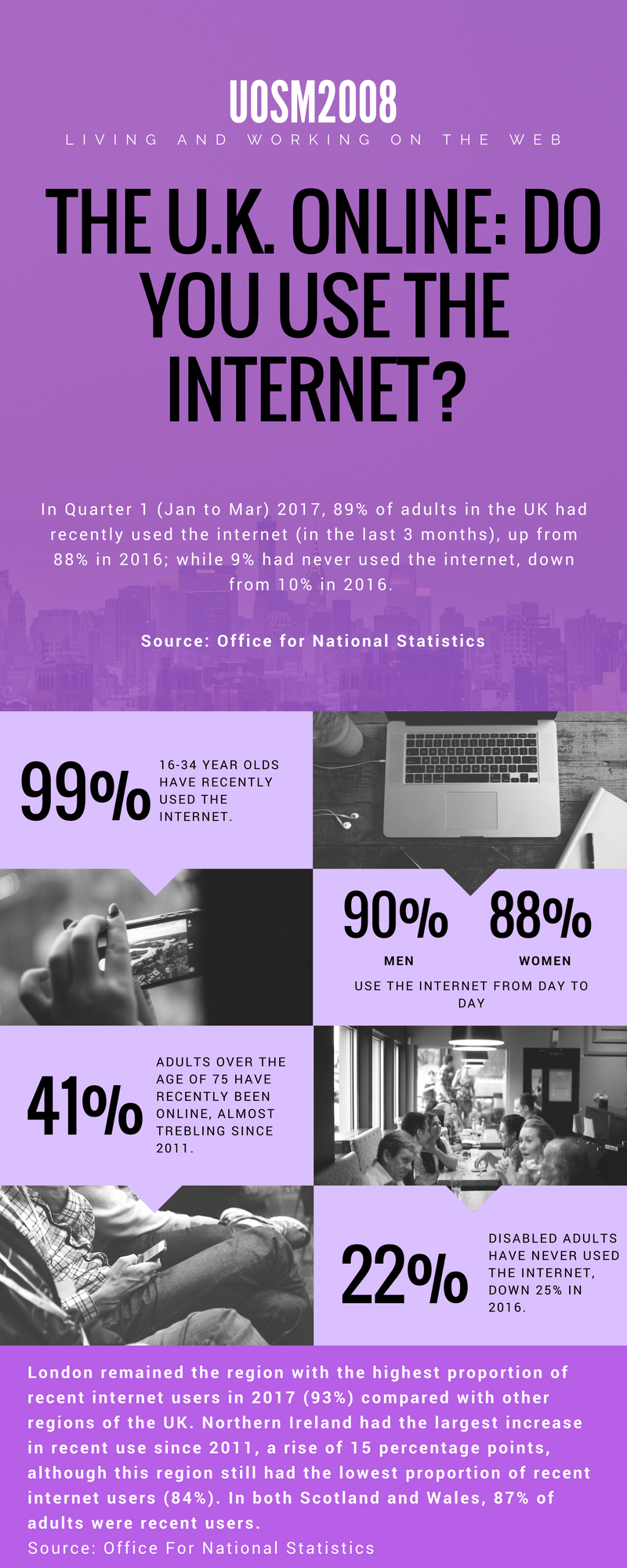
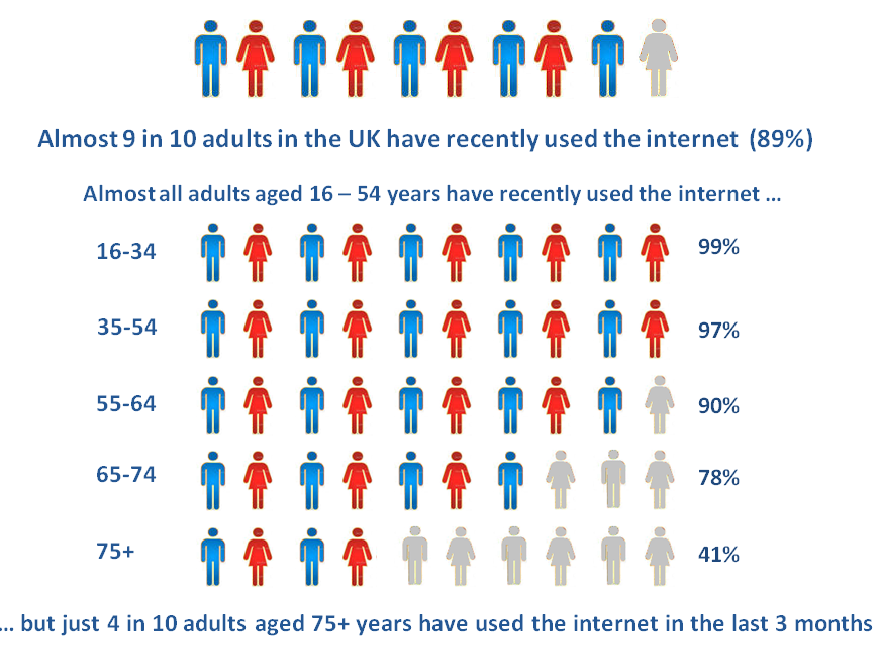
When we’re surrounded by so much technology and have such easy access to information , it’s easy to forget that not everyone does, or even can, use the Internet in the same way. In 2017, almost all of those aged 16-24 and 24-34 in the UK were recent Internet users at 99%, yet there were still 9% of users who had never used the Internet from January till March (Ons.gov.uk, 2018). Continue reading →

Digital Differences – We’re not all the same

When we’re surrounded by so much technology and have such easy access to information , it’s easy to forget that not everyone does, or even can, use the Internet in the same way. In 2017, almost all of those aged 16-24 and 24-34 in the UK were recent Internet users at 99%, yet there were still 9% of users who had never used the Internet from January till March (Ons.gov.uk, 2018). Continue reading →

Digital Differences – We’re not all the same

When we’re surrounded by so much technology and have such easy access to information , it’s easy to forget that not everyone does, or even can, use the Internet in the same way. In 2017, almost all of those aged 16-24 and 24-34 in the UK were recent Internet users at 99%, yet there were still 9% of users who had never used the Internet from January till March (Ons.gov.uk, 2018). Continue reading →

Digital Differences – We’re not all the same

When we’re surrounded by so much technology and have such easy access to information , it’s easy to forget that not everyone does, or even can, use the Internet in the same way. In 2017, almost all of those aged 16-24 and 24-34 in the UK were recent Internet users at 99%, yet there were still 9% of users who had never used the Internet from January till March (Ons.gov.uk, 2018). Continue reading →

Mind the (digital) gap.

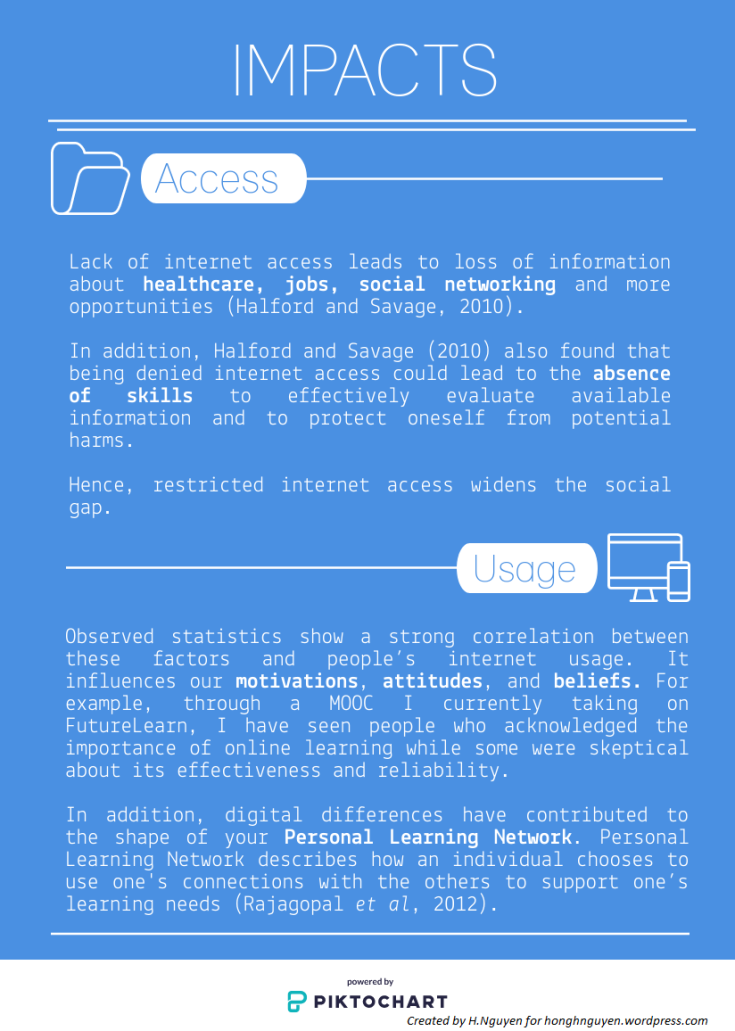
Having looked at digital users, it’s now time to understand the digital “gap”. Gap, what gap? That is the gap in Internet access and engagements between individuals (also known as “Digital Differences”) (Halford and Savage, 2010). van Dijk (2013) identified 5 types of inequality: Technological, Material, Immaterial, Social and Educational. The detailed properties are elaborated in the following video:   Mind the gap. Continue reading →

Mind the (digital) gap.

Having looked at digital users, it’s now time to understand the digital “gap”. Gap, what gap? That is the gap in Internet access and engagements between individuals (also known as “Digital Differences”) (Halford and Savage, 2010). van Dijk (2013) identified 5 types of inequality: Technological, Material, Immaterial, Social and Educational. The detailed properties are elaborated in the following video:   Mind the gap. Continue reading →

Mind the (digital) gap.

Having looked at digital users, it’s now time to understand the digital “gap”. Gap, what gap? That is the gap in Internet access and engagements between individuals (also known as “Digital Differences”) (Halford and Savage, 2010). van Dijk (2013) identified 5 types of inequality: Technological, Material, Immaterial, Social and Educational. The detailed properties are elaborated in the following video:   Mind the gap. Continue reading →

Mind the (digital) gap.

Having looked at digital users, it’s now time to understand the digital “gap”. Gap, what gap? That is the gap in Internet access and engagements between individuals (also known as “Digital Differences”) (Halford and Savage, 2010). van Dijk (2013) identified 5 types of inequality: Technological, Material, Immaterial, Social and Educational. The detailed properties are elaborated in the following video:   Mind the gap. Continue reading →

A New Human Right For The Digital Age – Topic 1

Whilst taking part in the ‘Learning in the Network Age’ MOOC as part of the UOSM2008 module, I discovered the concept of ‘digital differences’. Whilst most may assume that everyone uses the web for similar practices, research into this has revealed instead that factors such as age, gender, ethnicity, disability and class all impact if and how people use the internet (Zickuhr and Smith, 2012). Continue reading →

A New Human Right For The Digital Age – Topic 1

Whilst taking part in the ‘Learning in the Network Age’ MOOC as part of the UOSM2008 module, I discovered the concept of ‘digital differences’. Whilst most may assume that everyone uses the web for similar practices, research into this has revealed instead that factors such as age, gender, ethnicity, disability and class all impact if and how people use the internet (Zickuhr and Smith, 2012). Continue reading →