Currently browsing

Page 18

Don’t just read this headline!

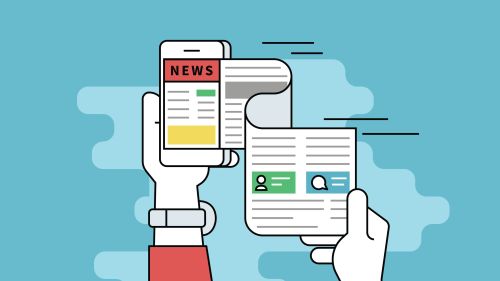
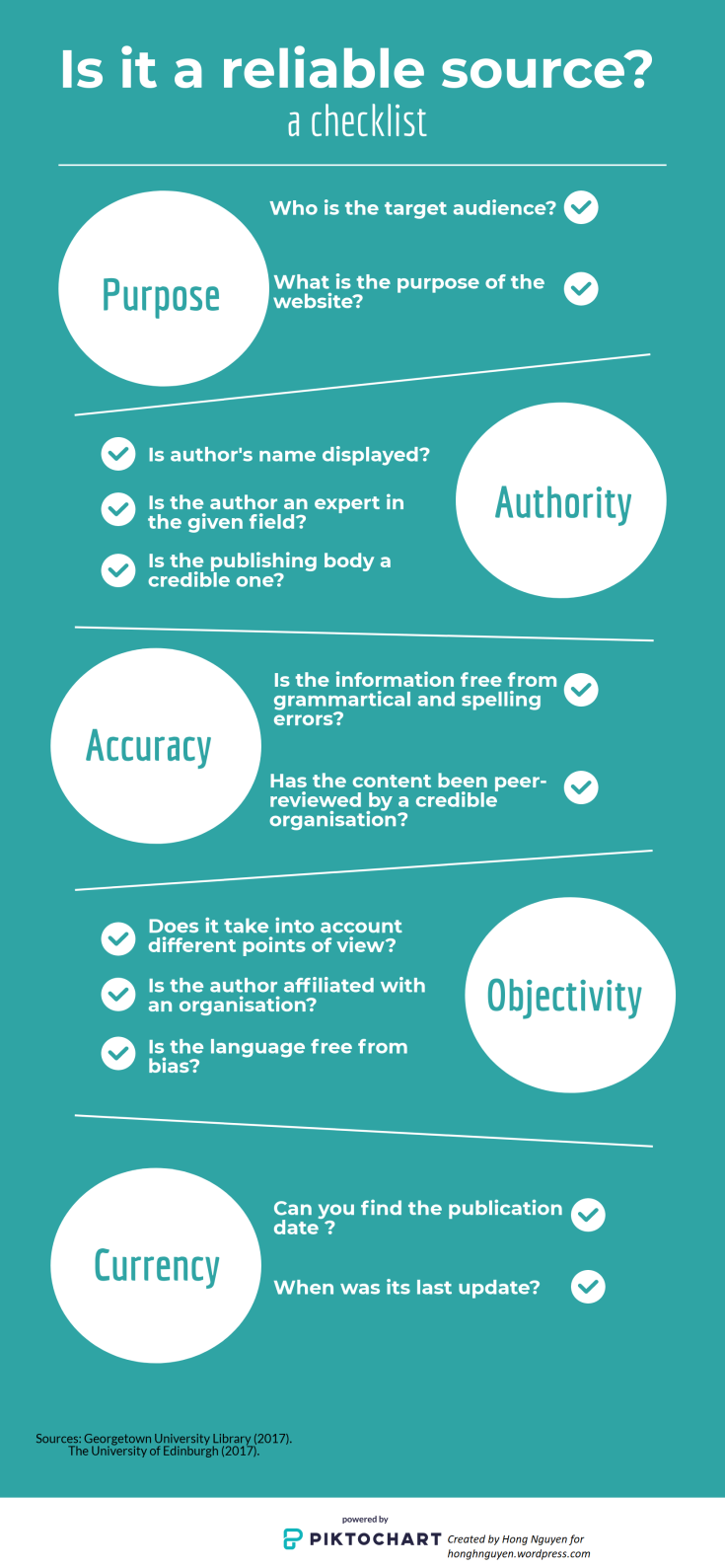
From the previous post on Digital Differences, we have seen how internet access could help narrow the social gap by increasing people’s access to information. At the same time, the adaptation of Internet and the growth of social media see an alarming spread of false or misled information. Hence, it is important to obtain the skill to identify reliable sources of information. Think twice Whenever you come across an article, think of this checklist. Continue reading →

Don’t just read this headline!

From the previous post on Digital Differences, we have seen how internet access could help narrow the social gap by increasing people’s access to information. At the same time, the adaptation of Internet and the growth of social media see an alarming spread of false or misled information. Hence, it is important to obtain the skill to identify reliable sources of information. Think twice Whenever you come across an article, think of this checklist. Continue reading →

Don’t just read this headline!

From the previous post on Digital Differences, we have seen how internet access could help narrow the social gap by increasing people’s access to information. At the same time, the adaptation of Internet and the growth of social media see an alarming spread of false or misled information. Hence, it is important to obtain the skill to identify reliable sources of information. Think twice Whenever you come across an article, think of this checklist. Continue reading →

Don’t just read this headline!

From the previous post on Digital Differences, we have seen how internet access could help narrow the social gap by increasing people’s access to information. At the same time, the adaptation of Internet and the growth of social media see an alarming spread of false or misled information. Hence, it is important to obtain the skill to identify reliable sources of information. Think twice Whenever you come across an article, think of this checklist. Continue reading →

Don’t just read this headline!

From the previous post on Digital Differences, we have seen how internet access could help narrow the social gap by increasing people’s access to information. At the same time, the adaptation of Internet and the growth of social media see an alarming spread of false or misled information. Hence, it is important to obtain the skill to identify reliable sources of information. Think twice Whenever you come across an article, think of this checklist. Continue reading →

HALF TRUTHS, WHOLE LIES?

Something seems odd. It feels disparate. Let me walk you through it. My Observation and Evaluation I analysed these numbers and wondered how there is a significant 8% rise over just a year as compared to 3% over three years in usage of social media sites as news sources when 88% (64%+24%) of the population feel fake or fabricated news cause confusion. This was perplexing to me. (Shearer, E. and Gottfried, J. (2018). And Barthel, M., Mitchell, A. and Holcomb, J. (2018). Continue reading →

HALF TRUTHS, WHOLE LIES?

Something seems odd. It feels disparate. Let me walk you through it. My Observation and Evaluation I analysed these numbers and wondered how there is a significant 8% rise over just a year as compared to 3% over three years in usage of social media sites as news sources when 88% (64%+24%) of the population feel fake or fabricated news cause confusion. This was perplexing to me. (Shearer, E. and Gottfried, J. (2018). And Barthel, M., Mitchell, A. and Holcomb, J. (2018). Continue reading →

How is your media literacy?

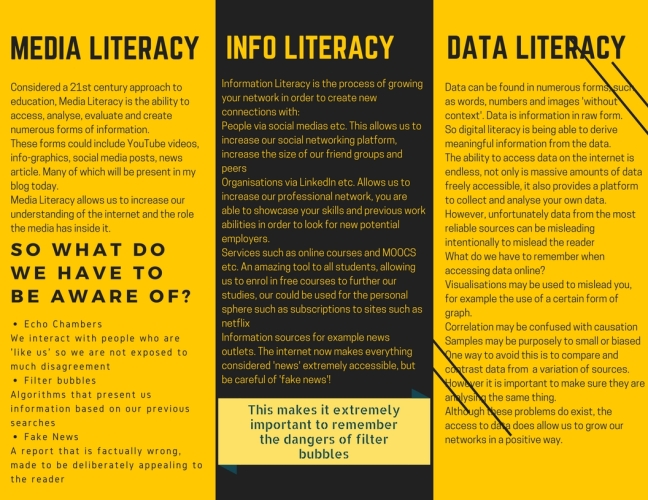
Media Literacy In a world where we are heavily surrounded by digital technologies, it is important to be cautious of online information. As noted in last week’s topic of digital differences, we touched on the notion that our learning and views can be limited if we do not widen our learning network. One way to achieve this is through improving our media literacy. Continue reading →

How is your media literacy?

Media Literacy In a world where we are heavily surrounded by digital technologies, it is important to be cautious of online information. As noted in last week’s topic of digital differences, we touched on the notion that our learning and views can be limited if we do not widen our learning network. One way to achieve this is through improving our media literacy. Continue reading →

How is your media literacy?

Media Literacy In a world where we are heavily surrounded by digital technologies, it is important to be cautious of online information. As noted in last week’s topic of digital differences, we touched on the notion that our learning and views can be limited if we do not widen our learning network. One way to achieve this is through improving our media literacy. Continue reading →

How is your media literacy?

Media Literacy In a world where we are heavily surrounded by digital technologies, it is important to be cautious of online information. As noted in last week’s topic of digital differences, we touched on the notion that our learning and views can be limited if we do not widen our learning network. One way to achieve this is through improving our media literacy. Continue reading →

Are YOU contributing to fake news?

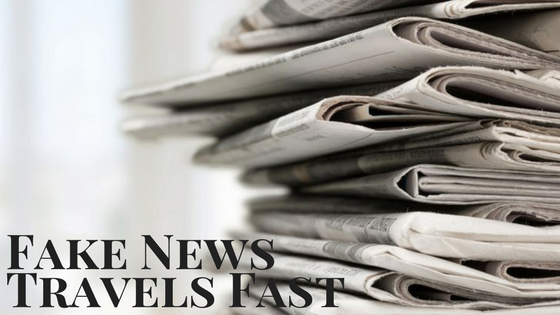
  Bertrand Russell once said “Do not feel absolutely certain of anything.”. However, this is easier said than done. It seems that on a deep psychological level, we are attracted to clickbait and sensationalist headlines, which leaves us vulnerable to believing false information. Especially when we consider that lies travel faster than truth (Vosoughi et al, 2018). Pictured: Fake news travels faster. Continue reading →