Featured

PhD Activities Autumn 2025

We’ll be continuing our regular Winchester School of Art PhD Seminar Series, which will generally run from 2-4pm on Wednesdays, in person (PGR Rooms at WSA) and on MS Teams. The series consists of (guest) speakers, workshops, trainings, and other research- and practice-led events.

In conversation with PhD Representatives, however, the nature of these sessions will be slightly different this term. Namely, we are trying to do fewer ‘big’ events and guest lectures (1 a month), and other events will be tailored to different subsets of our PhD community here at WSA (for instance practice-based PhDs and PhDs at specific stages of their projects).

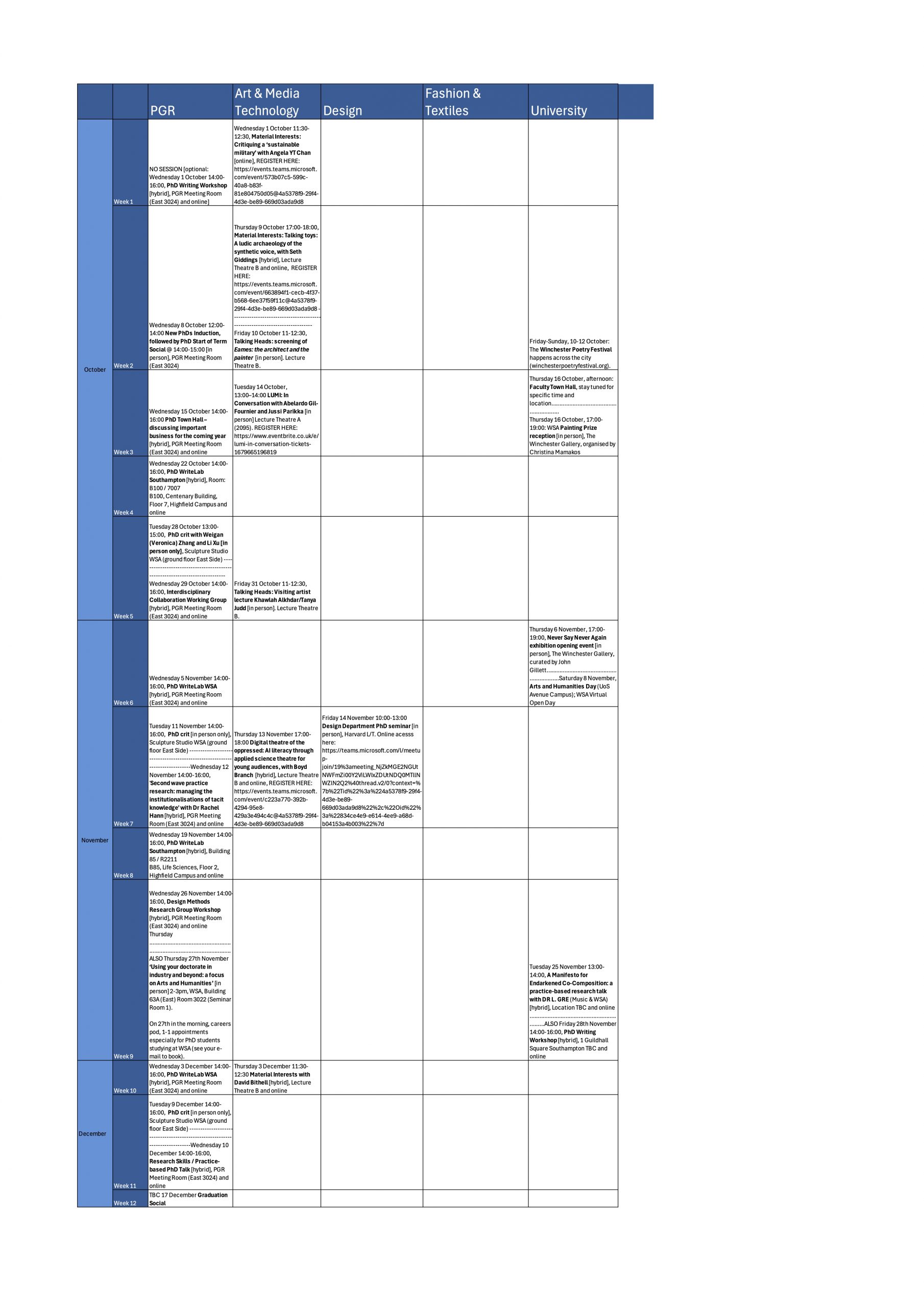
The working schedule for the Spring 2025 term is available below (also HERE as an Excel sheet), and will be updated here with any schedule changes. Details and bios for individual sessions will be linked as they become available.

For other Faculty and University wide events please see the central University events calendar: https://events.soton.ac.uk/ 

click the image below to enlarge

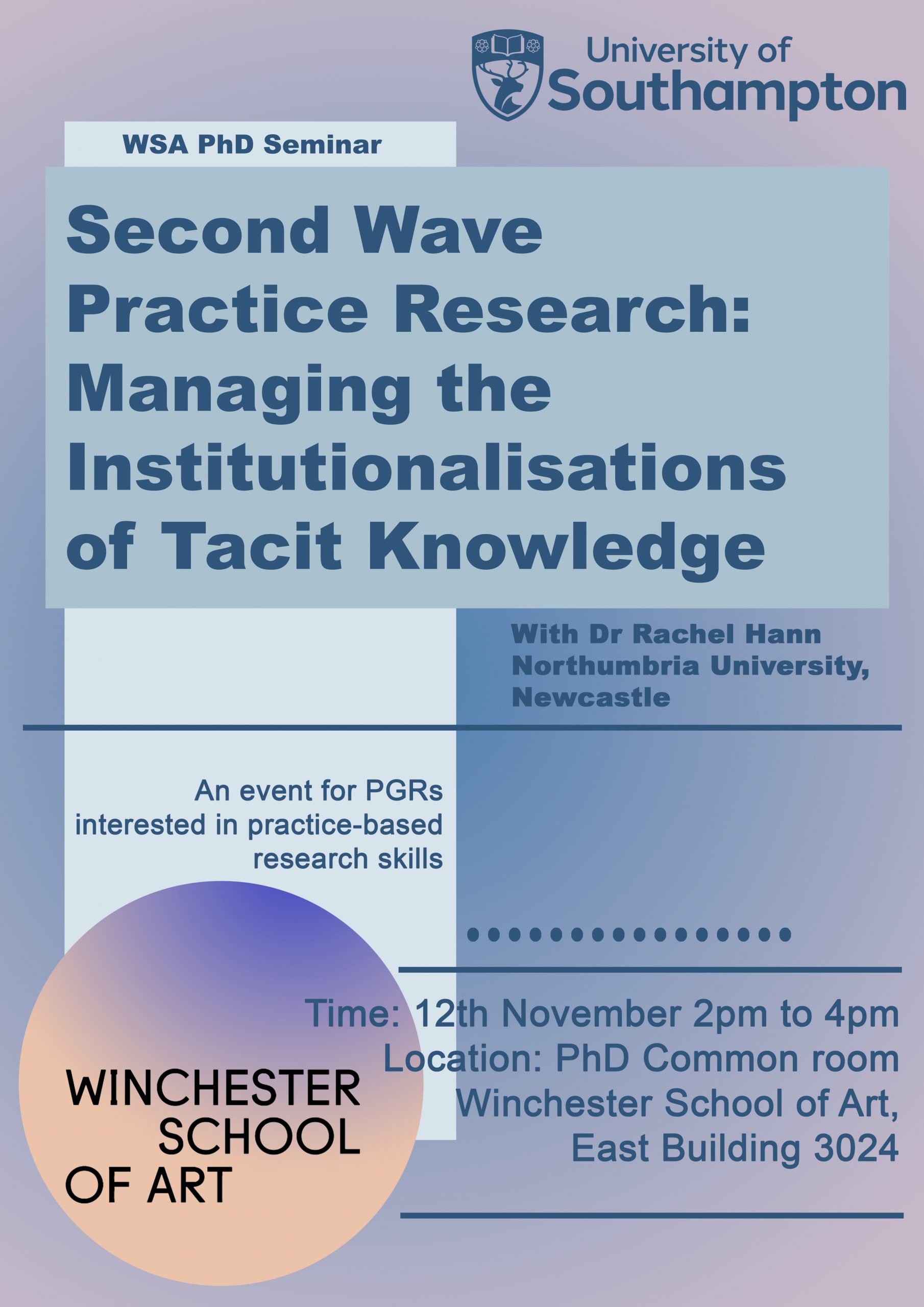
Second wave practice research: managing the institutionalisations of tacit knowledge (12 November 2025)

On 12 November, the WSA PhD Seminar is excited to welcome Dr Rachel Hann (Northumbria University, Newcastle), who has extensive experience with practice-based research across Fine Art, Design, and Fashion/Textiles.

Dr Hann’s talk will be on ‘Second wave practice research: managing the institutionalisations of tacit knowledge’ The main concern of what Dr Hann proposes as the ‘first wave’ of Practice Research was to win the right to conduct research through practice from the administrators (university management, HEFCE). The end game of this perspective was, she argues, that it sustains a culture where Practice Research is conducted for the purpose of administration: for evidencing an individual’s research profile to be assessed holistically, by exercises such as the REF. We now need to move beyond the administrative focus of Practice Research, however. Dr Hann is part of a movement suggesting a ‘second wave’ of arts research practice. This talk and subsequent discussion will lay out some strategies and examples for managing the institutionalisations of tacit knowledge, and skills for navigating a practice-based PhD within these institutions.

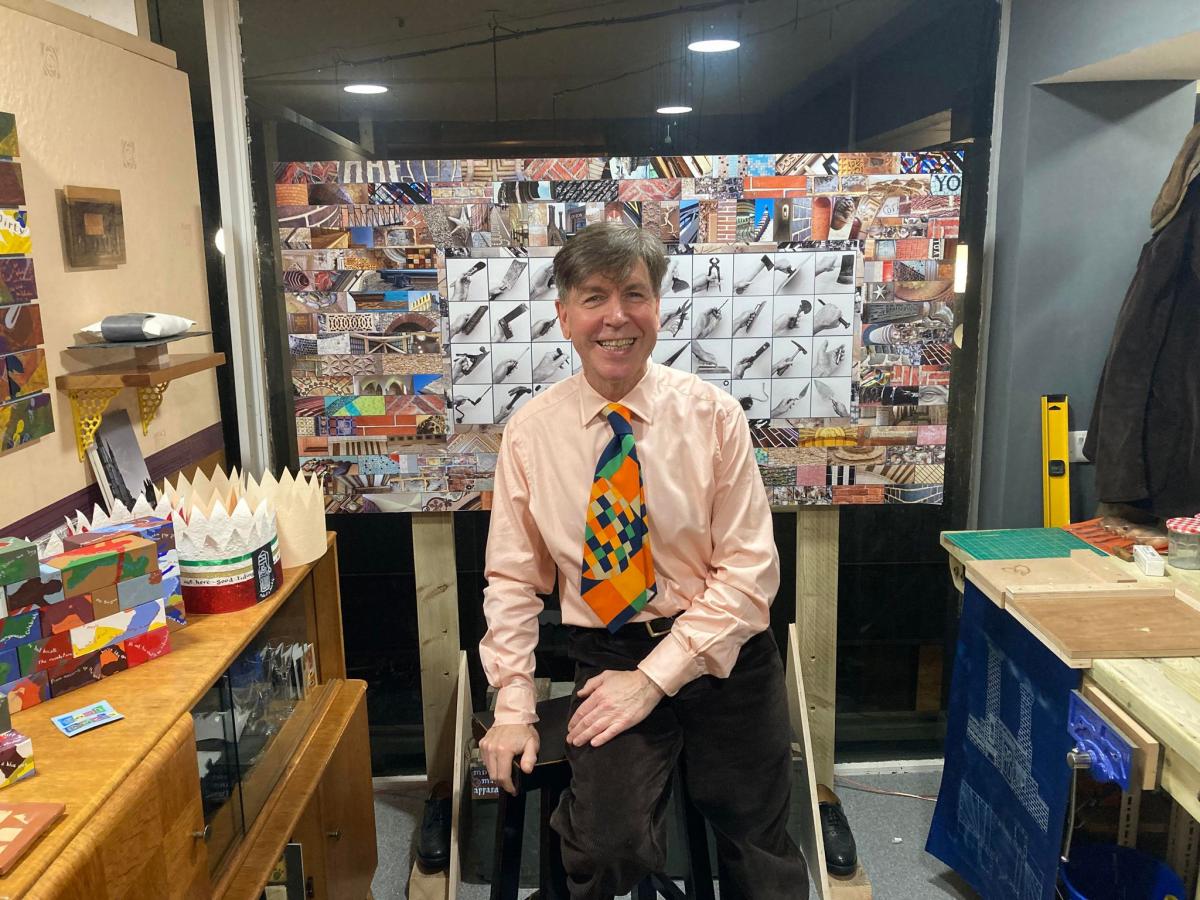
Dr. Rachel Hann is Associate Professor in Performance and Design at Northumbria University, Newcastle (UK). She researches material cultures of scenography, transness, and climate crisis. Rachel is the author of Beyond Scenography (Routledge 2019) and co-founder of the research network Critical Costume. From 2024-2025, she was PI for an AHRC Fellowship entitled Trans Performance Now. Rachel is also a former Chair of the Theatre and Performance Research Association, a member of the AHRC Peer Review College, and a curator for the Prague Quadrennial 2027. Rachel has examined 11 PhDs as external and supervised 11 to completion.

This session will take place in person in the PhD Common Room (WSA East Side 3024) and online. 

PhD Crits Resume

It has been so wonderful to see PGRs taking the initiative to develop a more collaborative research culture at our beloved WSA. Having a safe space and the opportunity to learn from each other and explore and challenge our ideas are very valuable for developing our competencies as researchers as well as for our own research.

This time, we would like to acknowledge David Birks, who has been working very passionately to present us with PhD crits. PhD Crits is a regular (biweekly) 2-hour workshop where a practice-led and a theory-based PGR from different stages of the research process (early, mid, and final) present their art/design research process and findings to gain action-orientated feedback from fellow PGRs and experts, such as Stephen Cornford and Megen de Bruin-Molé.

The structure of the workshop is specifically designed to facilitate a positive and critical peer learning environment to help both the presenters and participants be more aware and appreciative of each other’s research, to be comfortable in raising questions and answering them, and to learn more about various research philosophies/methodologies, approaches/methods, analyses, and effective ways to present our research. To facilitate effective engagement, this workshop will be an on-site and PGR-only event.

Therefore, we would like to encourage all WSA PGRs who live in and outside of Winchester to come and attend these events in person. Furthermore, we would love to have fellow PGRs that share similar research topics or approaches with the speakers to come and actively engage in the open dialogue sessions to co-create a productive workshop.


The PhD Crits will be a valuable complement to our regular Wednesday PhD Sessions, WriteLab, Design Research Methodologies and Methods, and Interdisciplinary Collaboration Working Group.


It is with great pleasure that we invite you to attend the launch of the 1st WSA PhD Crits that will be held on:

Date    : 28th October 2025

Time    : 1 to 3 PM

Venue    : Right-hand Installation Space (back end of the Sculpture Studio)

Introducing our speakers:

  1. Weigan Zhang [Practice-based research]

PhD research title: “An Artistic, Practice-Based Inquiry into Digital Memorialisation:Visual Reality as an Empty Machine for Reshaping Memory and Mourning”

Supervisors: Dr Alexandra Anikina, Dr Emma Reay and Prof Seth Giddings and Dr Ruohan Tang.

Abstract:

This study explores how VR can function as an ethical and reflective medium for digital memorialisation. In response to the rise of the “digital afterlife” industry, the project proposes the concept of the Empty Machine—treating VR as an open, participatory field for co-creating meaning around loss and memory. Through research-creation and participatory co-design, I’m developing a speculative VR prototype that invites users to navigate fragmented, polyphonic memories, fostering reflection and dialogue rather than simulation.

  1. Li Xu (Visiting Postgraduate Research Student from China) [Theory-based research]

PhD research title: “The Afterlife of Nucleic Acid Testing Booths: Assembling Post-Pandemic Urban Infrastructure”

Supervisors: Jussi Parikka and Ryan Bishop

Abstract:

This article examines the lifecycle of nucleic acid testing booths in China, a form of data infrastructure that became ubiquitous during the COVID-19 pandemic. While scholarship has addressed datafication and the politics of pandemic control, the material afterlife of such infrastructures — particularly their abandonment and reuse — remains underexplored. Drawing on fieldwork in Wuhan between December 2023 and September 2025, this study traces how these booths underwent territorialization, deterritorialization, and reterritorialization as public health policies shifted. Using assemblage theory and infrastructure studies, it conceptualizes the booths as a case of post-pandemic infrastructural adaptation that reveals the volatility and plasticity of short-cycle urban systems. Once integral to data collection and pandemic governance, the booths were rapidly decommissioned, generating both spatial friction and infrastructural waste. Yet many were reassembled into community kiosks and other shared facilities through grassroots initiatives. This reterritorialization highlights the agency of local actors who reconfigured abandoned digital infrastructures to meet evolving socio-spatial needs. The study advances urban theory by foregrounding the afterlife of temporary infrastructures, contributing to debates on urban resilience, waste politics, and community governance in post-pandemic cities.

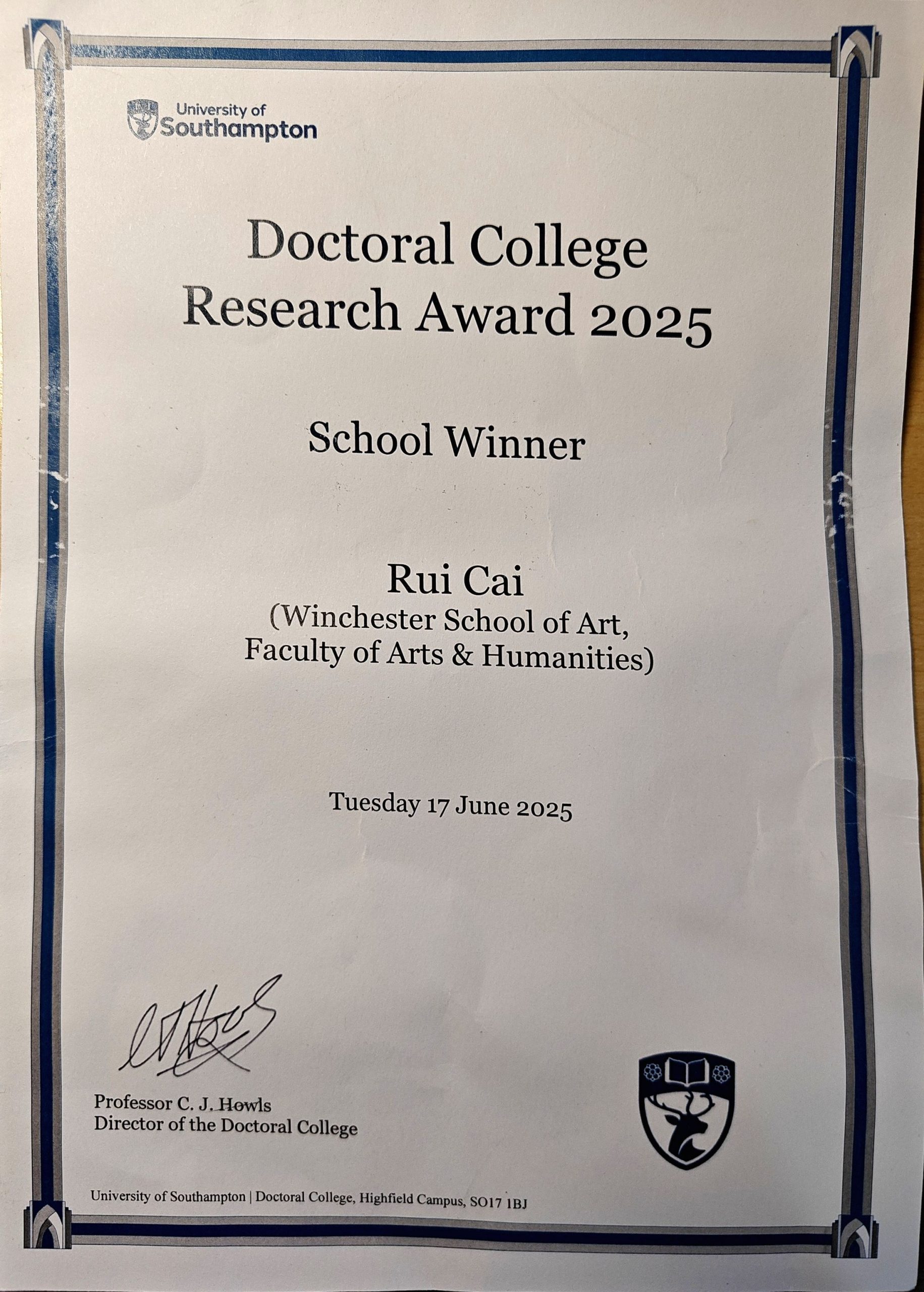
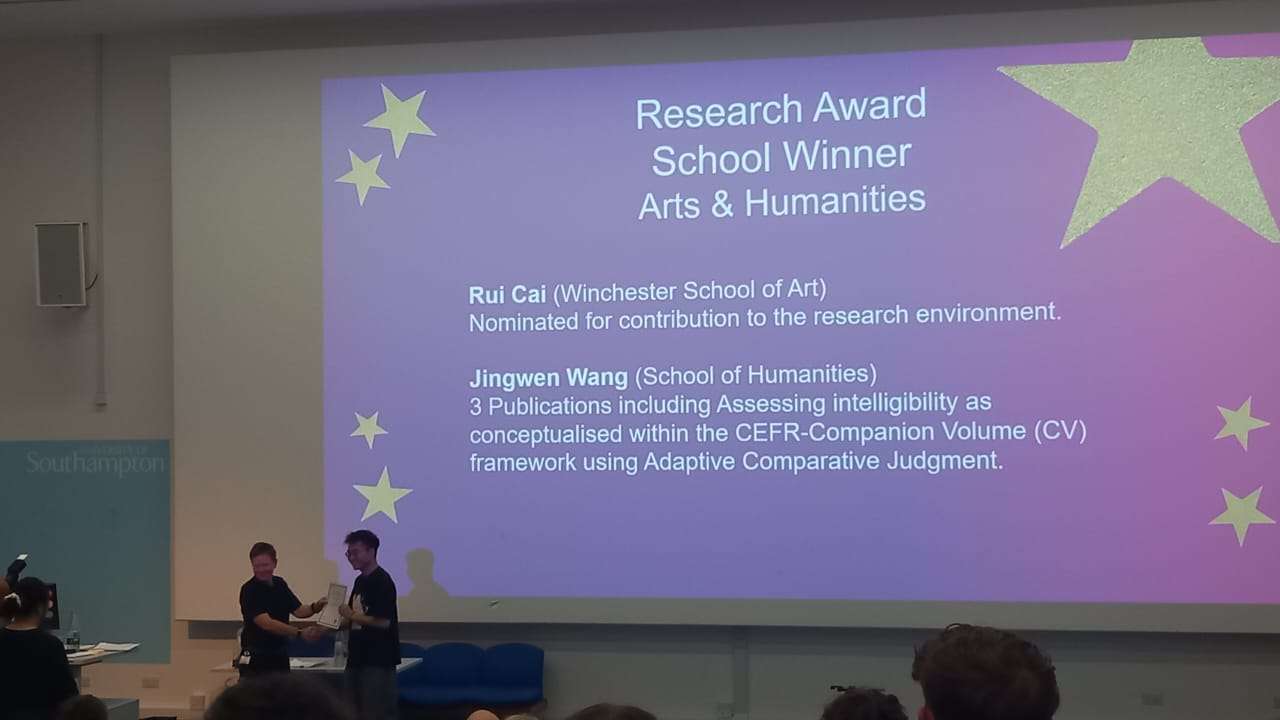
WSA PhD Researcher Rui Cai Wins Doctoral College Research Award 2025

WSA PhD researcher Rui Cai has been awarded the School Winner of the Doctoral College Research Award 2025, receiving a £200 prize in recognition of his outstanding contribution to the research environment. He was nominated for his active engagement in managing the shared studio space used by practice-based PhD researchers and for fostering a strong sense of community solidarity among all WSA PGR researchers. This award celebrates the exceptional impact of doctoral researchers on their research group, school, faculty, or the wider University research strategy. 


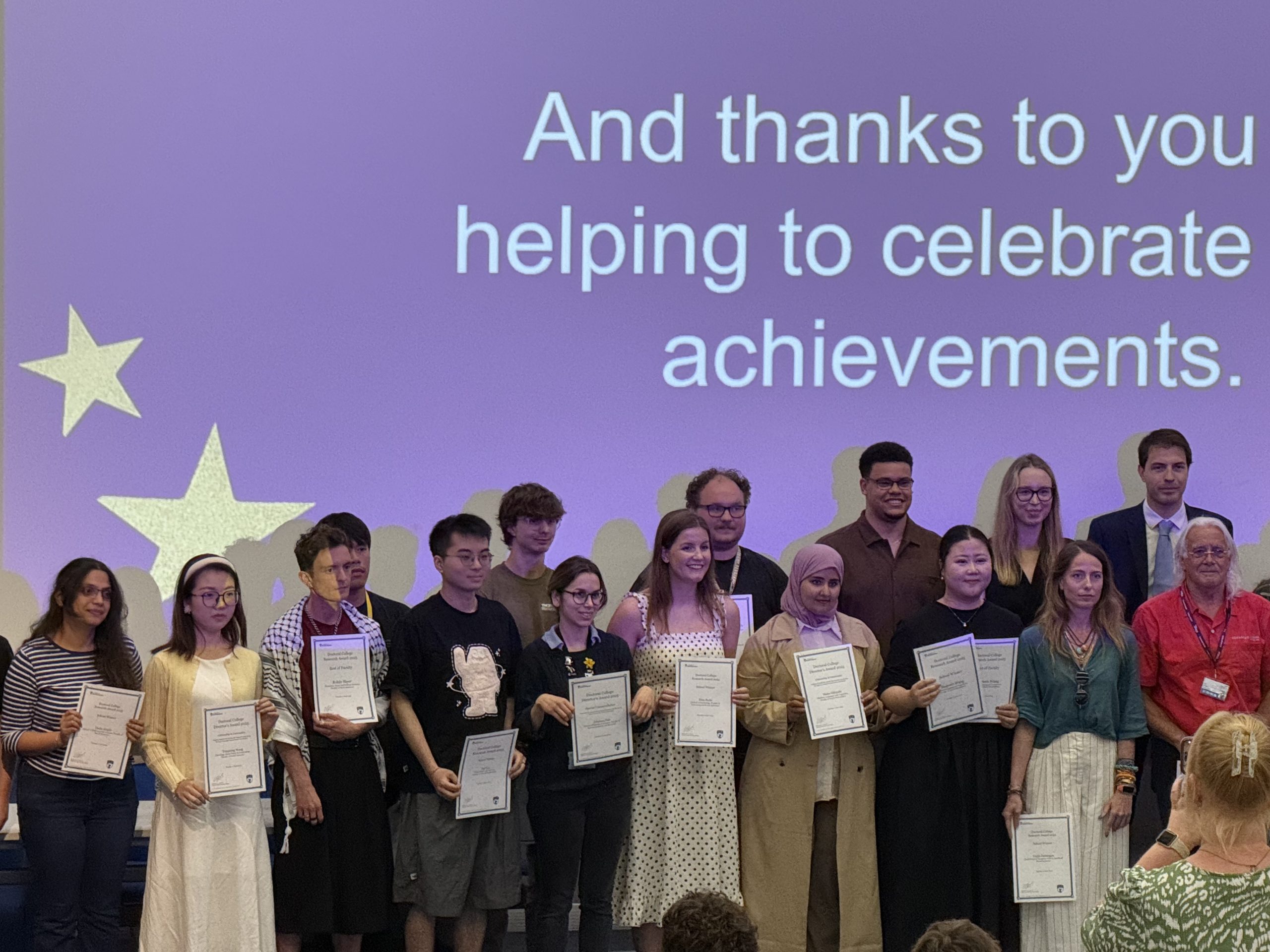
The Research Awards recognise a PGR’s excellent contribution to the research environment through a variety of research activities and outputs, as appropriate to their discipline, has been formally recognised at the PGR Showcase 2025: 3MT¼ Final & Awards Ceremony, which has been held on 17 June 2025 at Highfield Campus.

Rui Cai’s statement on the awards:

 I’m honoured to have been nominated for my contributions to the research environment. This recognition is particularly meaningful as my interdisciplinary work, primarily in the bio-art field, presents unique challenges. Combining biology and art requires significant effort, including mastering complex biological knowledge and troubleshooting practical issues like persistent contamination. However, the fascinating process and consistently surprising artistic outcomes motivate my continued dedication. I’m grateful for this acknowledgement from the university, which will undoubtedly support the progression of my research.

Many congratulations to Rui on this well-deserved recognition!


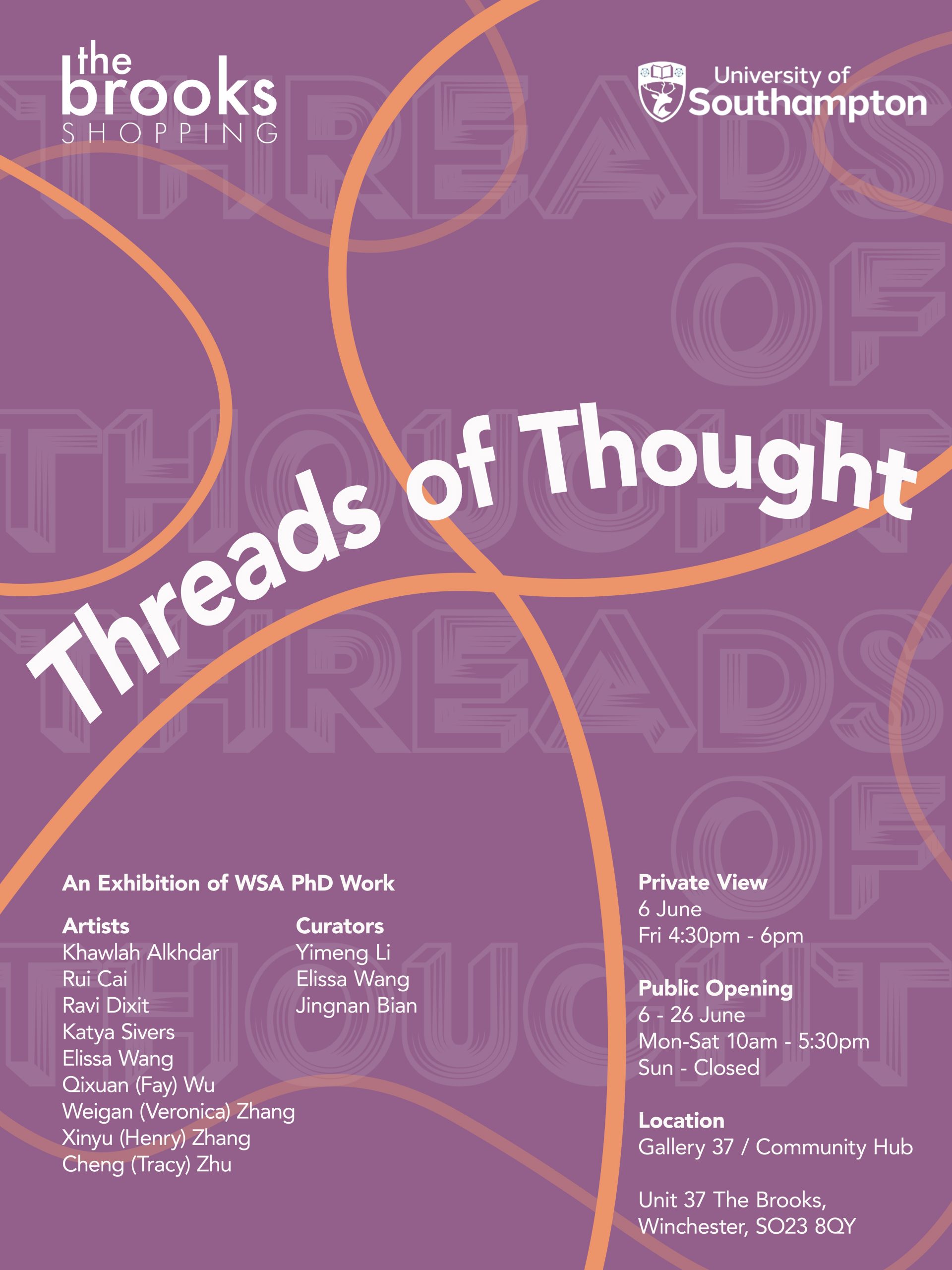
Threads of Thought: WSA PhD Exhibition 2025

Join us this month for a new exhibition of PhD work! The Winchester School of Art PhD research group are very pleased to present ‘Threads of Thought’. These works use practice or creative methods as a model of exploration, whether in fine art, design, or related fields. The selected works highlight the production process as a form of thinking, questioning, and unfolding.

Private View:

6 June (Friday 16:30 – 18:00)

Public Opening:

6 – 26 June
Mon-Sat 10am – 5:30pm
Sun – Closed

Location:  

Gallery 37 / Community Hub | Unit 37 The Brooks, Winchester, SO23 8QY

Thought is not a fixed point but a thread—unfolding, tangling, looping through forms, materials, and methods. When research takes shape through practice, knowledge is not simply demonstrated but made, tested, and reconfigured.

‘Threads of Thought’ invites a critical engagement with how knowledge is produced, questioned, and transformed through creative practice. Through iterative methodologies, material enquiry, and interdisciplinary engagement, the exhibition explores the embodied thinking and experimental processes that shape doctoral research beyond traditional academic forms.

Through language, visual impact, spatial extension, and human interaction, the works presented here demonstrate how practice emerges as a mode of enquiry—threading together ideas, materials, and methods across disciplines.

Curators:

Yimeng Li
Elissa Wang
Jingnan Bian

Medical Technology UK 2025: A Report by Hongrui Zhang, Post-graduate Researcher in E-Textile Innovation


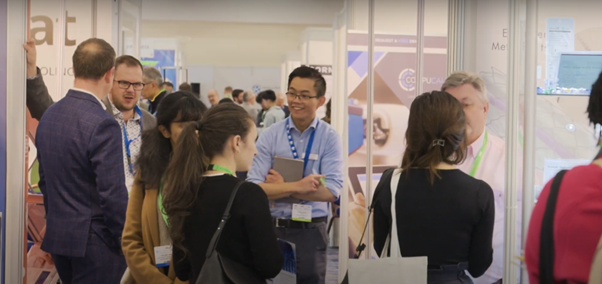
We are pleased to share an exciting update from Hongrui Zhang, a first-year Ph.D. researcher at Winchester School of Art. Hongrui attended the prestigious Medical Technology UK 2025 exhibition in Coventry, where Hongrui explored cutting-edge developments in medical device innovation and sustainability. 


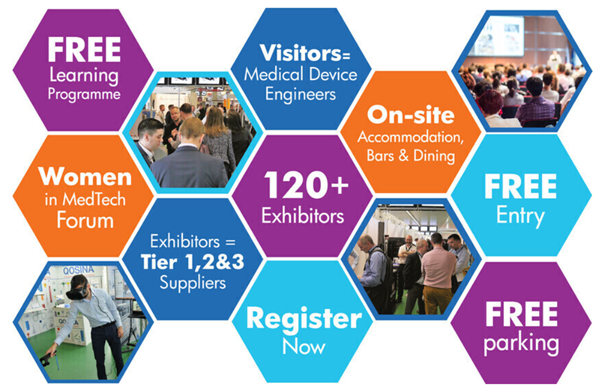
Hi, this is Hongrui Zhang, a first-year Ph.D. student in Design (E-textile Innovation Lab). With the support of the Winchester School of Art and my supervisor Professor Kai Yang. I had the opportunity to attend the Medical Technology UK 2025 exhibition, held on March 12-13 at the Coventry Building Society Arena, Coventry, England. This premier event presented the latest advancements in medical device design, development, and manufacturing. The event featured over 130 specialist suppliers, and a series of comprehensive learning programs such as the Women in MedTech Forum and Plastics & Sustainability in Healthcare, providing valuable insights into emerging trends in healthcare technology. During the exhibition, I actively engaged in learning about the latest industry developments and establishing connections with potential collaborators in both academia and industry. The networking opportunities provided interactions with key specialists in medical technology, fostering potential collaborations and knowledge exchange to enhance the development of sustainable e-textile electrodes as my project focuses on.

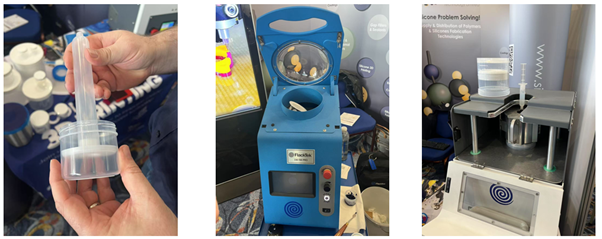
One of the key highlights of this event was the advancement in materials for medical applications, particularly in the realm of wearable technology and e-textiles. As my project, “Development of Sustainable and Wearable E-Textiles for Electrotherapy,” focuses on fabricating skin-friendly, sustainable, and high-performance electrodes, the exhibition provided a unique opportunity to explore relevant innovations in material science, electrode design, and manufacturing techniques. During the event, I had engaging discussions with multiple medical representatives such as Polymer Systems Technology UK Ltd, where they showed me their latest products for developing advanced medical silicone materials. This interaction inspired my research, particularly in enhancing the design and fabrication of silicone-based electrodes.

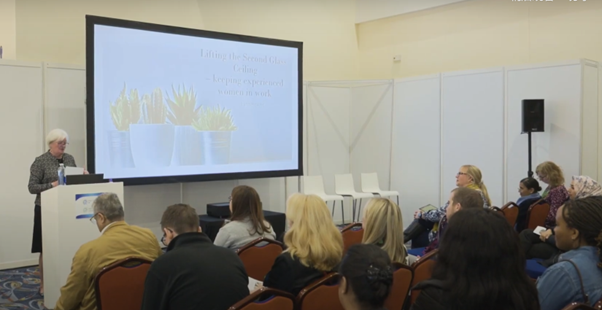
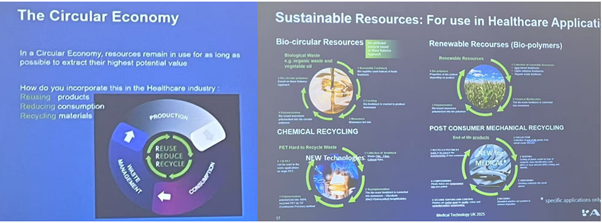
The exhibition also showcased cutting-edge solutions for medical device sustainability, a critical aspect of my research. With a focus on recyclable materials, eco-friendly fabrication processes, and long-term usability, discussions with industry experts provided insights into reducing environmental impact in healthcare applications. A particularly insightful part of the learning program, Plastics & Sustainability in Healthcare: Focus on Design & Development Options, discussed the adoption of biodegradable materials, energy-efficient manufacturing processes, and circular economy approaches in medical device production. However, I also realized that sustainability in healthcare still has a long way to go, as medical materials account for only a small fraction of overall material usage, and much of the effort has yet to become a reality. This awareness reinforced the significance of my research, giving me greater motivation to contribute to this field.

From left to right are: Customized pot for silicone rubber inks, Speed mixer for ink preparation, and Extruder for 3D-printable inks
Slides from the learning program Plastics & Sustainability in Healthcare: Focus on Design & Development Options

Overall, Medical Technology UK 2025 was highly beneficial to my research, offering exposure to state-of-the-art advancements and reinforcing the importance of sustainable and innovative solutions in healthcare applications. The event not only broadened my knowledge of material innovations and industry trends but also provided an excellent platform to reflect on the broader implications of my work in the real-world healthcare landscape.

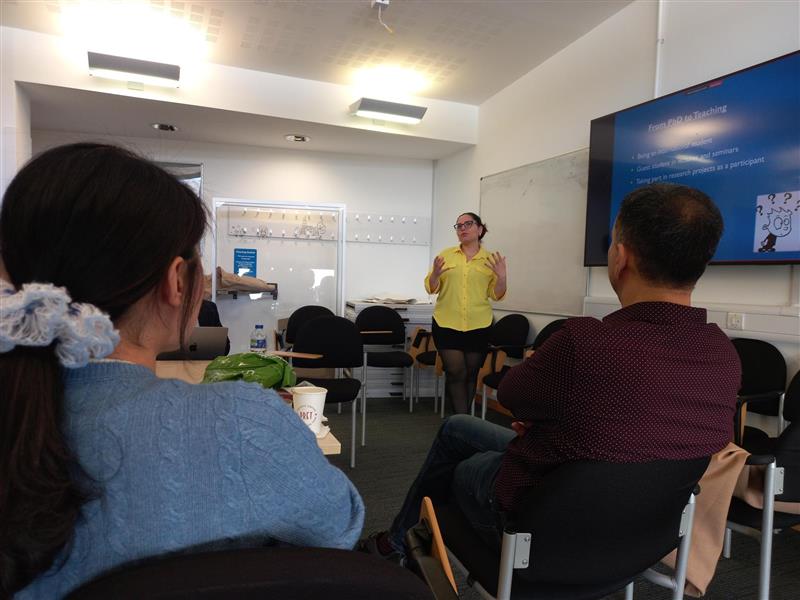
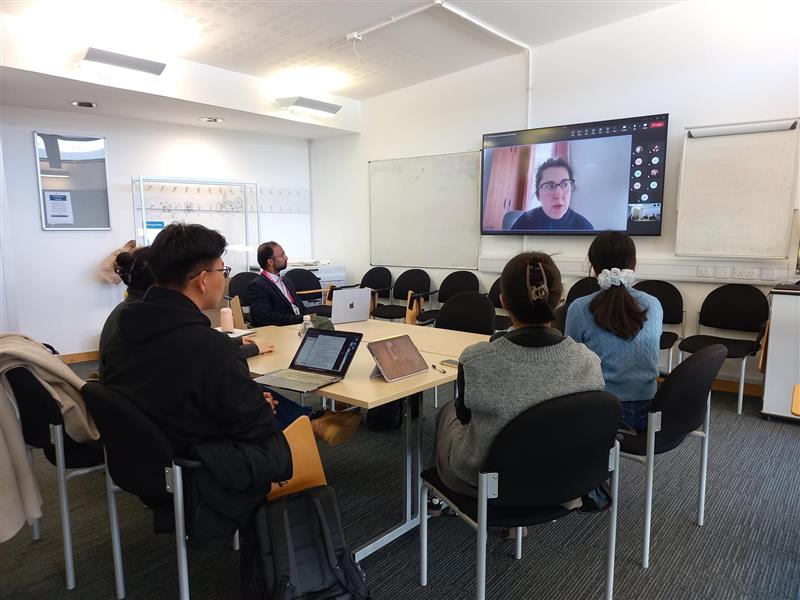
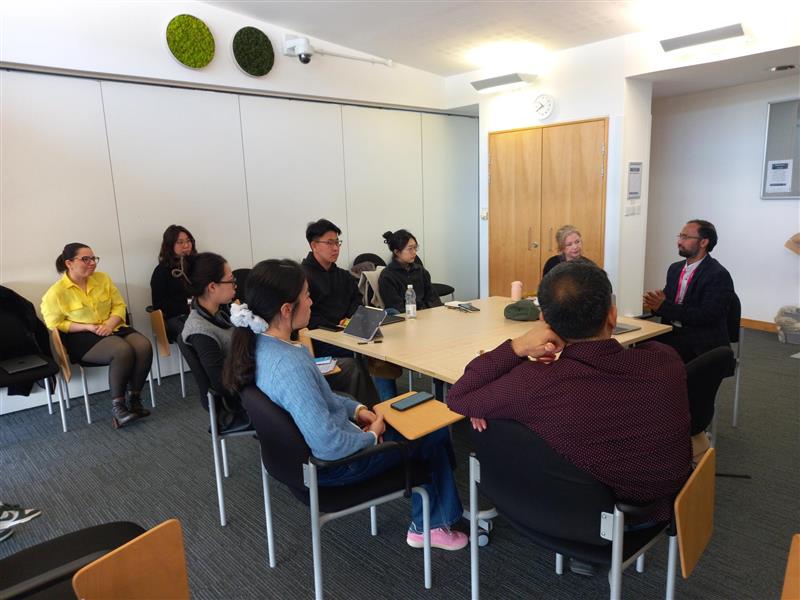
Navigating Academic and Professional Pathways — Insights from Diverse Career Journeys

Editorial note from Megen de Bruin-Molé (Director of Doctoral Programmes, WSA): The following report, by WSA PhD Representative Jingnan (Bianca) Bian, looks back on an event coordinated by and for the WSA PhD community and Early Career Colleague (ECC) community. The path of a researcher after their PhD can be very different from person to person. This meeting was an opportunity for Postgraduate Researchers (PGRs) and ECCs to share their lived experiences, along with support and advice. 

ECC & PGR Joint Event Report

Navigating Academic and Professional Pathways — Insights from Diverse Career Journeys

Date: 7th March

Location: Room 7 South Building, WSA

Organised by: ECC & PGR Reps (Jingnan Bian, Michael Kurniawan, Yimeng Li, Elissa Wang, Dimitra Gkitsa, Mazed Islam, Shan Wang)


Speakers

Dimitra Gkitsa

Mazed Islam

Ravi Dixit (Alumni)

Aybala Cakmakcioglu

Angelina Pan

Overview

This insightful event brought together a diverse panel of speakers who shared their personal journeys through academia and beyond. The session focused on navigating the PhD journey, transitioning to academic or industry roles, and the importance of resilience, adaptability, and proactive career planning. Each speaker provided a unique perspective, offering practical advice for early-career researchers and PhD students contemplating their next steps.

Speaker 1. Dimitra Gkitsa 

Dr. Gkitsa provided an honest reflection on her PhD journey and the transition into an academic career. She discussed the challenges of balancing work commitments with doctoral studies, gaining valuable teaching experience, and the process of applying for jobs and research fellowships. Her story underscored the importance of perseverance and seizing opportunities to grow both academically and professionally.

Speaker 2. Mazed Islam

Dr. Mazed emphasized the importance of a balanced approach to academic careers, integrating teaching, research, leadership, and management. Drawing from his experience in both industry and academia, he highlighted the need to remain adaptable in the face of career challenges. His final advice centered on self-awareness, building supportive networks, and staying open to opportunities to ensure a resilient and fulfilling career path.

Speaker 3. Ravi Dixit

Sharing his unique transition from industry to academia and back to the corporate sector, Dr. Dixit illuminated the transferable skills gained during a PhD — including research, communication, and project management. He encouraged attendees to explore varied career pathways, build professional networks, and utilize university resources. His message: remain adaptable, understand your strengths, and stay open to hybrid career models.

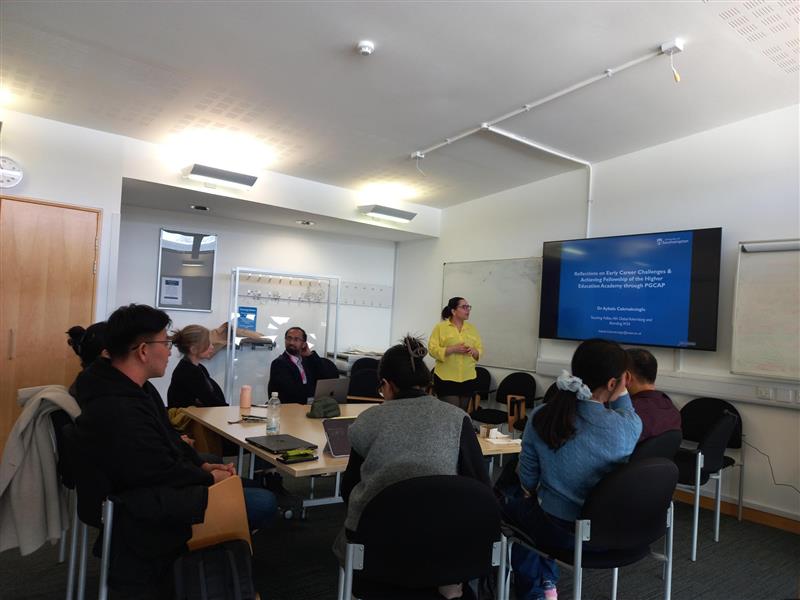
Speaker 4. Aybala Cakmakcioglu

Aybala, speaking from her experiences as an international student navigating academia and industry, emphasized the importance of resilience, adaptability, and proactive learning. She discussed institutional expectations, teaching experiences, and the role of reflection in career development. Attendees were reminded to seek mentorship, leverage career services, and continuously reflect on their professional growth.

Speaker 5. Angelina Pan 

Angelina shared her candid experiences of academic rejections, teaching responsibilities, and the eventual success of securing a postdoctoral role. She stressed the importance of handling setbacks with resilience, building teaching and research profiles strategically, and planning early for the job market. Her guidance encouraged balancing personal well-being with professional ambitions and recognising the long-term value of skills developed throughout the PhD journey.

Conclusion:

The event provided a wealth of practical advice and personal insights, empowering attendees to confidently navigate their academic and professional journeys. By embracing resilience, adaptability, and proactive career planning, PhD students and early-career researchers can chart fulfilling paths in academia, industry, or beyond.

PhD research and practice featured at transmediale festival in Berlin

WSA PhD researchers Yaqian Lai, Alejandro Limpio Gonzalez, and Katya Sivers presented their research and practice as part of this year’s transmediale festival.

transmediale is an annual festival that brings together international artists, researchers, activists, and thinkers with the goal of developing new outlooks on our technological era through the entanglement of different genres and curatorial approaches. In the course of its history, transmediale has grown from its beginnings as VideoFilmFest to one of the most important events for art and digital culture worldwide.

At the festival Yaqian Lai and Alejandro Limpio Gonzalez contributed to the ‘Structures of Haunting’ workshop, alongside colleagues from WSA’s department of Art and Media Technology and elsewhere. Yaqian’s project explores the formation of spatial knowledge on digital maps through the lens of experimental cartographic practices in contemporary visual media, and in her presentation she played with the idea of an atlas as a visual method of divination. Alejandro approaches ocean observation from an anthropological perspective, looking at networked images, online platforms, machine vision and artificial intelligence as key elements through which the ocean becomes a visual space in contemporary science and environmental governance. Presenting as part of Ocean Matter Studio, his contribution included a video art piece called ‘Haunted Wire’, exploring the cultural imagination sustaining the deep sea as space.

Katya Sivers, whose research and practice explores the critical potential of technology and visual art, also produced and presented work at PhD workshops hosted by the Digital Aesthetics Research Center (Aarhus University). Under the title everything is a matter of distance, the DARC workshops ‘related to the temporalities of always-on and FOMO, to the aesthetics as ways of sensing distance and proximity, and to the possibilities for resistance and critique’. The participants produced a peer-reviewed newspaper of their work, as well as a series of presentations and readings at the festival.

This series of events formed part of an extended collaboration between transmediale and the Critical Infrastructures and Image Politics research group at Winchester School of Art (University of Southampton), which is planned to continue with future iterations of the festival.

Welcoming New WSA PGR Representatives

WSA PhD representative Yimeng Li

We are excited to welcome three new Postgraduate Research representatives for Winchester School of Art, nominated after discussion with department leadership teams, the Students’ Union, and the Faculty Graduate School.

They will join our continuing PhD representative, Yimeng Li.

All four representatives will represent PGRs at school level, but the three new representatives have also agreed to act as first point of contact between specific departments and PGRs:

Elissa Wang (Fashion & Textiles liaison)

I am Elissa. I am a third-year PGR in Fine Art. I am also a practitioner, a knitter, and a mother. My research is about looking at the transcultural/multicultural identity of indigenous Chinese Mongolians in the context of globalisation through making and knitting. I started to investigate this when I was doing my master’s at Royal College of Art and this research is a continuity of my MA, which I started to involve studies of digital anthropology and material culture. I applied for this role to have a better insight into the academic culture and working of the school, gain experience working collaboratively with faculty and administrative staff, and help to contribute and hopefully improve the overall experience of research students in our community.

Michael Kurniawan (Art & Media Technology liaison)

I am a 3rd year PGR in design. Prior to my PhD, since 2008 I have been a faculty member in the School of Creative Industries at a private university in Indonesia, where I’ve taught in the Visual Communication Design and Fashion and Business undergraduate programme. I studied MA in Art and Design in Education in the UK with an interest in the relationship between museums and design higher education. As a continuation, my current research is on expanding museum partnerships and co-creation across sectors and levels. I applied for this position to understand more about the academic culture and workings of the school as a reputable international higher education institution and how I can continue to support and even improve it.

Jingnan “Bianca” Bian (Design liaison)

I am Jingnan Bian (Bianca), a PhD student in Design. My current research explores the dementia-friendly furniture design in inclusive design field. Before attending in front of you, I completed my bachelor’s degrees in China and Italy, and Master’s degree in WSA, which has given me a diverse academic and cultural perspective. I decided to put myself forward for this role because I believe in fostering a collaborative and inclusive environment where every student feels supported; and I am passionate about representing the voices of my peers and facilitating meaningful dialogue between students and staff to enhance our academic experience.

PhD Seminar Series Spring 2025

All are welcome at Winchester School of Art’s school-wide PhD Seminar Series, which will run from 2-4pm on Wednesdays this term, in person (PGR Rooms at WSA) and on MS Teams. The series consists of (guest) speakers, workshops, trainings, and other research- and practice-led events.

The working schedule for the Spring 2025 term is available below, and will be updated here with any schedule changes. Details and bios for individual sessions will be linked as they become available.

Additional department-level events are also highlighted, in italics, for ease of overview.

16 January 5-6pm, online – Material Interests (Art & Media Technology department research talks): ‘Understanding Early Tudor Art: the Invisible Illumination’ by Prof Kathleen E. Kennedy

29 January – no session; PhD participation at transmediale 2025 (29 Jan through 2 Feb), Chinese new year 29 Jan

5 February

    • Induction and welcome for new PGRs (12-2), start of term social (2-3) and campus tour (3-4)
    • From 11:30-12:30, LTB East Side and online, Material Interests (Art & Media Technology department research talks): ‘Decoding Hidden Stories: Finding new narratives within a game’s rules and systems’ with Marie Jarrell and Vanissa Wanick

SPECIAL SESSION 11 February – in collaboration with the Film department seminar series.

12 February

    • Town Hall, intro to PGR reps, and ‘Play With Platforms’ creative workshop on navigating university tech.

19 February

26 February

    • ‘Visual Strategies of Absence’ workshop by Louise Siddons (Head of Department Art and Media Technology)
      • NOTE: starts at 2:30 instead of 2pm due to PhD Periodic Review Meeting from 13:30 – 14:15 in Building 63G South, Seminar Room 7 (T3003)

5 March

    • PGR introductions and research mapping 
      • PGR profiles wall (A3) 
      • PGR Research Posters 
      • PGR Blog 

12 March

    • PGR Sharing Session (Current research 2nd year)

19 March

    • NOTE: this session will take place from 10am-12pm in Seminar Room 8, 2nd floor South Building (not the usual 2-4pm in the PGR Room). The online meeting link remains the same. Joint development session with Early Career Colleagues (postdocs, technicians, lecturers, etc)

26 March

    • Ryan Bishop (Head of Research, department of Art & Media Technology) – Foundational Research Skills: Speculative design and social design; and the intersections of graphic design and art

EASTER BREAK

30 April

    • Joanne Turney (Faculty Director of the Graduate School)
      – Foundational Research Skills: Feedback, Thesis Writing

7 May

14 May

    • PGR Sharing Session and preparation for first progression review (Current research 1st year)

21 May

NOTE: this session will take place from 10am-12pm (not the usual 2-4pm)

28 May

4 June

    • PGR Sharing Session (Current research 3rd and 4th year)

6 June