Currently browsing category

Introductory Topic, Page 6

Intro Topic: Digital Visitors and Digital Residents

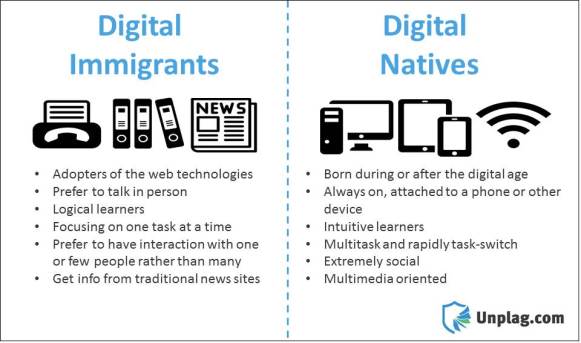
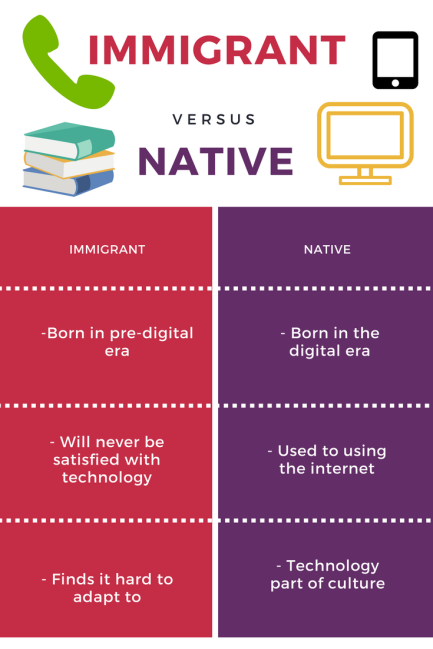
Digital visitors and Digital residents is a further development of Prenksy’s original theory of digital natives and digital immigrants. Prensky set to make a distinction between people who are completely at ease with technology and the digital world and those who actively work and know how to use the internet but will never be fully competent. This became an extremely influential theory, which until recently gained widespread acceptance. Continue reading →

Intro Topic: Digital Visitors and Digital Residents

Digital visitors and Digital residents is a further development of Prenksy’s original theory of digital natives and digital immigrants. Prensky set to make a distinction between people who are completely at ease with technology and the digital world and those who actively work and know how to use the internet but will never be fully competent. This became an extremely influential theory, which until recently gained widespread acceptance. Continue reading →
Am I a digital visitor or a digital resident?

The terminology “digital native” and “digital immigrants” were creations of Prensky in 2001, who supposed that people born into the “digital era” would be digital natives, whilst those born after were immigrants who were likely to ‘manage to learn to exist but will never be fully competent'(Prensky 2001). Despite initial credence, Prensky’s theory came under strain from critics. Continue reading →

Categorising Blog Posts

Once you’ve written your post, you will need to assign a CATEGORY to it. If you do not, it will not appear on the module blog and no-one will be able to read it...! BEFORE hitting the 'publish' button... FIRST: Create and assign the relevant category: Click on ā€˜+add new category’ Type the appropriate name (e.g. Intro Topic, Topic 1, Topic 2 etc. Continue reading →

A Reflection on Topic 4

Created using Canva With theĀ number ofĀ internet users continuing to grow, considering thatĀ just over 3.5 billions people areĀ able to access the internet (internetlivestats.com), there is an increasing pressure to ensure people use the internet ethically. Within Phil’s blog he focusedĀ on how social media generates a ‘lynch mob’ mentality in cases much like Justine Sacco, which we have explored previously. Continue reading →

Topic 4: Social Media Ethics

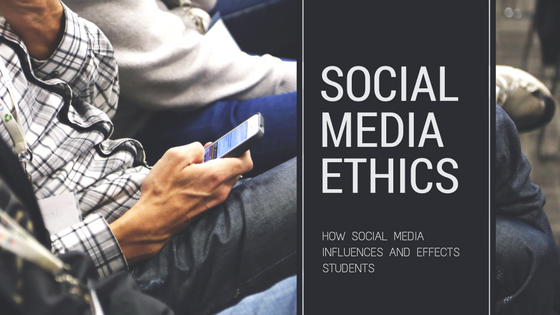
Created using Canva The advent of social networking sitesĀ has made all of us more connected and by doing so has allowed others to more easily contact each other. Some of those connections areĀ positiveĀ but some areĀ not. The format of social networking we see today began in the late 90s with ‘Six Degrees’, a social networking site that allowed users to create profiles and connect with others through existing relationships or through mutual interests (Boyd et al. 2007). Continue reading →

Social Media Giants-How they deal with ethical issues online.

According to Reference, ethical issues bring morality and principles into conflict and are more subjective and open to opinions and interpretation. Social media brings to light numerous ethical issues for example the issue of anonymity and privacy, freedom of speech and fake news. Social media giants (Facebook, Twitter) are slowly being forced to deal with these issues and held liable, rightly or wrongly. (S. Continue reading →

Social Media Giants-How they deal with ethical issues online.

According to Reference, ethical issues bring morality and principles into conflict and are more subjective and open to opinions and interpretation. Social media brings to light numerous ethical issues for example the issue of anonymity and privacy, freedom of speech and fake news. Social media giants (Facebook, Twitter) are slowly being forced to deal with these issues and held liable, rightly or wrongly. (S. Continue reading →

Topic 4: Reflections

This week, we were given the task of exploring the ethical issues that arise through business or educational use of social media. This topic triggered a broad range of topics to be discussed by fellow #UOSM2008 students, however my post focused on the issue of digital footprints that accumulate from using social media in education. I thoroughly enjoyed researching this topic and reading the different perspectives that everyone had explored. Continue reading →