Currently browsing author

Page 2

Reflecting on digital differences

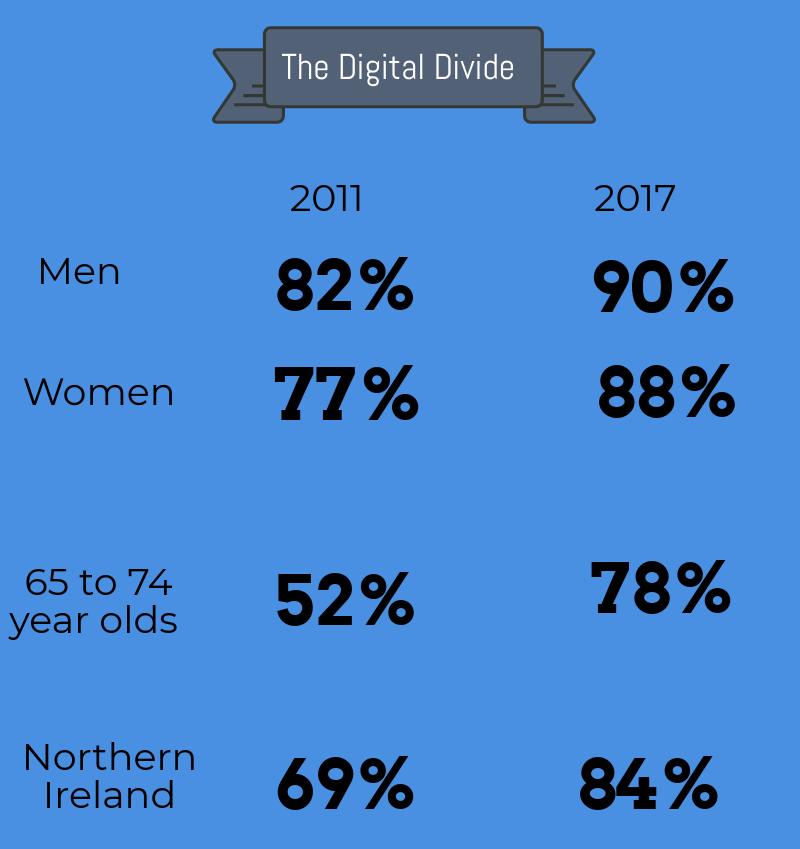
Inequalities in the UK I enjoyed the topic of digital differences this week as it felt like building upon what I had thought about last week in my discussion with Anna about cultural and socio-economic factors. Previously, I had thought about the differences between internet usage and access depending on country and age. However, after reading Carl’s Blog  I began to critically consider the digital differences within the UK. After discovering that 5. Continue reading →
Do our differences shape how we interact on the web?

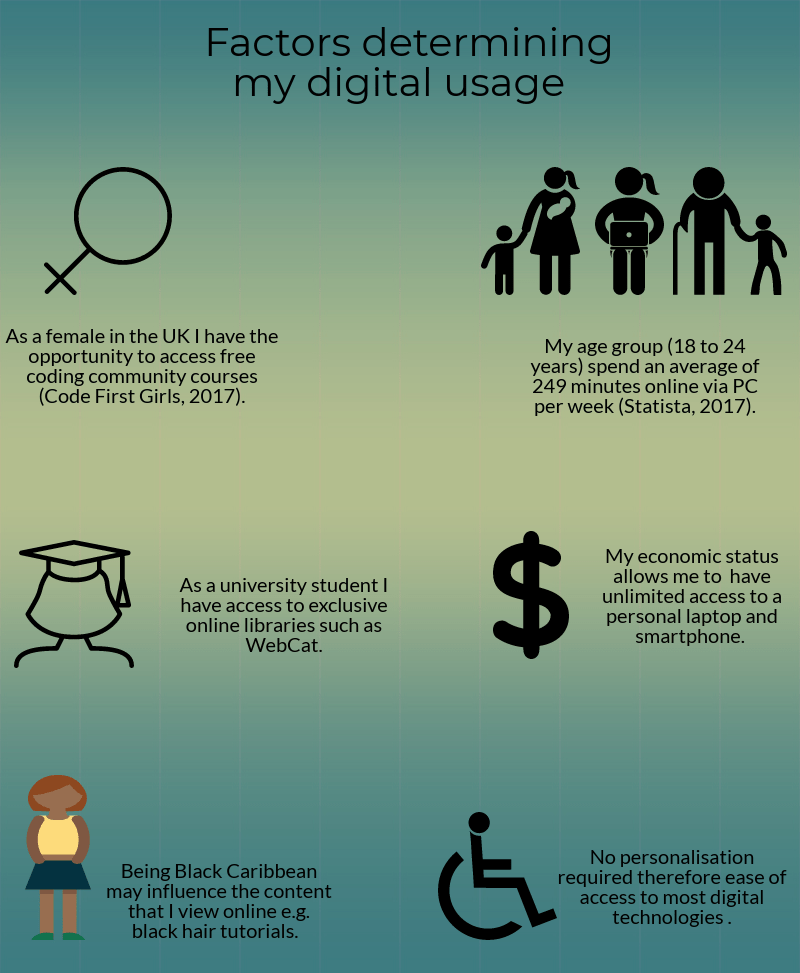
Digital Differences An individual’s online behaviours are often connected to their offline contexts (Future Learn, 2018). The concept ‘Digital Differences’ refers to the inequalities in access to technology and practices among various groups. These inequalities are based on factors such as age, gender, class, income and race (Halford & Savage, 2010). https://www.powtoon. Continue reading →

Do our differences shape how we interact on the web?

Digital Differences An individual’s online behaviours are often connected to their offline contexts (Future Learn, 2018). The concept ‘Digital Differences’ refers to the inequalities in access to technology and practices among various groups. These inequalities are based on factors such as age, gender, class, income and race (Halford & Savage, 2010). https://www.powtoon. Continue reading →

Do our differences shape how we interact on the web?

Digital Differences An individual’s online behaviours are often connected to their offline contexts (Future Learn, 2018). The concept ‘Digital Differences’ refers to the inequalities in access to technology and practices among various groups. These inequalities are based on factors such as age, gender, class, income and race (Halford & Savage, 2010). https://www.powtoon. Continue reading →

Do our differences shape how we interact on the web?

Digital Differences An individual’s online behaviours are often connected to their offline contexts (Future Learn, 2018). The concept ‘Digital Differences’ refers to the inequalities in access to technology and practices among various groups. These inequalities are based on factors such as age, gender, class, income and race (Halford & Savage, 2010). https://www.powtoon. Continue reading →

Introductory blog

Digital Natives and Digital Immigrants Prensky’s concept differentiates between those who were born in the digital world and speak the digital language (Natives) and those who have adjusted to the new technology at a later part of their life but will always have an “accent” (Immigrants) (Prensky, 2001). He also implied that ‘Immigrant educators’ would need to reform their methods of teaching to accommodate the Digital Natives (White & Cornu, 2011). Continue reading →

Introductory blog

Digital Natives and Digital Immigrants Prensky’s concept differentiates between those who were born in the digital world and speak the digital language (Natives) and those who have adjusted to the new technology at a later part of their life but will always have an “accent” (Immigrants) (Prensky, 2001). He also implied that ‘Immigrant educators’ would need to reform their methods of teaching to accommodate the Digital Natives (White & Cornu, 2011). Continue reading →