
Currently browsing author

Page 2

FAKE NEWS – Topic 2

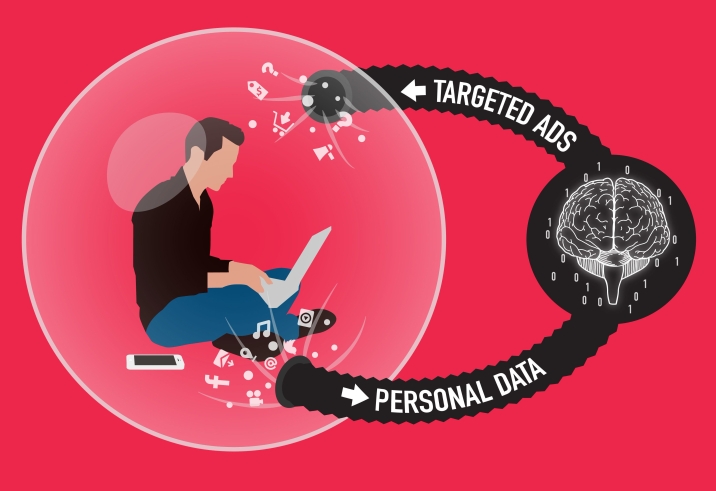
Last week I created my PLN (Personal Learning Network), by studying the FutureLearn MOOC I looked at how to grow this network. To do this I need to be more aware of the authenticity of online media I interact with. Eli Pariser coined the term ‘Filter Bubble’ in his Ted talk. The term is used to refer to the specific tailoring of online services (Google, Facebook, YouTube) to only show content based on what an algorithm thinks you want to see. Continue reading →
FAKE NEWS – Topic 2

Last week I created my PLN (Personal Learning Network) By studying the FutureLearn MOOC I looked at how to grow this network. To do this I need to be more aware of the authenticity of online media I interact with. Eli Pariser coined the term ‘Filter Bubble’ in his Ted talk. The term is used to refer to the specific tailoring of online services (Google, Facebook, YouTube) to only show content based on what an algorithm thinks you want to see. Continue reading →

FAKE NEWS – Topic 2

Last week I created my PLN (Personal Learning Network), by studying the FutureLearn MOOC I looked at how to grow this network. To do this I need to be more aware of the authenticity of online media I interact with. Eli Pariser coined the term ‘Filter Bubble’ in his Ted talk. The term is used to refer to the specific tailoring of online services (Google, Facebook, YouTube) to only show content based on what an algorithm thinks you want to see. Continue reading →
FAKE NEWS – Topic 2

Last week I created my PLN (Personal Learning Network), by studying the FutureLearn MOOC I looked at how to grow this network. To do this I need to be more aware of the authenticity of online media I interact with. Eli Pariser coined the term ‘Filter Bubble’ in his Ted talk. The term is used to refer to the specific tailoring of online services (Google, Facebook, YouTube) to only show content based on what an algorithm thinks you want to see. Continue reading →

FAKE NEWS – Topic 2

Last week I created my PLN (Personal Learning Network), by studying the FutureLearn MOOC I looked at how to grow this network. To do this I need to be more aware of the authenticity of online media I interact with. Eli Pariser coined the term ‘Filter Bubble’ in his Ted talk. The term is used to refer to the specific tailoring of online services (Google, Facebook, YouTube) to only show content based on what an algorithm thinks you want to see. Continue reading →

Digital Differences – Reflection

At the end of my previous post I examined the idea of the Internet being a basic human right, discussing this further with Sheyra. She stated there are other amenities more important as a human right, and that geographical differences make it impossible for everywhere to have equal Internet access. She provided an article stating that the high cost of hardware and maintenance crushes the idea of the Internet as a human right. Continue reading →

Digital Differences – Online Inequality

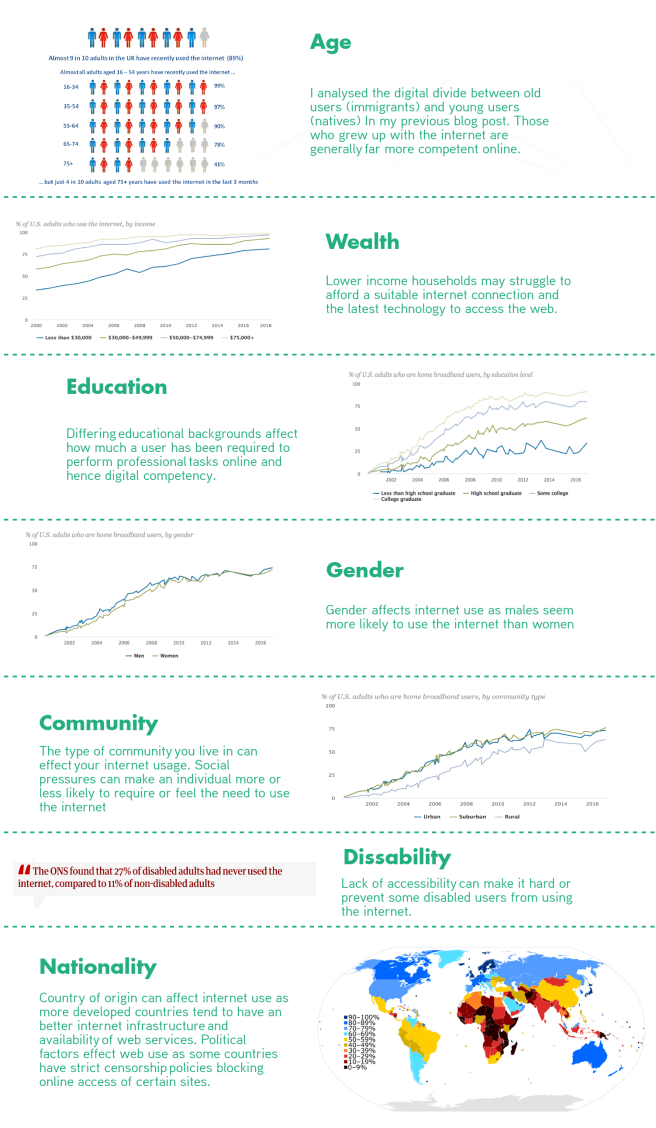
Digital differences refers to the inequality of internet engagement among users from differing backgrounds. Van Dyke outlines 5 factors that lead to web inequality: Technological, Material, Immaterial, Social and Educational. Hargittai also recognises this, and overviews the factors that affect web use. Below I outline the key areas where digital inequality is present and how they effect us. Continue reading →

Introductory Topic – Self Reflection

While I do consider myself to be reasonably competent using the internet, comparing my digital self test with others has shown me that I am lacking in some areas; Mostly involved around participating in and building online social networks and managing my online identity. Prenksy’s argument for “Digital Natives and Immigrants” appears as a persuasive and black and white approach to categorising internet users. Continue reading →

Introductory Topic – Self Reflection

See my original post here. While I do consider myself to be reasonably competent using the internet, comparing my digital self test with others has shown me that I am lacking in some areas; Mostly involved around participating in and building online social networks and managing my online identity. Prenksy’s argument for “Digital Natives and Immigrants” appears as a persuasive and black and white approach to categorising internet users. Continue reading →