Currently browsing category

2016, Page 20

Topic 4: Privacy

Privacy is one of the ethical issues raised by business use of social media that I consider to be particularly significant. Social medias, as we know, enables the creating and sharing of information, ideas, career interest and other forms of expression through virtual communities and network. Continue reading →
Topic 4 – Do you think it is ethical for organizations to incorporate user generated content?

(Source: Image by me, information from link) Before discussing the ethical implications which social media has on an organization, let us first discuss what exactly is ethics? The definition of ethics is hard to pin down and often lingers in the grey area. Jay Shepherd claims that it’s as simple as knowing the right thing to do, then doing the wrong thing. These days, media has a huge influence on boosting a business by increasing inbound traffic to websites and improving brand loyalty. Continue reading →

Topic 4: Censorship of information

Delivery of information in the digital age I have mentioned previously that the ability to voice our opinion online was one of benefits of the internet. Access to available information is another important aspect that is often overlooked. Source Internet uses have been on the rise since the beginning of the new millennium. It is an estimate that 3 billion people have access to the internet. That is 3 billion people with the information of the world at their finger-tips. Continue reading →

Who can we trust?

How often do we think before we share anything online? There are so many ethical issues pertaining to social media. Many of which comes from the ignorance of people utilising social media – us. This means we are vulnerable in exposing ourselves when we leave behind our digital footprint. Hence, the most impactful ethical issue to me is the issue of misrepresentation. This can come in different forms. Continue reading →

Social Media Screening

Ethical Subjectivism states that all moral standards or truths are dependent only upon the opinions and feelings of the utterer making the subjective moral judgment (David Agler). My personal view on e-screening being unethical is inherently subjected to arguments. As stated in my previous post, (Hudson, 2015) reports that 41% of managers in Singapore use social media screening. Surprisingly 79% of applicants are comfortable with their future employers seeing their online footprint. Continue reading →

Anti-Social Social Media 

The digital revolution has brought about significant advances in education, and one avenue has been through the prevalent use of social media in education. According to usage statistics gathered earlier this year by Ofcom, 66% of adults have a profile on at least one social networking site. Correspondingly, universities and other educational institutions have increasingly used social media as a medium to engage and interact with students. Continue reading →

Astroturfing: Is it ethical?

Have you ever went on food blogs like LadyIronChef or DanielFoodDiary to look for restaurant recommendations and reviews? I sure did, because I believe reviews dish out genuine opinions which are deemed as a good indicator of quality. However, companies have caught on and are manipulating these reviews through the practice of astroturfing. Astroturfing is the practice of masking the sponsors of a message or organization (e.g. Continue reading →

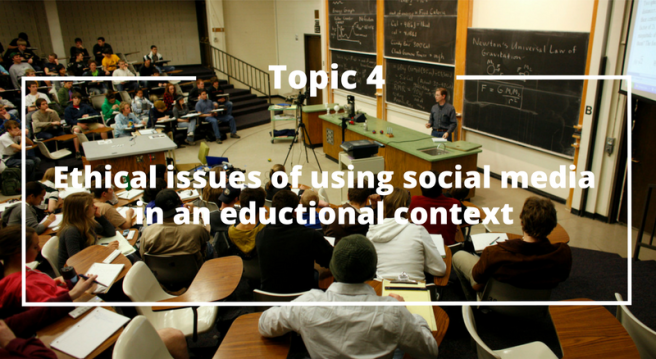
Topic 4: Ethical issues of using social media in an eductional context

Ethics and morals are often associated with the branch of knowledge that deals with moral principles, and schools can provide important lessons in ethical thinking and action (Weinstein, 2009). 43% of students in grade 9-12 say social networking sites are the primary mode for communication with their friends. And hear this, at schools that ban mobile devices, 63% of students use them anyways (ascd,2011). (Source: caglecartoon. Continue reading →