Currently browsing tag

acrg, Page 9

End of another week of magnetometry and topographic survey

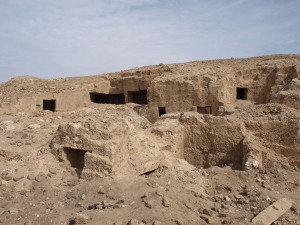
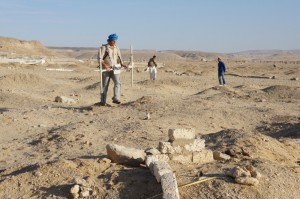
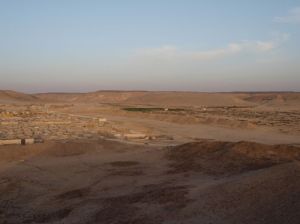
Another week of survey at Antinoupolis is at an end. This week work focused on survey in the area of the ancient city, between the northern corner of the walls and the east gate survey area from 2012. In addition Jay has spent the last few days starting a GPS topographic survey of the east gate and the hippodrome to the north-east of the city. Results of the hippodrome topography are looking impressive. Continue reading →
Visit to the Sheikh Ebada mosque and the tomb of Ebada Ibn Samet

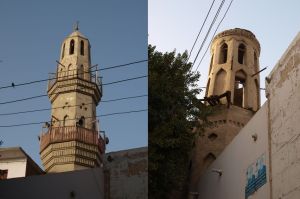
Once again finding time to be able to write is getting difficult, with the survey work going on at a strong pace. Time for two blogs this evening, later on some updates on the survey, but for now a description of a short trip the team made the other evening to the mosque in Sheikh Ebada, and to the tomb of Ebada Ibn Samet. The mosuqe is located in t he northern part of Sheikh Ebada, aligned with the northern decumanus of the Roman city. Continue reading →

#bttowerview

I love this digital stuff. Following a tweet and some exchanges of emails the inimitable @cgutteridge has created a great mashup of the BT tower view panorama, wikipedia (including use of RDF) and lat long locations e.g. from google maps. Have a look at the BTtowerview mashup. It would be great to identify some archaeological and architectural history locations as RDF to feed into the view. Has anyone hacked a way of turning a long lat location to #bttowerview bookmark? e.g. btlondon2012.co. Continue reading →

End of first phase of magnetometry – and a day off

Second blog of the day trying to catch up on over a week of missed writing. For the last four days the magnetometry has been continuing in the necropolis area of Antinoupolis. Work starts on site at 7am sharp, and we take a knackered old pick-up truck on a track roughly along the line of one of the decumani of the city, out to the Severian wall and up to the Coptic chapel of Theodosia adjacent to the Roman necropolis. Continue reading →

Antinoupolis Survey Magnetometry Commences

Trying to catch up with blog posts this week, on a slow internet connection and pushing the magnetometer survey forwards. Work is moving ahead with the survey of the necropolis of Antinoupolis. The area was gridded out last Saturday, with 10 hectares prepared, and the magnetometry has been moving forwards. The area in question is located between the north-western corner of the city, the Coptic cemetery to the west and the confines of the wadi to the north. Continue reading →

End of Theban survey and up to Antinoupolis

The internet connection at Sheikh Ebada near El Minya is terrible, so no blogging for the last week. This is the first time I have managed to get set up so there is plenty to write about. We finished the survey at Thebes on 7th February, and Angus and the team departed for the UK on the 8th. We caught up with some American colleagues before the end, and enjoyed an amazing view of the West Bank including Kom el Hetan, one of the focal points for the THaWS survey. Continue reading →

Transmitted RTI

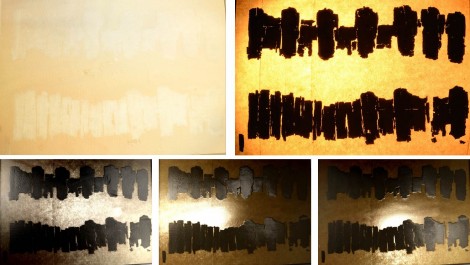
Following our successful experimentation with microscopic RTI and multispectral RTI, we develop a transmitted RTI methodology, inspired by transmitted photography, a set-up proposed for conservation documentation of translucent materials, canvas paintings, mounded papyri, photographic material, and works of art on paper or archival material. The transmitted RTI provides an enhanced RTI visualisation, complementary to reflected visible and infrared RTI. Continue reading →

A new year at Portus

The New Year has begun auspiciously for all those of us involved with the Portus Project and related work. At one level, we are pushing ahead steadily with completion of the post-excavation work that will form the basis of the final reports on the project. In January, we held the first of three planned Workshops at the British School at Rome (BSR). This was organized by Christina Triantafillou and myself and was very well attended. Continue reading →