Currently browsing tag

acrg, Page 8

Late Bronze Age Stelae, Craftspeople and Digital Technologies: Some Recent Explorations

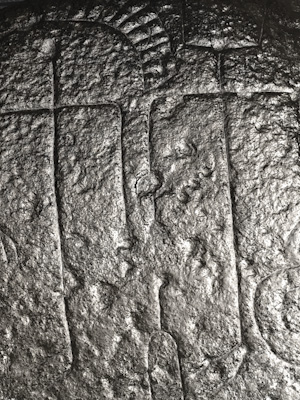
Reflectance Transformation Imaging (RTI) is revealing itself as a very powerful tool to examine prehistoric rock art. Through the application of different filters and the manipulation of the incidence of light, RTI provides an enhanced visual experience of the micro-topography of engraved stones, enabling the detection of subtle details that are difficult, at times impossible, to be seen through other recording techniques. Continue reading →

Damage to the Archaeological Site of Antinoupolis

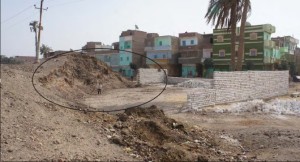
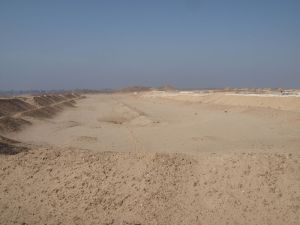
Further to my recent posts on the survey at Antinoupolis, the subject of this entry is to highlight some of the quite extensive damage that is occurring at the Roman city and necropolis. Damage to the large furnace structure at Sheikh Ebada The site has slways formed the focus of forms of looting and destruction for centuries, from 18th century antiquities to the excavation of the site to provide raw materials for gunpowder manufacture in the 19th century. Continue reading →

Digitally Recording A 3rd Century BC Underwater Battlefield

One of the most exciting archaeological discoveries of the last decade has been an ancient naval battlefield off the Egadi Islands in Italy. Located in over 100 metres depth and requiring robots to survey and record the artefacts, the site dates to the decisive climax of the First Punic War between Rome and Carthage in 241 BC. Previously, only two waterline warship rams had ever been discovered, but ten have been found at the battle site together with thousands of other artefacts. Continue reading →

Alasdair Whittle’s “Times of their Lives” project in Seville

I have just spent an intense but immensely rewarding few days with the Alasdair Whittle’s “Times of their Lives” project in Seville, Andalucia, where a new dating programme for the fantastic Copper Age site of Valencina de la Conception is starting to take shape. Valencina is a site I’ve been interested in for some time with my long term collaborator and friend Leo Garcia (Seville University) and it’s an exceptional site in many ways. Continue reading →

Luxor, time for reflection, and some useful information

Finally got back from Antinoupolis to Luxor on 5th March, after a great season in the field with Jay Heidel. The Italian mission from the University of Florence closed the dig accommodation on the morning, and we took a micro bus up on to the desert edge through Deir Abu Hines and Deir el Bershar, then south along the desert road, around the Qena bend in the Nile and down to the bright lights of Luxor. Continue reading →

RTI at the Urban Variation Conference, Gothenburg

Last week Gareth and I travelled to Gothenburg in Sweden to present at the Urban Variation conference.  The conference website is here: http://conference.earlymoderntown.com/urban-variation/.  The conference was organised by the Early Modern Town Project team (find the University of Gothenburg project website, here; http://www.earlymoderntown.com/) and was attended by a multidisciplinary crowd of academics and professionals. Continue reading →

1st March day off and visit to the Via Hadriana and quarries of Antinoupolis

After another long week of survey, it was good to get out for a morning, away from the noise of Sheikh Ebada, and to have a look at the broader landscape of the ancient city of Antinoupolis. The planned itinerary was to walk up past the hippodrome, and along the wadi, finding the start of the ramp that leads to the Via Hadriana, the road linking Antinoupolis and the Nile with the Red Sea coast. Continue reading →