Currently browsing tag

acrg, Page 6

Excavation and Survey at Portus: the first week of the 2013 field school

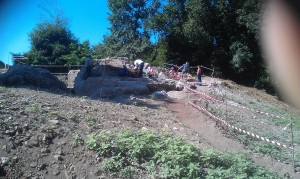
It isn’t difficult to understand the draw of working in fascinating or beautiful places on archaeological sites which represent pivotal moments in European history, and the case of Portus is no exception. This is a site and landscape close to my heart and research interests, more in terms of the development of the broader Tiber delta, than the Roman port per se. Continue reading →

Survey and Excavation at Cranborne Chase

After a few weeks of survey in the New Forest, teaching of practicals and writing up of some papers, it was good this week to get back out in the field with staff and students from the University of Southampton. This time we headed out to Dorset for excavation and survey at Down Farm on Cranborne Chase, with teams of students involved in excavation, finds processing and recording, together with some topographic survey and magnetometry. Continue reading →

Southampton at the SAA Annual Meeting, Honolulu 3-7 April 2013

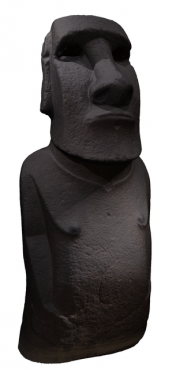
Recently, the department of archaeology at Southampton made its debut appearance at the Society for American Archaeology annual conference. This year it was due to be held in Honolulu, Hawai’i, which promised to make it one of the best-attended meetings of its kind. Besides the well-publicized size of the SAA meetings and the high esteem in which they are held, Honolulu is a desirable travel destination for very obvious reasons. Continue reading →

Testing a Prototype 3D Structure Light Imaging System for Underwater Archaeology

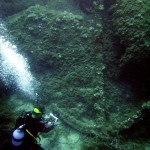
Anchor Scanning While 3D imaging has become a revolution in land archaeology, it has experienced a difficult baptism underwater. Electrical equipment and water do not mix, plus many systems do not easily transfer underwater when you add currents, visibility issues, and salt into the equation. Approaches that have been attempted include acoustics, laser-based systems, and photogrammetry with each of these having varying success depending on site conditions. Continue reading →

Capturing and exploring textures in National Archive

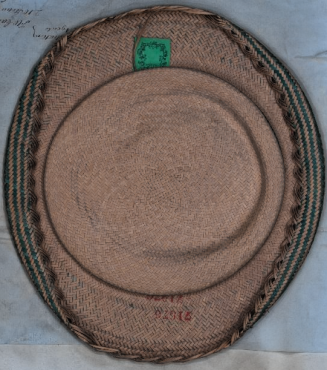
BT 43/57/71976: Straw hat, registered on 18 September 1850; proprietor unknown Some time ago we made a visit to UK National Archive with James Miles to test RTI technology on a wide range of examples provided by the National Archive. James went back in September of 2012 for a second time to do more recording. Recently Dinah Eastop, a Curatorial Research Fellow from the National Archives has written two blog posts and presented the results of the work on their blog. Continue reading →

Basing House Survey Final Day – A rain check and some reflections

The second week of survey at Basing House finished on Friday in a spray of mud and rain, hailstones and inky cloud. What had promised to be a reasonable day quickly became unworkable, wet and cold. The teams set out for the final day of survey, focusing on completion of the magnetometry and resistivity in the area of the New House and outer bailey, and GPR over the outer bailey also. We abandoned the magnetic susceptibility to ensure that all hands were working on the res and mag. Continue reading →

Basing House Survey, Day Four – Spring finally arrives!

We have had some really productive days on the second phase of survey at Basing House, with third year and postgraduate students from the University of Southamotin working hard, and carrying out resistance survey, magnetometry, GPR and magnetic susceptibility of the Old and New houses, and Civil War defences and the outer bailey. Spring also finally arrived today after single-figure temperatures and damp weather. Altogether today marked the best day of surveying yet. Continue reading →