Currently browsing

Page 97

The Sun Stands Still

Just a little plug for The Sun Stands Still, a very short Unity based point and click adventure. Naomi Alderman, the author behind it, had a little bit to say about emotions and narrative on the BBC World Service’s Click programme: Games have access to emotions of agency Ā which you can’t necessarily get when you are audience-member or a reader. Continue reading →

Italian translation of week one topics

Excavating a burial at PortusPhoto: Hembo Pagi Once again Eleonora has translated the summaries of the week one activities into Italian in order to support sharing of the course via Italian social media. As discussed previously the course itself runs in English and it is not possible to moderate the posts on the FL platform in English and Italian. This would require Italian speakers on the FutureLearn platform which is monitored 24 hours a day. Continue reading →

Next CLLEAR seminar: ā€œSourcing (some) differences in heritage language bilingualism and why different is NOT deviant NOR incompleteā€

The next Centre for Linguistics, Language Education and Acquisition Research (CLLEAR) seminar will take place on Wednesday 28 January 2015 from 5:00-7:00pm in Lecture Theatre C, Avenue Campus. The talk is entitled ā€œSourcing (some) differences in heritage language bilingualism and why different is NOT deviant NOR incompleteā€ and will be delivered by Professor Jason Rothman from the University of Reading and University of Tromsoe. Continue reading →

Italian film showing today: Agata e la tempesta (Silvio Soldini, 2004)

The Italian film, Agata e la tempesta (Silvio Soldini, 2004), will be showing in Lecture Theatre A at 6.30pm on Monday 26 January 2015. Review, introduction and discussion by Laura Nera. All welcome! ************************************************* Il primo film di questa rassegna ĆØ una commedia sentimentale dello stesso regista del famoso ā€œPane e tulipaniā€. Continue reading →

Archaeo-Politics in Macedonia

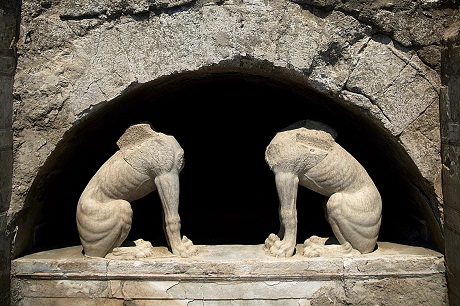
sphinxes at amphipolis On Friday IĀ wrote a post on the London Review of Books blog about Alexandromania.Ā It begins as follows: “On Monday, six days before the general election, the Greek Ministry of Culture published a preliminary report by the osteo-archaeological team studying the skeletal remains found in the mound of Amphipolis in northern Greece. The bones were found in November, since when there had been a lot of speculation about who they might have belonged to. Continue reading →

Orpheus in the round

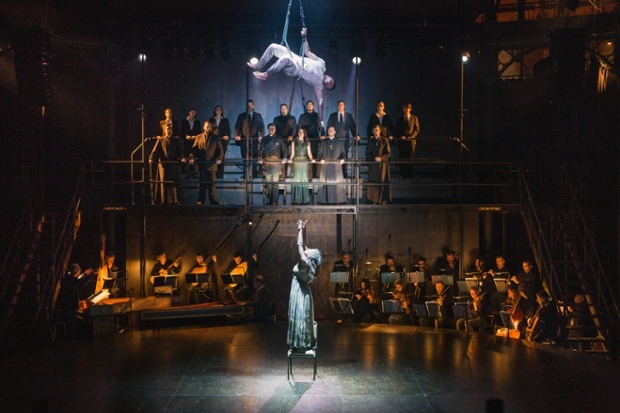
Professor of Music Jeanice Brooks made a field trip to hear one of her favorite operas: Last week I went along with some of my Southampton Music colleagues to see Claudio Monteverdi’s Orfeo. Composed in 1607, it’s the earliest opera that is regularly staged today. It’s a piece I completely adore, and though I teach it both in first year music history and in a specialised module on Monteverdi for second and third years, I’ve had only a few chances to see it in the theatre. Continue reading →