Currently browsing

Page 213

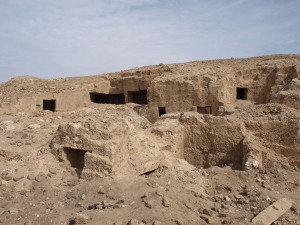
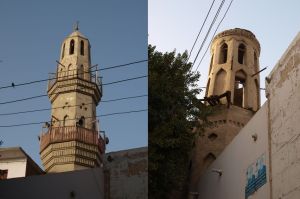
Visit to the Sheikh Ebada mosque and the tomb of Ebada Ibn Samet

Once again finding time to be able to write is getting difficult, with the survey work going on at a strong pace. Time for two blogs this evening, later on some updates on the survey, but for now a description of a short trip the team made the other evening to the mosque in Sheikh Ebada, and to the tomb of Ebada Ibn Samet. The mosuqe is located in t he northern part of Sheikh Ebada, aligned with the northern decumanus of the Roman city. Continue reading →
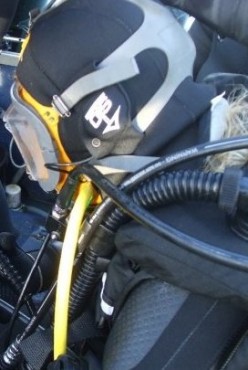
Contemplating the necessity for international collaboration in maritime research

This has been a busy week. Instead of writing the dreaded chapter for a gazetteer, this week has been filled with meetings and seminars from visiting scholars undertaking maritime research around the globe. The arrival of our colleagues from Woods Hole Oceanographic Institution (USA), the University of Western Australia, Thessaloniki University (Greece) and Yokohama National University (Japan) has been coincidental; we were not hosting an international symposium or congress. Continue reading →

#bttowerview

I love this digital stuff. Following a tweet and some exchanges of emails the inimitable @cgutteridge has created a great mashup of the BT tower view panorama, wikipedia (including use of RDF) and lat long locations e.g. from google maps. Have a look at the BTtowerview mashup. It would be great to identify some archaeological and architectural history locations as RDF to feed into the view. Has anyone hacked a way of turning a long lat location to #bttowerview bookmark? e.g. btlondon2012.co. Continue reading →

Upcoming….

8th March Dr. Rob Hosfield University of Reading, UK       “Walking in a winter wonderland? Mid-latitude seasonal mobility options in the Lower Palaeolithic”    Abstract: Any occupation of northern Europe by Lower Palaeolithic hominins (H. heidelbergensis/proto-Neanderthals, and H. erectus and/or antecessor?) must have addressed the challenges of marked seasonality and cold winters, primarily during ‘interglacial’ MIS. Continue reading →

CALR lecture tomorrow: The mortality of Hindustani: Can there be an Indian national language?

The next CALR lecture is taking place on Wednesday 27th February 2013 from 5.00 – 6.30pm in Lecture Theatre C, Avenue Campus, University of Southampton. The lecture is entitled “The mortality of Hindustani: Can there be an Indian national language?” and will be presented by Dr Priti Mishra, scholar of language policy in colonial and postcolonial India, from the University’s History department. Continue reading →

Italian film showing today: La stella che non c’è (2006)

The Italian film, La stella che non c’è (Gianni Amelio, 2006) will be showing in Lecture Theatre A, Avenue Campus, at 6.30pm on Monday 25th February 2013. A review, introduction and discussion will be led by Leonardo Provvedi. Vincenzo Buonavolontà lavora per un’acciaieria italiana che sta ormai chiudendo e il cui altoforno è stato venduto ad un’azienda cinese. Vincenzo sa che l’impianto ha un difetto ma, nonostante informi il nuovo acquirente, non viene ascoltato. Continue reading →

#CAAUK and Fragmented Narrative

I’m posting this from Day Two of the CAAUK conference. I think there may be more of relevance to my studies today, though yesterday was by no means disappointing. There were many thought provoking points made, and I got to meet more of my fellow Southampton students than I’ve met so far while actually at University. I also heard yesterday that my seminar in Thursday might be streamed to York University’s Cultural Heritage students. Argh! Scary. Continue reading →

End of first phase of magnetometry – and a day off

Second blog of the day trying to catch up on over a week of missed writing. For the last four days the magnetometry has been continuing in the necropolis area of Antinoupolis. Work starts on site at 7am sharp, and we take a knackered old pick-up truck on a track roughly along the line of one of the decumani of the city, out to the Severian wall and up to the Coptic chapel of Theodosia adjacent to the Roman necropolis. Continue reading →