Currently browsing

Page 132

Italian translation of week one topics

Excavating a burial at PortusPhoto: Hembo Pagi Eleonora has translated the summaries of the week one activities into Italian in order to support sharing of the course via Italian social media. As discussed previously the course itself runs in English and it is not possible to moderate the posts in English and Italian. This would require Italian speakers on the FutureLearn platform which is monitored 24 hours a day. So, we will continue to provide additional resources such as this where possible. Continue reading →

Topographical survey at Portus

Teaching students how to use a total station next to the Terrazza di Traiano. Photo: Hembo Pagi Hi, my name is Stephen Kay and I’m responsible for the topographical survey on the Portus Project. I am currently the Molly Cotton Fellow at the British School at Rome (www.bsr.ac.uk), one of the partner institutions for the field school. My research interests are focused on landscape archaeology, in particular on Roman urbanism in central Italy. Continue reading →

‘Contemporary Central and South-East European Cinema in Transition’ – Postgraduate symposium tomorrow

A one-day postgraduate symposium on ‘Contemporary Central and South-East European Cinema in Transition’ will take place tomorrow, Friday 23rd May 2014 from 10:00-18:00 in Lecture Theatre B, Avenue Campus, University of Southampton. The event will bring together postgraduate research students in the field of Central and South-East European cinema, providing a forum for research exchange and making connections with others in the same field. Continue reading →

Reshaping Languages in Higher Education Conference 2014 – Early bird registration until 31st May

Anyone interested in attending the ‘Reshaping Languages in Higher Education Conference 2014’ can benefit from early bird registration until 31st May 2014. This seventh biennial conference on languages in higher education, organised by the Centre for Languages, Linguistics and Area Studies (LLAS) at the University of Southampton, the University Council of Modern Languages (UCML) and the Association of University Language Centres (AULC), is taking place on 9 and 10 July 2014. Continue reading →

New research story: Wars of Memory by Claire Eldridge

Wars of Memory by Claire Eldridge In July 1962, French empire in Algeria came to an end following one of the most violent and iconic wars of decolonisation. That summer, while Algerians celebrated their independence, almost one million inhabitants of the former colony felt compelled to leave their homeland and make their way across the Mediterranean to France. Continue reading →

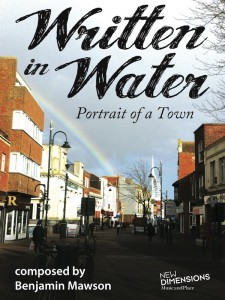
Written in Water: Portrait of a Town

Final year PhD composer Ben Mawson tells us about his project ‘Written in Water: Portrait of a Town’, which allows listeners to explore Gosport in a new and exciting way: After receiving the first prize at the SXSC3 Dragons’ Den competition (November 2013) to develop 3DBARE (software to allow listeners to walk inside a piece of music), I have just completed a commission from New Dimensions, portraying the maritime history and contemporary character of the town of Gosport... Continue reading →

Brazilian language students learn English online with retirees

The Independent has reported on a scheme in a Brazilian language school, which is helping students to improve their English by linking up with elderly Americans online. Some unlikely friendships have developed between the young Brazilian learners and the American retirees, many of whom live lonely lives in retirement homes. To find out more about the scheme, read the full article on the Independent website. Continue reading →

Welcome to Week One – the Port of Claudius

Frame from one of Simon Keay’s videos filmed at Portus last summer The course has just now become available! We have been working on this for a while now so it is good to be able to share the course with you properly. As you will now see the course is structured thematically, temporally and spatially. Each week we will discuss archaeological methods, object types, and also theoretical concerns. Continue reading →