Currently browsing

Page 131

Modern Languages singers participate in University of Southampton Voices performance

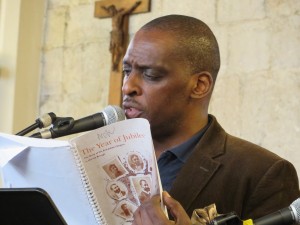
Earlier this month, a number of staff from Modern Languages at Southampton participated with colleagues and students in a performance by the University of Southampton Voices, the University’s community choir, led by Harvey Brough. The performance, which told the incredible story of the Fisk Jubilee Singers, was a great success, attracting a large audience to St Michael’s Church in Southampton. Continue reading →

Which languages did Jesus speak?

The BBC has reported on current debates around the language(s) that Jesus would have spoken. Whilst several languages were used in the places where Jesus lived, many believe that Aramaic would have been his first language, whilst Hebrew would have been used to respond to scholarly questions. He may also have known some Greek. To read the article in full, visit the article page on the BBC website. Continue reading →

Week one – imagining the Claudian port

Rose surveying on site; an experienced archaeologist who uses art as another means to explore archaeological process and data. Photo: Hembo Pagi It has been a fantastic first week for us all involved in the course. Above all, we have been so grateful for the depth and breadth of comments, and for your enthusiasm for the course. If you are reading this and haven’t yet signed up then please do – there is still time to join in the conversations from week one and move on to week two. Continue reading →

Pelagios: a Sea of Connections

I’m Leif Isaksen, one of Graeme, Simon and Dragana’s colleagues in the University of Southampton Archaeology Department. This week the MOOC has been thinking about the Mediterranean as a sea of connections between ancient harbours and settlements, and the importance of Portus as a hub within it. This level of interconnectivity had an enormous impact on the lives and culture of the people who lived within and beyond the borders of the Empire. Continue reading →

Engines of Emotion

This is the text of my short presentation today: This is my first presentation to this forum, so by way of introduction, let me explain that I’m interested in the power that video (or computer) games have, to tell stories in virtual (though ever more realistic) spaces. I want to explore what we can learn from games, as interpreters and storytellers of cultural heritage about telling emotionally engaging stories in the spaces that we look after. Continue reading →

Last places on Teaching English for Academic Purposes (TEAP) course

The Centre for Language Study at the University of Southampton is running a three-week intensive course in Teaching English for Academic Purposes (TEAP), starting on Monday 30th June 2014. Led by experienced teaching staff, the course is a great opportunity for those with some teaching experience to prepare for teaching on a university pre-sessional programme. Continue reading →

iTunes U recording: Pronoun Interpretation in the Second Language

Follow this link to a recording of a public seminar given by Professor Roumyana Slabakova and Prof. Lydia White (McGill University) on Pronoun Interpretation in the Second Language at The Department for Education at the University of Oxford. Abstract: A much-studied phenomenon in first language (L1) acquisition concerns the fact that children have greater difficulty in interpreting sentences with pronouns than with reflexives, the so-called Delay of Principle B Effect (DPBE). Continue reading →