
Currently browsing tag

visualisation

Build your own Portus

Modelling help sheet (Grant Cox and Christina Triantafillou) I’m very excited about the imagination shown in the comments on the Archaeology of Portus: exploring the lost harbour of ancient Rome course. But it is clear that even at this late stage it is still hard to get a sense of space. We’ve worked hard to film as much as possible of the MOOC content actually on-site at Portus last summer, and you can see where this footage was filmed. Hopefully this week will also help. Continue reading →

Virtually Reconstructing Musical Numbers: The Modeller’s Perspective

Earlier this year I had the opportunity to get involved in a unique inter-disciplinary project, one that has taken me outside of my usual research area, as part of the SotonDH small grants. The project is a collaboration with Beth Carroll, who for her film studies PhD thesis is analysing the genre of musicals – specifically the phenomenon of the ‘musical number’. Continue reading →

York Heritage Seminar Series: Description, Dialogue or Debate? Examining the role of narrative in the visualisation of archaeology

Date: 26.02.2013 Time: 5.30pm Speaker: John Swogger (Archaeological illustrator) Location: Room 3043 building 65a (avenue campus) Tuesday 26 February we will be live-streaming another York Heritage Seminar, this time by the archaeological illustrator John Swogger who will talk about “Description, Dialogue or Debate? Examining the role of narrative in the visualisation of archaeology”. Continue reading →

Reconstructing Portus – Rome’s Lost Empire

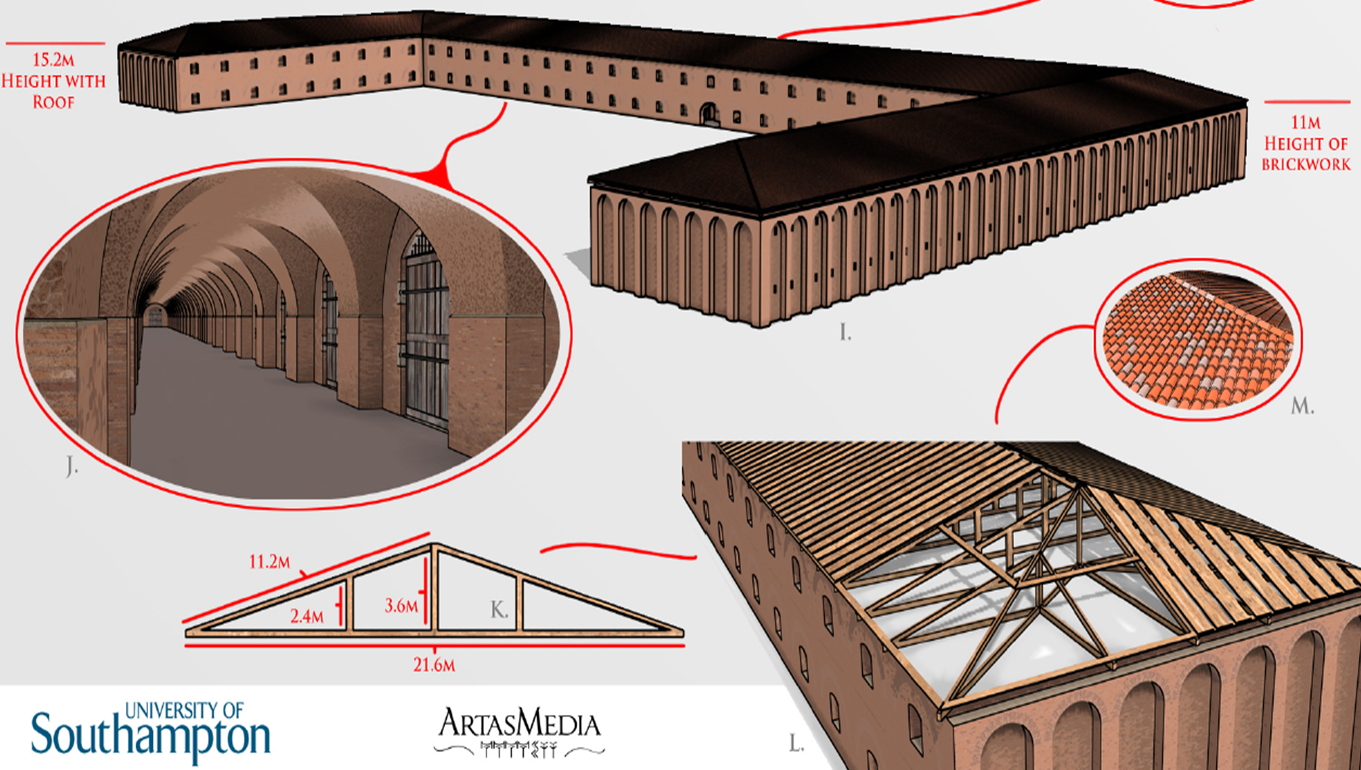
Why produce computer models? We have been producing computer graphic representations as part of our work at Portus since 2007. These are used for a number of purposes. Firstly, they help us to bring together all the many forms of digital data gathered on site, through survey, geophysics, photogrammetry, laser scanning and other tools. For example, we are combining three-dimensional geophysics with laser scans and excavated sections to understand the development of the Building 5. Continue reading →