
Currently browsing tag

polynomial texture mapping

Late Bronze Age Stelae, Craftspeople and Digital Technologies: Some Recent Explorations

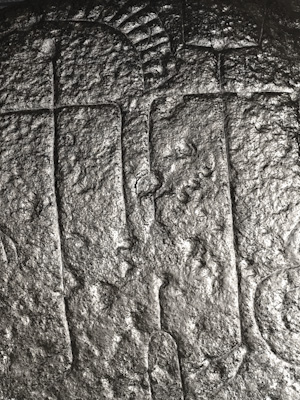
Reflectance Transformation Imaging (RTI) is revealing itself as a very powerful tool to examine prehistoric rock art. Through the application of different filters and the manipulation of the incidence of light, RTI provides an enhanced visual experience of the micro-topography of engraved stones, enabling the detection of subtle details that are difficult, at times impossible, to be seen through other recording techniques. Continue reading →

Seeing in a New Light – Archaeological Computing Research Group Seminar

Speaker: Sally Ford Location: Digital Archaeology Lab, Building 65a, Avenue Campus, Southampton Date: 26.10.2012, 2-3pm This Friday is the first ACRG seminar of the term, and we welcome all students and staff to attend. Seeing in a new light: How can polynomial texture mapping help record forensic investigations of cremations? Polynomial texture mapping is an image capture and processing technique used to record and represent details from a surface. Continue reading →