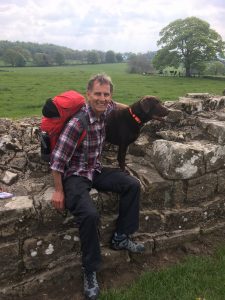
A brief update prior to departing for a week’s R and R in the Lake District. Unfortunately a looming date with Lake Windermere and an unusually busy week on campus (UG/PG dissertation and essay tutorials, plus assorted other activities) stopped me in my tracks, such that I remain tantalisingly close to completion of my chapter on CRF’s creation of Fairey Aviation in 1915. Needless to say this was not a solitary enterprise, depending heavily upon close friend Lt Dawson RNAS, a key investor, and Frank Rees, the ambitious wheeler-dealer from East Finchley who endeavoured to orchestrate proceedings but remained always firmly under Fairey’s control. It’s a complicated story, involving among others Short Brothers and Commodore Murray Sueter at the Admiralty, as well as a group of Belgian refugees available to work in Hayes; but frustratingly it’s not quite told. As soon as I am back from Ambleside I shall finish off the chapter (around 12000 words, same as its predecessor, and my anticipated average length for every chapter) and complete my British Academy application, recycling material from what is now an unsuccessful bid for a Radcliffe Institute fellowship – a brave attempt, but I had no illusions! The British Academy application is for funding to visit archives at the Smithsonian Institute in Washington and the Eisenhower Presidential Library in Abilene, examining the papers of US Treasury official Philip Young, who commenced his high-flying career (including ambassadorships and a stint as Eisenhower’s chief of staff) as secretary of the main US-UK aircraft procurement committee 1940-45, chaired by the British Air Commission’s Sir Richard Fairey (Young married the latter’s widow). Th BA application will be followed by an internal application for research funding to ensure I have adequate resources to support a fortnight in Washington DC and Kansas. After submitting the BA bid and finishing chapter 3 I need to focus upon the pre-Easter conference co-organised at the University of Kent, ‘The Great War and the Moving Image’, before leaving for the United States and Canada on Good Friday. Once back from Boston and London, Ontario then I can combine writing about Fairey’s upbring, and critically his scientific education (part of chapter 1), with examining the papers from Yeovilton on Fairey Aviation in the latter part of the First World War and the early years of peace. At the same time I need to finish, firstly, the introduction to the second(paperback) edition of my Mannock biography and, secondly, my inaugural lecture marking the seentieth anniversary of Keith Douglas’s death in Normandy. So, gentle reader, a few weeks may pass before the next update, and its accompanying ruminations and reflections.
Mar 26
So near and yet so far…
Adrian Smith, Emeritus Professor of Modern History, University of Southampton