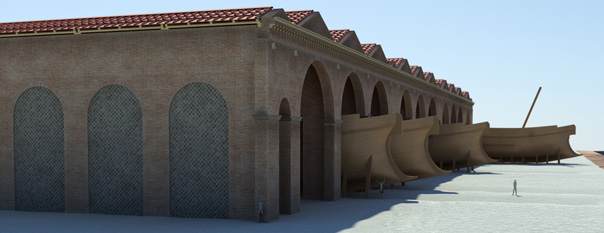
Portus (Fiumicino) was established by the Roman emperor Claudius in the mid-1st century AD. It was later enlarged by emperor Trajan, and subsequently modified during the 3rd and 4th centuries AD.
Portus was critically important for supplying the city of Imperial Rome with foodstuffs and materials from across the Mediterranean from the 1st century AD onwards. It also acted as both a point of export for supplies and products from the Tiber Valley to the north of Rome, and a major hub for the redistribution of goods from ports across the Mediterranean. It must also have been a major conduit for people visiting Rome from around the Mediterranean.
The port began to enter a period of slow decline from the late 5th century AD onwards, although it was the scene of a major struggle between Byzantine and Ostrogothic troops during the Gothic wars (AD 535-553).
Portus is now a significant archaeological site providing key insights into ancient Roman life and trade.