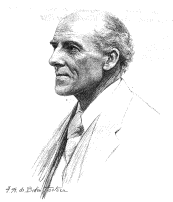
[The first thing Pearson could remember] was sitting in a high chair sucking his thumb. Someone told him to stop sucking it, and added that unless he did so, the thumb would wither away. He put his two thumbs together and looked at them for a long time. “They look alike to me,” he said to himself. “I can’t see that the thumb I suck is any smaller than the other. I wonder if she could be lying to me.” Here in this simple story we have rejection of constituted authority, faith in his own interpretation of the meaning of observed data, and finally, imputation of moral obliquity to a person whose judgement differed from his own. These characteristics were prominent throughout his entire career. Walker (1958 & -78)
University of Southampton
Karl Pearson: A Reader’s Guide