Arts and events

raviTurner Sims – Ravi Coltrane Quartet – 13 March

Grammy-nominated saxophonist Ravi Coltrane, son of the legendary John Coltrane, has matured into an artist at the height of a career built on his talent, not his name. He has been praised for his music’s elusive beauty (Downbeat) and for his style informed by tradition but not encumbered by it (Philadelphia City Paper). Tonight he appears at Turner Sims with his talented quartet.


beetBeethovathon – Nine Symphonies In One Day – in aid of Comic Relief – 21 March

In 2009 Turner Sims hosted Haydathon, performances of all 104 of Haydn’s symphonies in a single weekend. Now, as part of our 40th anniversary year and in aid of Comic Relief, it’s Beethoven’s turn. With a hand-picked orchestra and choir on stage, experience all nine of Beethoven’s symphonies in one day in the order in which they were composed. Choose your favourites to enjoy, or undertake the marathon with us beginning at 11 and ending (with a few breaks) some 10 hours later.

unmdefilmJohn Hansard Gallery – Uriel Orlow: Unmade Film –  3 March – 25 April 2015

Unmade Film is an ambitious body of work by Uriel Orlow shown for the first time in its entirety in the UK. The work takes the form of an impossible film, fragmented into its constituent parts. An expansive collection of audio-visual works that point to the structure of a film but never fully become one, Unmade Film takes as its starting point the emblematic yet wholly invisible Palestinian village of Deir Yassin, formerly on the outskirts of Jerusalem.


Media roundup

Welcome to the latest edition of the University media digest, which covers major media appearances during the month of January.

In that time, media appearances relating to the University created over 72 million opportunities to view and hear stories via print, broadcast and online outlets. The advertising equivalent value of these appearances in print and via commercial broadcast media reached £503,364.

Below is a selection of stories which reached regional, national and international audiences:

maddyPatient-Doctor communication

Research by Dr Maddy Greville-Harris that found a perceived lack of empathy on the part of doctors could lead to a worsening of patients’ symptoms, was covered in more than 180 UK regional newspapers, as well as The Daily Mail, Yahoo News and media outlets in 12 other countries, including The Times of India, The Business Standard and The Malaysian Sun.

Read the press release here

brainBrain marking technique

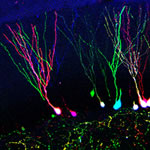
A new cell marking technique to help understand how our brain works, developed by Dr Diego Gomez-Nicola, was reported by the Times of India, Daily Echo, Financial Express, Economic Times, Medical News Today and other specialist news websites. Read our press release here


bbcjanefalkinghamFocus on ageing

Professor Jane Falkingham reached over 1.5 million viewers in a live broadcast by BBC Breakfast concentrating on the issues of an ageing population. The programme, at the Lowry Arts venue, also highlighted an exhibition about the subject being taken on a tour of the UK by the ESRC Centre for Population Change based at the University. Read more here 


Hoegh Osaka incident

Oceanographer Dr Simon Boxall  gave comment to the world’s media on the Hoegh Osaka, which ran aground in the Solent, including Good Morning Britain, Channel 4 News (online), BBC News Channel, BBC World Service, BBC Radio 2, BBC Radio 5 Live, BBC TV South, ITV Meridian, Daily Telegraph, Daily Express, Daily Mail, Daily Echo, BBC Radio Solent, numerous BBC regional radio stations, Press Association and a number of regional newspapers.

The Conversation 

University academics contributed 12 opinion pieces to The Conversation during January. These articles had a total readership of 618,617 and were republished on popular websites including IFL Science, Business Insider and The Huffington Post.

Top articles included: James Dyke’s Humanity is in the existential danger zone, study confirms, Richard Werner’s ECB is about to implement the wrong type of quantitative easing and Mirco Tonin’s Note to bosses: workers perform better if you give to charity

Sally Hayward on the new Senior Tutor’s Forum

Following the launch of a new Senior Tutor’s Forum in January 2015, we asked the Chair, Sally Hayward, what the background was.

The Senior Tutors’ Forum developed from the original ‘Tutors and Pastoral Care Network’ which met until recently.

Its formation is directly the result of the work which was done last year by a group of academic and Professional Services colleagues and by members of SUSU under the leadership of the Academic Registrar.

This major piece of work was undertaken directly in response to the students’ recognition that the Personal Tutor system already in use widely across the University needed refreshing in order to ensure consistency of experience of this very important aspect of support for all our students.

What will this Forum offer in practical terms?

The Forum meetings will allow discussion and sharing of good practice.  The sessions could be about day to day issues, such as special considerations and extension or how to support students to increase retention and whether students are becoming less resilient to deal with academic demands and/or personal difficulties.

As well as the meetings, we are establishing an e-mail discussion group and building a repository for key information. This will be based around the Personal Academic Handbook and arranging training events.

Why were you chosen as Chair and what will you bring to the initiative?

That’s an interesting question and perhaps one that those who asked me should answer! Much of the pastoral work I do is, of course, confidential and just the students and a few others might know about it.

I’ve always known the importance of seeing students as individuals that have to be relatively happy and healthy to make the most of university and their academic studies. I became Director of Student Support in Geography in order to make a contribution to this.  I feel that I have achieved this in some measure because in 2013 I won the university-wide Best Academic Support SUSU Excellence in Teaching Award. I have also won other Academic Unit and Faculty awards.

When I received a Vice-Chancellor’s Teaching Award this summer, there was a spontaneous standing ovation from the students and lots of noise and cheering!  I think these public, student-led expressions of recognition and appreciation have been important in demonstrating just how much the work I, and many, many others do quietly behind the scenes, really does impact on students’ lives.

What will you bring to the initiative?

I bring these achievements and recognition and nearly 25 years experience of lecturing and enabling students in Southampton to fulfil their personal and academic potential.

I also bring considerable life experience.  I was very lost and homesick when I went to university, and I have and still face other challenges day to day; I think this enables me to see things realistically and honestly through the students’ eyes, and to help them find the resilience and self-belief to succeed.

What is your day job at the University?

My day to day job primarily combines teaching and pastoral care in Geography and Environment. I run induction and teach an extensive year 1 skills unit including lectures, fieldwork and small group supervisions to support students make the transition to degree level learning.

I also teach a year 3 unit called Arctic and Alpine Geomorphology and contribute to 3 other units on Physical Geography, as well as taking supervisions and supervising UG research projects .

So day to day it is lectures, tutorials, seeing students one-to-one and periodically lots of marking!

Over the last few months, having been invited to be the Faculty Senior Tutor for the Faculty of Social and Human Sciences, and then to Chair the Senior Teaching Forum, my day to day work has broadened to include more administration and meetings and the associated preparation.

What do you do when you are not working?

I spend time watching my 14 year old son Tom play sport (especially cricket) and relaxing with my dog Jake.

Ivor Powell

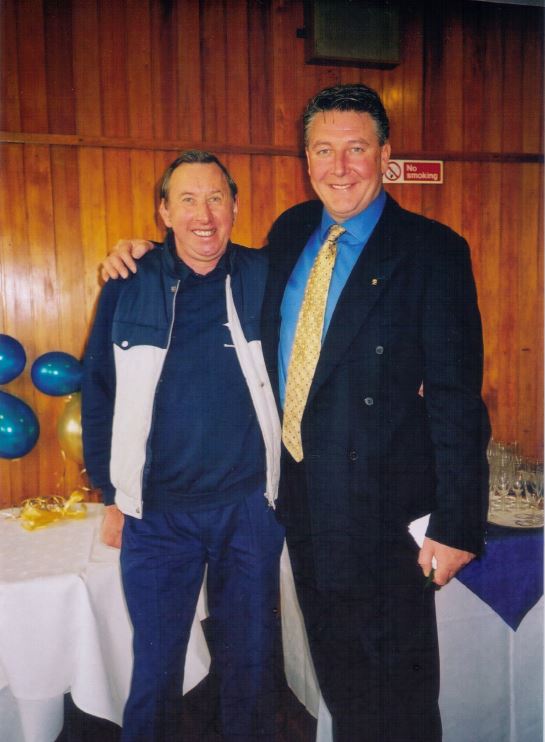
Capturegardener2The Vice-Chancellor has presented Ivor Powell with a gift of engraved wine glasses to acknowledge 50 years’ service with the University.

Ivor Powell joined the University as a junior gardener aged 17. His first position was at the then newly-acquired site of Chilworth Manor, which had been neglected by its previous owner.

The 100+ acre site needed to be brought up to a presentable standard by the team of 4 gardeners.

“We had to disturb dozens of adders, who’d made themselves comfortable in the grounds,” remembers Ivor.  “I helped the local farmer on the Chilworth estate deliver a calf from one of their cows! And I had to pass a tractor driving test to be able to move tractors on the road between university sites.”

Ivor went on to study for professional horticultural qualifications and in 1969 was promoted to Chargehand Gardener and was involved in creating and building the stream through the centre of the main campus next to the Turner Sims Concert Hall.

In 1973 Ivor moved to become Chargehand Gardener at the Wessex Lane Halls complex:

“The grounds of South Stoneham House were originally landscaped by Capability Brown in 1722, so this was a challenge to maintain!” says Ivor.

CapturecelebrityMemorable moments were creating the Bayliss Border of Rhododendrons & Azaleas following a donation made by the Bayliss family. Coping with trees infected with Dutch Elm Disease and the 1987 storm which caused a lot of damage and brought down many trees.

In 1987 Ivor married Alison Macleod and their reception was held in Connaught Hall so that all the wedding guests could admire the lovely gardens and take good photographs.

Asked what he has enjoyed about his time as gardener Ivor replied:

“I’ve enjoyed working outside in the open air and keeping healthy. Meeting a variety of people including staff and students. The satisfaction of watching shrubs and trees grow to maturity. Participating in the Golden Jubilee celebrations in 2002, including meeting Tommy Walsh from the Ground Force TV programme!”

Campus Connections

main_article_png_sustainabilitytemplateThe Sustainability Action awards celebrate the enormous range of activities being undertaken by our students and staff. You have until 27 February to nominate someone.

The Reward Project is improving how the University recognises staff for their contribution, including greater equality across different academic career paths. Read the latest from the project.

Two USMC academics are featured in The Sun, Malaysia and talk about their research, experiences and advice for students. Read about Dr Low Siow Yong and Dr William Chong.

Rewarding and recognising staff

There’s been positive feedback to the new appraisal training resulting from the Reward Project which is focused on rewarding and recognising staff for their contribution to the University.
The Reward project is currently being introduced to the ERE (Education Research and Enterprise) community.  It involves changes to the way staff are appraised at the University and directly supports our current strategy (Vision 2020 People Plan) ‘to achieve excellence in our operations through enhancing people, culture and organisation’. It was designed by academics for academics.

The initiative is also a response to concerns, expressed through the staff survey, that  employees did not feel recognised for their full contribution and that there was a lack of transparency regarding career progression and pay at the higher levels.

As part of the implementation, five hundred ERE appraisers have participated in the appraisal training.  The interactive half-day workshop used Forum Theatre techniques to focus on the skills and behaviours required to lead successful appraisal discussions and challenging conversations.  Two experienced actors played out an appraisal meeting and encouraged the audience to guide the appraiser towards best practice.

 What people said about the course:

 ‘An enjoyable, interesting and creative way to reflect on the issues.’

‘Really interesting method of teaching, to challenge my ideas on the appraisal process, enjoyed it.’

‘The delivery and style of course allowed easy learning and allowed very good exploration of the subject.’

‘Great framework for very dynamic discussions. Thanks, time well spent.’

The training includes an e-learning course which offers practical guidance and examples to support staff through all aspects of the appraisal process.  You can access the course by logging onto Blackboard and selecting ‘Academic Appraisal Training’.

 
What changes are currently happening for ERE staff as a result of the Reward project?

  • The project will mean a difference to the way people are appraised in their job. Specifically, all appraisers are expected to undergo training, there is a clear timetable for undertaking appraisals, there is more of a focus on future development and a new online appraisal system has been developed to record the outcome of the appraisal conversation.
  • Academic titles have been updated with the introduction of Associate Professor for those on a Balanced Pathway at Level 6.
  • There are refreshed career pathways which recognise the diversity of academic careers, including a newly defined Enterprise pathway.
  • Education is valued equally to Research through expectations in the Balanced Pathway (at least 20% research and education).
  • For those at level 7, there is a new and transparent pay framework and a change to biennial pay based on the appraisal ratings.
  • The Academic Promotion process has been refreshed.
  • Probation is reduced to 2 years from 3 years.

When will the project be introduced to the rest of the University?

Work has already started to prepare for the introduction of the project to staff in professional services and technical roles across the University at levels 4-7 from October 2015. The following phase will focus on the needs of staff at levels 1-3.

Cancer Immunology Campaign

Peter%20Johnson_jpg_SIA%20-%20JPG%20-%20Fit%20to%20Width_144_true

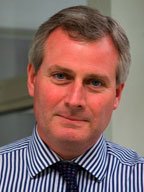
Professor Peter Johnson, Professor of Oncology at Southampton and Chief Clinician at Cancer Research UK, is championing the Campaign for a Centre for Cancer Immunology.  He talks to e-Voice about the background to the campaign and why immunology holds the cure for some cancers.

The campaign’s goal is to raise £25 million.  What will the money be used for? We are going to build the UK’s first dedicated Centre for Cancer Immunology: this is founded on Southampton’s long track record, and will help us to accelerate progress in this rapidly-changing field. There will be a new building on the General Hospital site which will house the existing research groups, our clinical trials unit, and a number of important new recruits in discovery science.

The University received an historic gift of £10 million.  How did this come about and why are we choosing to put this towards the new Centre?  This gift came from one of our long-standing supporters, who recognised the excellence of the translational research in Southampton and wanted to help us do more. They also made a matching gift to the Cancer Research UK campaign to fund the Crick Institute in London, with the explicit intention of linking cancer immunology research between the two places.

What are the main aims of the new Centre? We need to expand and accelerate our programme of research into cancer and the immune system: how cancers evade immune detection, how they can be made recognisable again, and how we can switch on the body’s responses to treat them.  This will encompass a range of work spanning from basic discovery of the precise mechanisms involved right through to clinical trials of new types of treatment.

Can you explain in simple terms what immunology does and how it can help save lives from cancer? The immune system is one of our main defences against the outside world: it is how we cope with infections and injuries.  Cancer has to escape the surveillance of our immune system in order to develop at all: we generate hundreds of tiny cancers every day which are mostly caught at a very early stage by the immune system and eliminated. The ones that are a problem are the ones that have evolved to get past our natural defences.  By finding ways to restore the immune recognition of cancers we can devise treatments that will control them, and keep on controlling them: immunity can be life-long if we get it right.

Why is it such an exciting time for scientists/clinicians working in cancer immunology? We have always believed that triggering immune responses to cancer would be a good way to treat it, but for many years we saw only limited effects in our clinical trials.  The last 3 years have changed all this.  We have seen unprecedented success against a number of different cancer types by using antibodies that can throw the switches in the immune system.  This has opened up whole new fields of research, and we need to work out how to use this new knowledge as effectively as possible. There is a huge amount to do.

What impact will a new Centre make on the University’s current cancer immunology research and global research in general? Southampton is in a great position to make a leading contribution in this area.  We have over 40 years’ experience in the field, and superb expertise in both basic science and its clinical application: the team we already have is excellent, and the new Centre will allow us to make it better still.

When and where is the Centre planning to be open? The new centre will be in front of the General Hospital.  If all goes to plan we should be opening it in early 2017.

How will the Centre be funded once it is established? Almost all our research is funded by grants from Research Councils, charities such as Cancer Research UK, and industry collaborations.  We will be able to bring in more grants by expanding our research facilities.  At the moment we are completely full so we urgently need the extra space.

What have been the high and low points so far?  The high point was getting backing from the University for our fundraising campaign, and finding ourselves in the vanguard of the University’s plans to expand its philanthropic support. This is something all universities now have to do, and if we can produce a successful first example it will have follow-on benefits across the campus.  The low point was probably a very long discussion about parking space at the General Hospital: I know we have to make sure our plans cause as little disruption as possible, but I now know more about parking management than is really healthy.

We talk a lot about ‘Connectivity’ at the University, as the connections we make change the world.  Can you explain how the immunology campaign fits in with the Connectivity theme?  This field relies upon the connection of many different disciplines, and bringing the distinct cultures of discovery science and clinical medicine together to bear on the problem is crucial.  We have collaborators all over the world, so it is a genuinely global undertaking for us.

‘The cure for cancer? You’re it’ ….. why is this a good title for the campaign? This sums up really nicely the whole idea that we contain the makings of successful treatment within our own defences, if only we can wake them up to the danger that cancer poses.  It has an obvious intuitive appeal, but it also benefits from being true in many cases. Our task is to make it true for more people, sooner.

How would you describe your role in the project?I am very excited to be part of the team that is going to make this Centre a reality.  My role is to help make sure we have the right research teams, that they have the resources they need, and that we are building a Centre that will make a real difference to people with cancer.

What motivates you to be so involved in this project?  I have always believed that immunology would play a big part in modern cancer treatment, even through the years when it wasn’t fashionable science.  It is why I came to Southampton in the first place.  Seeing the sort of results that are coming through our trials now is incredibly energising: I can’t wait to see what the next few years will bring.  We are on the cusp of some very exciting discoveries.

This sounds like something we should all be very proud is happening right here at the University.  How can our staff support this project? This is an important project, not just for what it will deliver in scientific terms, but as an example of what Southampton can do to attract philanthropic funding.  We would like to make sure all the University’s staff feel they have a stake in this, and can spread the word about our appeal.  This is not just about cancer and medicine: this is about being an ambitious organisation that can make a real difference to people’s lives.

We can all support the campaign.   Whether it’s engaging in the campaign’s social media, promoting the website, spreading the word to friends and colleagues, fundraising for the campaign or making a donation, your help will make the Centre a reality, accelerating our immunology research and ultimately saving more lives from cancer.

Help us raise £25m for the new Centre for Cancer Immunology at Southampton and save more lives from cancer.

 

Opportunities for you to meet our leadership team

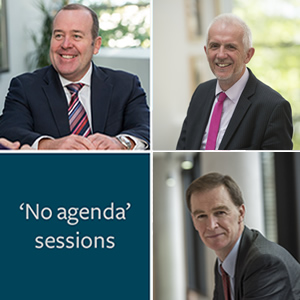
no-agenda-LATESTMembers of the leadership team are spending more time talking with and listening to staff face to face. There are several ways you can meet them:

One of these opportunities is the ‘no agenda’ sessions hosted by Mark Spearing, Provost, Steve White, Chief Operating Officer and Adam Wheeler, Deputy Vice-Chancellor. These offer colleagues on all our UK campuses a genuine opportunity to share what’s on their mind with members of the senior team and to ask any question. You can book your place here.

The Vice-Chancellor, Don Nutbeam, is doing more of the coffee mornings he started several years ago, including recent visits to meet colleagues in Archaeology and the Library. These are also open Q&A sessions. Contact Delia Edwards (d.l.edwards@soton.ac.uk)  if you would like to invite the V-C to join your team for coffee.

Alternatively, some of our senior managers are making themselves available to meet with you through the ‘Invite us’ area on the Strategy SharePoint site. You can find more here.